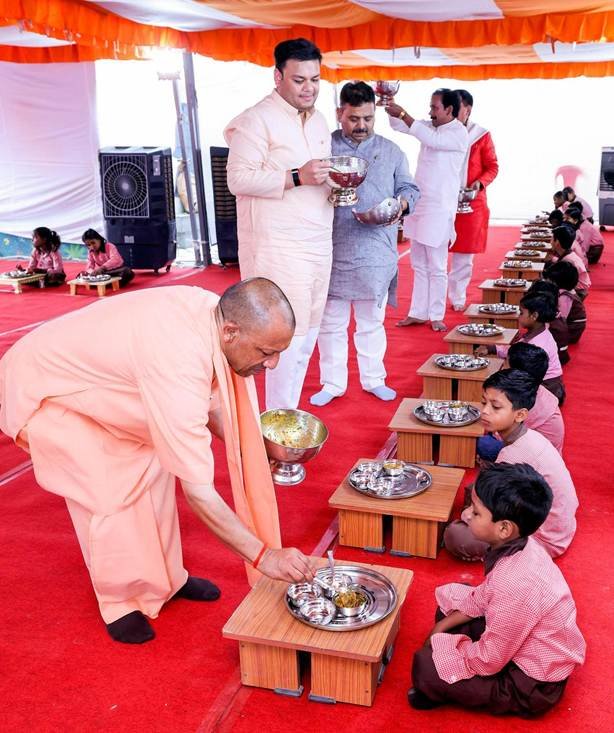
A Statewide Mission to Ensure 100% Enrollment
Uttar Pradesh Chief Minister Yogi Adityanath has intensified efforts to eliminate school dropouts across the state, positioning education as the backbone of social and economic transformation. Launching the ‘School Chalo Abhiyan’ from Varanasi, the Chief Minister emphasized that achieving a zero-dropout rate is no longer just a policy goal but a societal responsibility that requires participation from every section of society.
The campaign aims to ensure that every child in the state is enrolled in school and receives quality education. Over the years, Uttar Pradesh has made significant progress in reducing dropout rates, bringing them down from 19% before 2017 to approximately 3% today. This improvement highlights the impact of consistent policy interventions, infrastructure development, and targeted welfare schemes.
Major Improvements in Education Infrastructure and Accessibility
The state government has invested over ₹80,000 crore in strengthening the education system, focusing on both infrastructure and accessibility. Schools across Uttar Pradesh have witnessed notable upgrades, including the construction of clean classrooms, separate toilets for boys and girls, access to drinking water, and improved learning environments. These changes have addressed one of the key reasons behind school dropouts in earlier years.
Additionally, initiatives such as free distribution of uniforms, textbooks, and financial support through schemes like direct benefit transfers have reduced the financial burden on families. This has encouraged higher enrollment rates and improved attendance among students, particularly in rural and economically weaker sections.
The government has also focused on qualitative improvements in education through programs like ‘Operation Kayakalp’ and ‘Operation Nipun’, which aim to enhance learning outcomes and create a more engaging educational environment. These initiatives are designed to ensure that children not only attend school but also receive meaningful and skill-oriented education.
Role of Teachers and Community Participation
A key highlight of the Chief Minister’s address was the emphasis on the role of teachers and society in achieving the zero-dropout target. Teachers have been urged to actively identify children who are not attending school and bring them back into the education system. The government has also encouraged educators to adopt innovative teaching methods, including storytelling, activities, and practical learning techniques, to make education more engaging.
Beyond teachers, Yogi Adityanath called upon parents, local communities, and social organizations to contribute to this mission. He stressed that education is not solely the responsibility of the government but a collective duty that determines the future of society. Ensuring that no child is left out of school requires awareness, accountability, and consistent efforts at the grassroots level.
Transformational Impact Since 2017
The transformation in Uttar Pradesh’s education sector since 2017 has been significant. Earlier, many children dropped out due to poor infrastructure, lack of basic facilities, and limited awareness about the importance of education. Schools often lacked toilets, clean drinking water, and adequate teaching resources, which discouraged attendance.
Today, the scenario has changed considerably. With improved facilities and policy-driven initiatives, schools are becoming more inclusive and student-friendly. The reduction in dropout rates reflects a broader shift towards prioritizing education as a key driver of development.
The government’s focus on data-driven decision-making has also played a crucial role. By identifying regions with higher dropout rates and addressing specific challenges, authorities have been able to implement targeted interventions that yield measurable results.
Focus on Skill-Based and Holistic Education
Another important aspect of the state’s education strategy is the shift from rote learning to skill-based education. The Chief Minister highlighted the need to equip students with practical knowledge and skills that can enhance their employability and overall development.
By integrating modern teaching techniques and focusing on conceptual understanding, the education system aims to prepare students for real-world challenges. This approach aligns with the broader vision of creating a skilled and capable workforce that can contribute to economic growth.
Challenges and the Road Ahead
While the progress made so far is commendable, achieving a zero-dropout rate remains a challenging task. Factors such as economic constraints, social barriers, and migration continue to impact school attendance in certain areas.
However, with sustained efforts, community involvement, and continued policy support, the goal of universal education appears achievable. The government’s commitment to improving infrastructure, enhancing teacher training, and expanding welfare schemes will play a crucial role in addressing these challenges.
The ‘School Chalo Abhiyan’ serves as a reminder that education is a fundamental right and a powerful tool for social transformation. By ensuring that every child has access to quality education, Uttar Pradesh is laying the foundation for a more inclusive and prosperous future.
Follow for more updates regarding business related news in newsnownation.com
