Understanding the SIR Controversy and Political Fallout
The Special Intensive Revision (SIR) of electoral rolls in West Bengal has emerged as one of the most contentious political issues ahead of the 2026 Assembly elections. What was introduced as an administrative exercise to clean up voter lists has now escalated into a full-scale political confrontation between the ruling Trinamool Congress (TMC), the Election Commission of India (ECI), and the Bharatiya Janata Party (BJP).
The SIR process, designed to update electoral rolls by removing duplicate, deceased, or ineligible voters while adding new eligible ones, is a standard procedure. However, in West Bengal, the scale and impact of this revision have triggered serious concerns about transparency, fairness, and political intent.
As per reports and political claims, lakhs of voters have been removed from the electoral rolls during this process. The controversy intensified when allegations surfaced that a significant portion of these deletions disproportionately affected minority communities and marginalized groups.
West Bengal Chief Minister Mamata Banerjee has strongly criticized the SIR exercise, calling it a “scam” and alleging that it is a deliberate attempt to manipulate voter data in favor of the BJP. She claimed that millions of names have been removed, raising serious questions about the integrity of the electoral process.
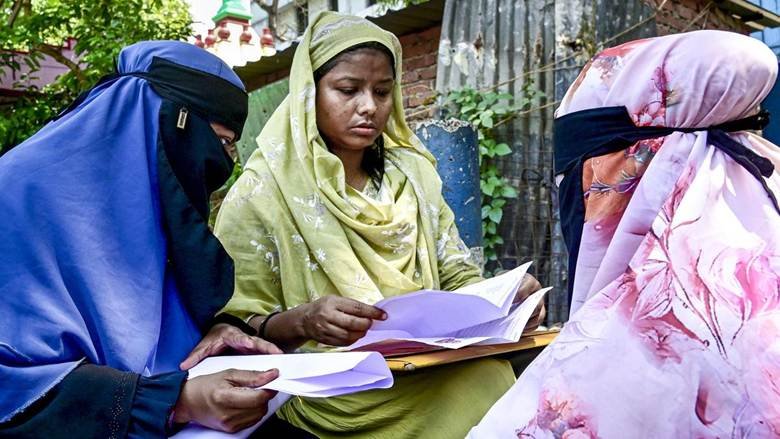
The situation further escalated when reports indicated that even individuals with valid identity documents such as Aadhaar, PAN cards, and passports were excluded due to documentation discrepancies, particularly related to parental records. This has raised concerns about procedural rigidity and the potential disenfranchisement of legitimate voters.
The controversy has also reached the judicial domain, with the Supreme Court being informed that a significant percentage of those removed from the voter list remain excluded even after adjudication processes. This has added another layer of complexity to the issue, highlighting systemic challenges in resolving voter grievances.
Politically, the SIR row has overshadowed traditional election narratives such as development, welfare schemes, and governance. Instead, the debate has shifted to electoral integrity, voter rights, and institutional accountability.
The TMC has accused the central government and the ECI of collusion, alleging that the voter revision process is being used as a tool to influence election outcomes. On the other hand, the BJP has dismissed these claims, maintaining that the SIR exercise is necessary to ensure fair and accurate voter lists.
Adding to the tension, both TMC and BJP have filed multiple complaints against each other with the Election Commission, accusing each other of violating the Model Code of Conduct and engaging in unethical practices.
The timing of the controversy is crucial, as West Bengal is set to go to polls in April 2026 to elect representatives for all 294 assembly seats. With over 67 million registered voters, even minor discrepancies in the electoral roll can significantly impact the election outcome.
Beyond political rhetoric, the SIR controversy raises fundamental questions about the balance between administrative efficiency and democratic inclusivity. While updating voter lists is essential for maintaining electoral integrity, the process must ensure that no eligible voter is unfairly excluded.
The issue also highlights the challenges of documentation in a diverse country like India, where many citizens may lack comprehensive records, especially older generations or those from marginalized backgrounds. The reliance on strict documentation criteria may inadvertently exclude genuine voters.
As the elections approach, the SIR controversy is expected to remain a central issue in West Bengal’s political landscape. It has not only intensified the rivalry between major political parties but also brought the role of constitutional institutions under scrutiny.
Ultimately, the credibility of the electoral process depends on transparency, fairness, and public trust. How the Election Commission addresses the concerns raised during the SIR exercise will play a critical role in shaping voter confidence and the overall democratic process in the state.
For now, the SIR row stands as a reminder that electoral reforms, while necessary, must be implemented with sensitivity and accountability to uphold the democratic rights of every citizen.
Follow for more updates regarding business related news on newsnownation.com.
