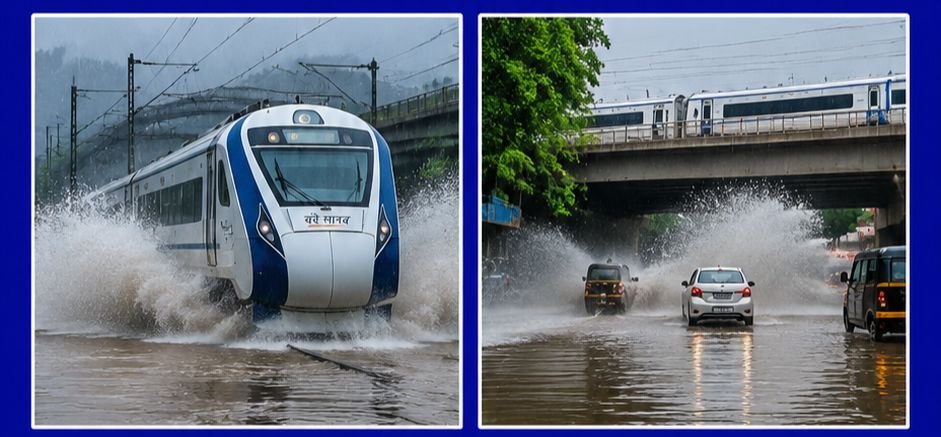
A dramatic video reportedly showing a Vande Bharat Express moving through heavily waterlogged railway tracks in Mumbai has captured widespread attention on social media. The footage, said to have been recorded near Kanjur Marg, shows the train travelling through a section of railway track covered with rainwater while large sprays of water rise on both sides.
The viral video emerged as Mumbai faced intense monsoon rainfall and widespread waterlogging across several parts of the city. Roads, low-lying neighbourhoods and sections of the transport network were affected by the heavy downpour, creating difficulties for commuters and disrupting normal movement in multiple areas.
The striking footage of the Vande Bharat Express quickly became one of the most discussed visuals linked to the latest spell of Mumbai rain. Social media users shared the clip widely, with many commenting on the train’s movement through the waterlogged section. At the same time, the video also renewed discussion about Mumbai’s recurring monsoon challenges and the pressure placed on urban infrastructure during periods of intense rainfall.
Viral Vande Bharat Video Draws Attention Across Social Media
The video reportedly shows the Vande Bharat Express moving steadily through accumulated rainwater on the railway tracks near Kanjur Marg. As the train passes through the flooded stretch, water is seen spraying dramatically around it. The unusual visual attracted immediate attention and led to a wave of reactions across social media platforms.
Many users focused on the performance and appearance of the modern train as it travelled through the waterlogged area. Others viewed the footage as another reminder of the scale of the rainfall affecting Mumbai. The combination of a premium semi-high-speed train and heavily flooded tracks made the video particularly striking.
However, questions have also been raised regarding the authenticity of the viral clip. While several media reports have described it as footage of a Vande Bharat Express travelling through waterlogged tracks in Mumbai, other reports have highlighted conflicting claims about whether the video is genuine or digitally generated. Because of these questions, the exact circumstances surrounding the footage should be treated with caution unless railway authorities provide a clear and final confirmation.
The discussion surrounding the clip demonstrates how quickly dramatic weather-related videos can spread online. Viral content often reaches millions of users before all details are independently verified, making careful reporting especially important.
Heavy Mumbai Rain Causes Widespread Waterlogging
The viral video appeared during a period of severe monsoon weather in Mumbai. Heavy rainfall caused waterlogging in several parts of the city and created major challenges for daily commuters. Low-lying roads were particularly vulnerable as rainwater accumulated and slowed traffic.
Mumbai’s monsoon season frequently tests the city’s drainage, road and transport infrastructure. When intense rainfall falls within a short period, water can collect rapidly in areas with limited drainage capacity. This can lead to traffic congestion, diversions and delays across the city.
The latest spell of rain once again highlighted the dependence of millions of residents on Mumbai’s transport network. Local trains, buses, roads and other public transport services play a crucial role in the city’s daily functioning. Any disruption can have a significant impact on office workers, students, businesses and essential services.
Reports from the city indicated that heavy rain affected road movement and caused waterlogging in several locations. Some transport services faced delays and diversions, although railway operations reportedly continued in many areas despite difficult weather conditions.
Vande Bharat Express Remains at the Centre of Public Interest
The Vande Bharat Express has become one of the most recognised trains in India. Its modern design, improved passenger facilities and faster travel experience have made it a major part of the country’s railway modernisation programme.
Whenever a Vande Bharat train appears in an unusual situation, images and videos often attract significant online attention. The latest viral clip from Mumbai followed the same pattern. The visual of the train moving through accumulated water generated discussion not only about the railway service but also about the broader impact of extreme monsoon conditions.
For many social media users, the video appeared to represent the ability of transport services to continue operating during challenging weather. For others, the waterlogged tracks raised questions about infrastructure resilience and the need for stronger flood-management systems.
Railway safety during heavy rain depends on several operational factors, including track conditions, water levels, signalling systems and official safety assessments. A dramatic social media video alone cannot establish whether a particular railway section was safe or unsafe. Such judgments remain the responsibility of trained railway authorities and operational teams.
Mumbai’s Monsoon Infrastructure Faces Renewed Scrutiny
Mumbai’s annual monsoon regularly brings the issue of urban infrastructure into public debate. The city’s high population density, extensive construction and complex transport system make flood management a major challenge.
Waterlogging can affect economic activity by delaying employees, disrupting deliveries and reducing customer movement. Small businesses, retail outlets, offices and service providers can all face operational difficulties when roads become difficult to access.
The latest rainfall has again raised questions about long-term urban planning. Drainage upgrades, regular maintenance, improved flood monitoring and better coordination between civic and transport authorities remain important for reducing the impact of severe weather.
Climate variability is also increasing attention on the ability of major cities to prepare for intense rainfall events. Urban infrastructure must be capable of responding not only to average seasonal rainfall but also to short periods of extremely heavy rain.
Mumbai’s economic importance makes transport resilience particularly significant. As one of India’s largest commercial centres, the city depends on the continuous movement of people and goods. Weather-related disruption can therefore have consequences beyond local commuting.
Viral Video Highlights the Power and Risk of Social Media News
The rapid spread of the Vande Bharat video also shows how social media has changed the way people receive breaking news. A short video can reach a large audience within minutes and shape public discussion before complete information becomes available.
This speed can be useful during emergencies because residents can quickly share information about flooded roads, transport disruptions and dangerous locations. However, the same speed can also spread incomplete or unverified claims.
The uncertainty surrounding the authenticity of the viral Vande Bharat footage is an important reminder that viewers should check information before accepting every widely shared video as confirmed fact. Artificial intelligence and advanced editing tools have made realistic digital content easier to create, increasing the importance of verification.
News organisations, authorities and social media users all have a role in preventing misinformation. Clear official communication can help resolve confusion, while responsible users can avoid sharing uncertain claims as established facts.
The viral Vande Bharat Express video has become one of the most discussed visuals from Mumbai’s latest spell of heavy monsoon rain. Whether viewed as a striking railway moment or as a reminder of the city’s waterlogging challenges, the footage has generated significant public attention.
The wider story remains Mumbai’s continuing struggle with intense monsoon conditions and the need for resilient transport and urban infrastructure. As heavy rainfall affects roads, public transport and everyday business activity, effective planning and timely information remain essential.
The incident also underlines the importance of verifying viral content before drawing conclusions. Dramatic footage can attract immediate attention, but accurate reporting requires confirmed facts, reliable sources and careful context.
Follow for more updates regarding business-related news on newsnownation.com.
