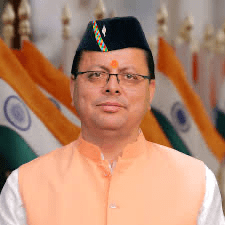
The Uttarakhand government, led by Pushkar Singh Dhami, has proposed the Uniform Civil Code (UCC) through the Uniform Civil Code, Uttarakhand 2024 Bill. If approved in the Assembly and signed by the Governor, this bill will make Uttarakhand the first state to implement the UCC, with Goa currently having it under Portuguese rule.
The BJP, fulfilling its 2022 election promise, formed a committee under the Dhami government to gather over 2.5 lakh suggestions and draft the UCC accordingly. The Central Government, awaiting the Law Commission’s report, is also considering UCC implementation.
The proposed UCC in Uttarakhand encompasses various aspects, including regulations on live-in relationships. If enacted, it will also ban polygamy and apply to everyone except Scheduled Tribe (ST) members.
Live-in relationship regulations include mandatory registration at the district registrar, declaration before the registrar if the relationship ends, and parental consent for those below 21. Non-compliance may result in a three-month jail term or a fine of Rs 10,000 after a month of undisclosed cohabitation.
The information submitted for registration will be sent to the relevant police station for verification. Providing false information during registration may lead to a three-month jail term or a Rs 25,000 fine.
Unregistered or deemed invalid are live-in relationships involving familial ties or blood relations between partners. Additionally, if either partner is a minor, the relationship is considered invalid. If one partner is already married and engages in a live-in relationship, it will be deemed unlawful.
The validity of a live-in relationship hinges on mutual consent, making deceit, coercion, or intimidation grounds for invalidation. Children born during such relationships are entitled to legal recognition, and if the relationship dissolves, the woman can seek alimony through the family court.
To conclude a live-in relationship, either partner must declare their intention to terminate the relationship. For those below 21, the registrar requires information from parents or guardians.
It’s worth noting that the Supreme Court, in a 2013 ruling, granted legal recognition to live-in relationships after adulthood. However, illegalities may arise if a married individual engages in a live-in relationship without obtaining a divorce. A 2010 Supreme Court case outlined guidelines for recognizing live-in relationships, emphasizing the need for couples to present themselves publicly as a couple.
This proposed UCC in Uttarakhand aims to regulate various aspects of personal law, ensuring legal clarity and uniformity. The bill is currently under consideration, awaiting legislative approval and gubernatorial assent to become law. If implemented, it could set a precedent for other states in India.

 and Live-In Relationship Regulations)