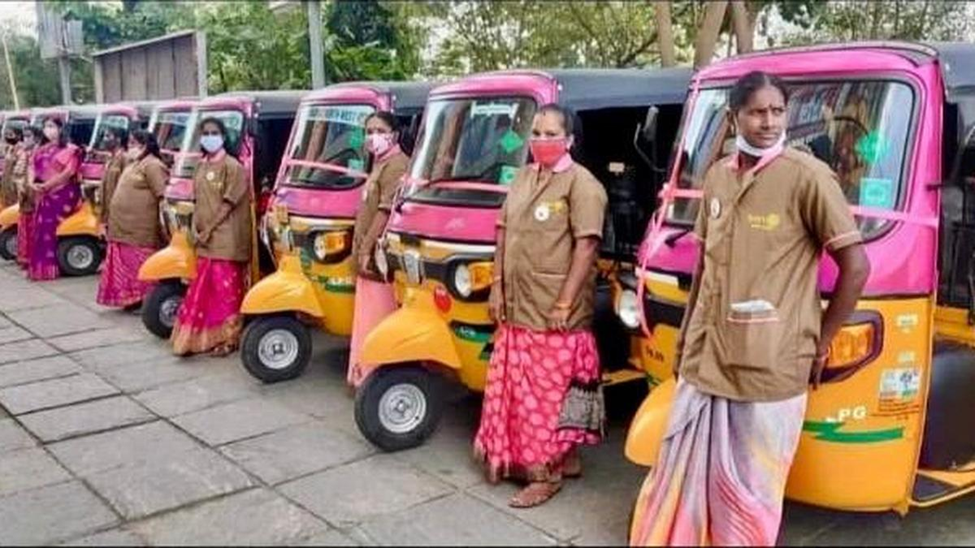
Women-Centric Transport Initiative Gains Momentum
Chennai is witnessing a progressive step toward women empowerment through a unique initiative popularly referred to as the “Pink Route.” This initiative focuses on enhancing safety, accessibility and employment opportunities for women in public transport, reflecting a broader effort to create inclusive urban mobility systems.
The Pink Route concept revolves around deploying buses operated predominantly by women staff, including drivers and conductors, while also ensuring a safer commuting environment for female passengers. The initiative has gained attention for addressing two critical issues simultaneously — women’s safety in public spaces and their participation in the workforce.
Public transport has long been a lifeline for urban populations, but concerns around safety and comfort have often discouraged many women from fully utilizing these services. The Pink Route seeks to change this narrative by creating a space where women feel secure, respected and encouraged to travel freely.
The initiative is also opening doors for women to take up roles that were traditionally dominated by men. By training and employing women as drivers and conductors, the program is breaking stereotypes and creating new employment opportunities.
Women participating in the initiative have shared that the experience has been empowering both financially and socially. Many of them see this as more than just a job — it is a step toward independence and self-confidence.
The buses operating on these routes are designed to ensure a comfortable environment, with measures such as better lighting, clear visibility and a focus on passenger safety. These features contribute to building trust among commuters and encourage more women to rely on public transport.
Passengers have responded positively to the initiative, appreciating the sense of safety and the professional conduct of the staff. Many have noted that such initiatives are essential in creating a more inclusive and supportive public infrastructure.
The Pink Route also aligns with broader government efforts to promote women’s participation in various sectors. By integrating employment opportunities with public service, the initiative is contributing to both economic and social development.
Urban planners and policymakers have highlighted that such initiatives are crucial for sustainable city development. A city can only truly progress when its infrastructure is inclusive and accessible to all sections of society.
In addition to improving safety, the initiative is also helping in changing societal perceptions. Seeing women confidently operating buses and managing public transport systems challenges long-standing stereotypes and inspires others to pursue similar paths.
The success of the Pink Route could pave the way for similar initiatives in other cities across India. As more states explore ways to enhance women’s safety and employment, such models can serve as a blueprint for effective implementation.
Experts believe that empowering women through public infrastructure not only benefits individuals but also strengthens communities as a whole. When women feel safe and have access to employment opportunities, it leads to broader economic growth and social stability.
The initiative also highlights the importance of collaboration between government bodies, transport authorities and local communities. Such partnerships are essential for ensuring that policies are effectively implemented and deliver tangible results.
As cities continue to grow and evolve, the need for inclusive and gender-sensitive planning becomes increasingly important. The Pink Route is a step in this direction, demonstrating how thoughtful policies can bring meaningful change.
While challenges such as scalability and long-term sustainability remain, the early success of the initiative offers hope and inspiration. Continuous support, monitoring and improvement will be key to ensuring that the program achieves its full potential.
The Pink Route stands as a symbol of progress, showing how targeted initiatives can address multiple challenges at once. By focusing on safety, employment and empowerment, it represents a holistic approach to urban development.
As more women step into roles of responsibility and visibility, initiatives like these contribute to building a more equal and inclusive society. The journey toward empowerment is ongoing, but each step brings the country closer to a future where opportunities are accessible to all.
Follow for more updates regarding business related news in newsnownation.com.
