Tamil Nadu and West Bengal Set to Receive New Governors Ahead of Poll Season
A significant administrative reshuffle has been announced in India’s gubernatorial positions, with major changes affecting two politically important states — Tamil Nadu and West Bengal — just days before the announcement of election schedules. The move comes as part of a broader restructuring of governors and lieutenant governors across several states and Union Territories by the President of India.
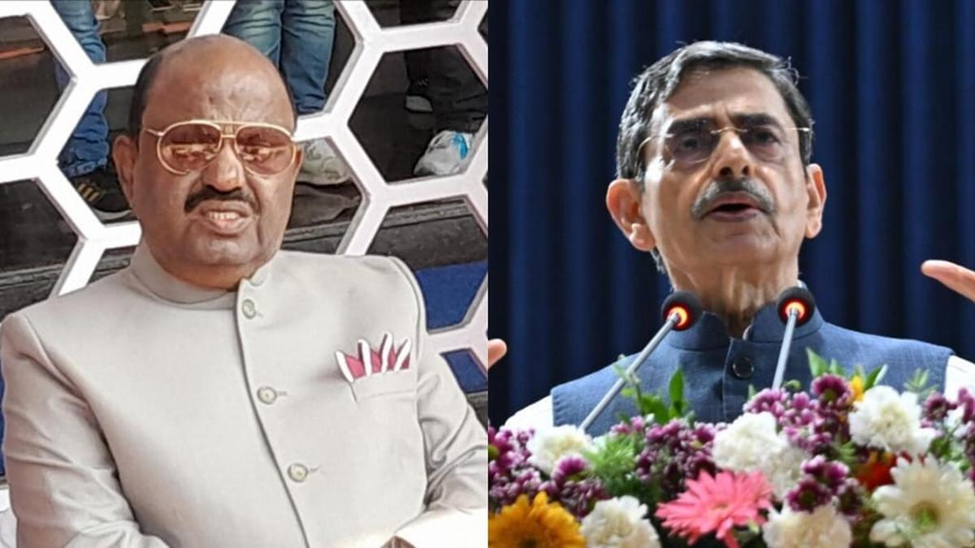
As part of this development, R. N. Ravi, who had been serving as the Governor of Tamil Nadu since 2021, has been appointed as the new Governor of West Bengal following the resignation of C. V. Ananda Bose. The change in leadership at Raj Bhavan in West Bengal comes at a sensitive time when the state is preparing for upcoming elections.
The resignation of C. V. Ananda Bose, a retired Indian Administrative Service officer who assumed office in November 2022, triggered the reshuffle in the state’s gubernatorial office. Bose stepped down before completing his tenure, prompting the central government to appoint a successor immediately to ensure administrative continuity in the poll-bound state.
With the appointment of R. N. Ravi in West Bengal, Tamil Nadu will now see a change in its gubernatorial leadership. Rajendra Arlekar, currently serving as the Governor of Kerala, has been given additional charge as the Governor of Tamil Nadu until further arrangements are made.
The timing of the reshuffle is politically significant. West Bengal is preparing for a crucial electoral cycle, and administrative changes in the governor’s office often attract attention due to the constitutional role governors play in state governance. Governors are responsible for overseeing constitutional processes, ensuring that governments function within the legal framework, and representing the President at the state level.
The governor also plays a key role in legislative procedures, including summoning state assemblies, approving bills, and managing constitutional crises when they arise. In politically sensitive periods such as election cycles, the governor’s office becomes even more important in maintaining administrative stability and ensuring smooth functioning of democratic institutions.
R. N. Ravi is a former Indian Police Service officer and an experienced administrator who has served in several key positions within the national security and intelligence framework. Prior to becoming Governor of Tamil Nadu, he served as the Governor of Nagaland and also played a role in negotiations related to the Naga peace talks.
During his tenure in Tamil Nadu, Ravi was involved in several high-profile political and administrative debates, including disagreements with the state government over legislative and constitutional matters. His transfer to West Bengal is therefore expected to draw attention in political and administrative circles.
The broader reshuffle announced by the central government also includes changes in several other states and Union Territories. The move is part of periodic adjustments made by the central administration to ensure effective governance and administrative oversight across the country.
Political analysts believe that such appointments often carry strategic importance, especially when states are approaching elections or when administrative transitions are necessary. While the governor’s role is constitutionally non-partisan, their presence often becomes central to discussions surrounding federal relations between the central government and state governments.
In West Bengal, the new appointment comes at a time when political activity is intensifying ahead of the state’s upcoming elections. The Election Commission is also preparing for the electoral process, which typically involves reviewing electoral rolls and assessing administrative readiness.
For Tamil Nadu, the additional charge arrangement ensures that administrative continuity remains intact until a permanent appointment is made. The state has witnessed several constitutional interactions between the governor’s office and the state government in recent years, making the position particularly significant in the current political environment.
The reshuffle of gubernatorial positions reflects the evolving administrative framework of Indian federal governance. As states prepare for elections and political transitions, such institutional appointments become key elements in maintaining constitutional balance and administrative stability.
With the new appointments now confirmed, both Tamil Nadu and West Bengal are expected to witness changes in their Raj Bhavan leadership structures while continuing to prepare for the next phase of their political and administrative developments.
For more updates regarding business, governance and national developments, follow the latest news at https://newsnownation.com/
