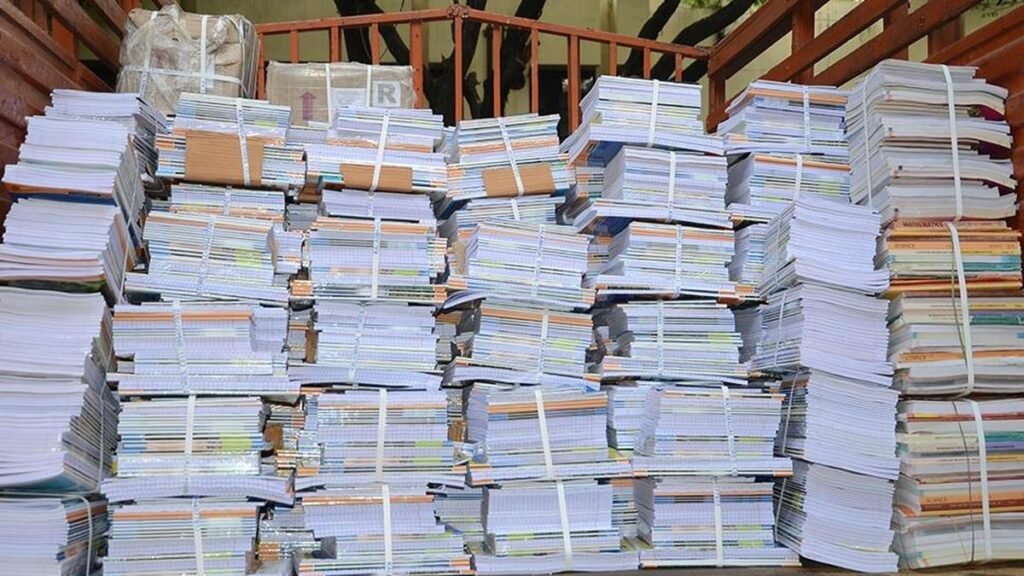
The Supreme Court of India has taken strict suo motu cognizance of a newly introduced Class 8 Social Science textbook published by the National Council of Educational Research and Training (NCERT). The controversy centers around a specific chapter that discusses “corruption in the judiciary,” a subject that has drawn severe reprimand from the highest echelons of the legal system. Chief Justice of India Surya Kant, presiding over a three-judge bench, termed the inclusion a “calculated measure” and ordered immediate corrective actions, prompting the NCERT to withdraw the publication and issue a formal apology.
The Core of the Controversy
The textbook in question, titled “Exploring Society: India and Beyond, Vol II,” was slated for the upcoming academic session. Chapter 4, designated as ‘The Role of the Judiciary in Our Society,’ departed from previous editions that primarily focused on the hierarchy of courts and the fundamental concepts of justice. Instead, the revised text addressed systemic challenges, explicitly mentioning corruption at various levels of the judiciary and the massive backlog of cases.
The chapter provided data on case pendency, citing approximately 81,000 cases in the Supreme Court, 6.24 million in High Courts, and over 47 million in district and subordinate courts. It further referenced the Centralised Public Grievance Redress and Monitoring System (CPGRAMS), noting that over 1,600 complaints regarding judicial conduct were received between 2017 and 2021. The text also quoted a July 2025 speech by former Chief Justice B.R. Gavai regarding instances of misconduct within the judiciary and the need for transparent resolution to maintain public confidence.
Legal Backlash and Court Proceedings
The issue was brought to the apex court’s attention on Wednesday by senior advocates Kapil Sibal and Abhishek Manu Singhvi. Representing the concerns of the Bar, the advocates argued that teaching impressionable young minds about judicial corruption without providing a balanced view of other democratic pillars is highly objectionable. Singhvi highlighted the selective targeting, questioning why the textbook omitted discussions on corruption within the executive, bureaucracy, or corporate sectors.
Chief Justice Surya Kant expressed grave concern, stating that he had received numerous communications from High Court judges and judicial officers who were deeply perturbed by the content. “I will not allow anyone on earth to defame the institution or taint its integrity. Whosoever and however high it may be, I know how to deal with it,” the Chief Justice remarked during the proceedings.
Justice Joymalya Bagchi, who is part of the bench along with Justice Vipul M. Pancholi, observed that the narrative in the textbook undermined the constitutional integrity and the basic structure of the republic. The bench registered the suo motu case titled ‘In Re: Social Science Textbook for Grade-8 (Part 2) published by NCERT and ancillary issues’ and scheduled formal hearings for February 26, 2026. Furthermore, the court directed the central government to ensure that digital PDF copies of the textbook are immediately removed from all online platforms.
NCERT’s Response and Remedial Measures
Facing intense judicial scrutiny, the NCERT swiftly executed damage control. By Wednesday evening, the educational body halted the distribution of the textbook and removed the e-version from its official website. In a public statement, the NCERT expressed regret, characterizing the inclusion of the controversial material as an “error of judgement” that was “purely unintentional.”
The council clarified that it holds the judiciary in the highest esteem as the protector of fundamental rights and the upholder of the Indian Constitution. “There is no intent to question or diminish the authority of any constitutional body,” the statement read. The NCERT confirmed that the chapter will be thoroughly reviewed and rewritten in consultation with appropriate legal authorities before being reintroduced for the 2026-27 academic session.
Implications for Educational Policy
This unprecedented clash highlights the delicate balance educational boards must maintain when drafting curricula that touch upon active democratic institutions. While transparency and systemic challenges are critical components of civic education, the Supreme Court’s reaction underscores the necessity for nuanced presentation. Moving forward, the government and autonomous educational bodies will likely implement stricter vetting protocols, particularly involving the Ministry of Law, to prevent institutional disparagement in academic materials.
Stay updated on this developing legal and educational narrative at NewsNowNation.com.
