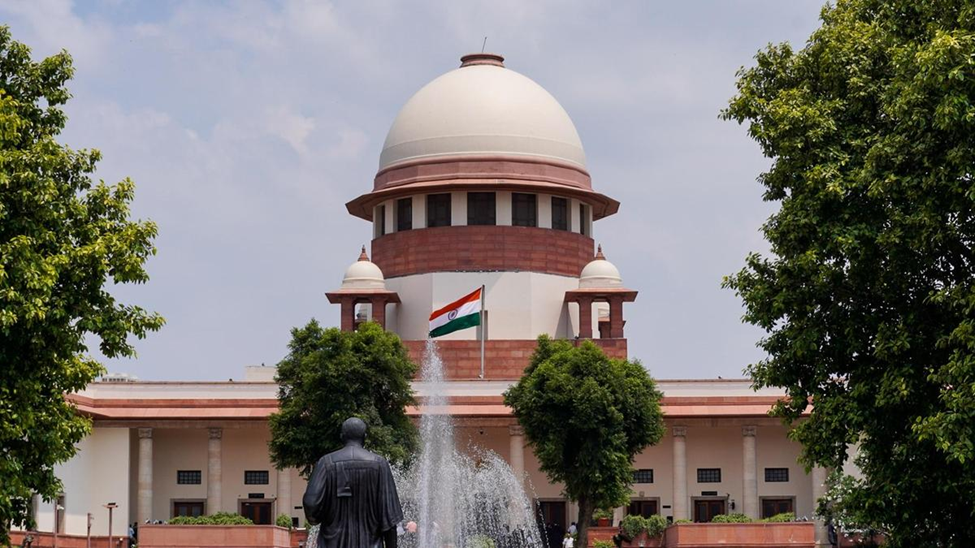
Legal Interpretation and Constitutional Framework
The Supreme Court has reaffirmed that Scheduled Caste (SC) status in India is currently limited to individuals belonging to Hindu, Sikh and Buddhist communities, as per the provisions of the Constitution (Scheduled Castes) Order, 1950. The observation came during recent proceedings where the court examined petitions seeking extension of SC status to individuals from other religions.
The issue has been a subject of legal and political debate for decades, with several petitions filed requesting that SC status be made religion-neutral. Petitioners have argued that caste-based discrimination exists across religions and therefore the benefits associated with Scheduled Caste status should not be restricted to specific religious groups.
However, the Supreme Court noted that the current legal framework clearly defines eligibility based on religion, and any change to this structure would require legislative action rather than judicial intervention. The court emphasized that it is bound by the constitutional provisions and existing laws while interpreting such matters.
The Constitution (Scheduled Castes) Order, 1950, originally restricted SC status to Hindus. It was later amended to include Sikhs in 1956 and Buddhists in 1990. Despite these amendments, other religious communities such as Christians and Muslims have not been included under the Scheduled Caste category.
During the proceedings, the court observed that the matter involves complex questions related to social justice, historical discrimination and policy considerations. It highlighted that extending SC status beyond the currently defined groups would require a comprehensive examination by the government.
The bench also pointed out that such decisions involve broader socio-political implications and cannot be addressed solely through judicial interpretation. The court reiterated that it cannot alter the scope of the law without a clear legislative mandate.
The issue of Scheduled Caste status is closely linked to affirmative action policies in India, including reservations in education, employment and political representation. These measures are designed to address historical disadvantages faced by certain communities due to caste-based discrimination.
Supporters of extending SC status argue that discrimination based on caste continues to exist even after conversion to other religions. They believe that denying SC benefits to such individuals creates inequality and limits access to opportunities intended for socially disadvantaged groups.
On the other hand, some stakeholders argue that the existing framework is based on historical and constitutional considerations, and any changes should be approached carefully to avoid unintended consequences.
The central government has previously indicated that it is examining the issue, and a commission has been set up to study the matter in detail. The findings of such studies could play a crucial role in shaping future policy decisions.
The Supreme Court’s recent observation reinforces the current legal position while leaving the door open for legislative action. It underscores the principle that courts interpret the law, but changes to the law must come from the legislature.
The case also highlights the ongoing challenges in balancing social justice with constitutional principles. As India continues to evolve, questions related to equality, representation and affirmative action remain central to public discourse.
The court’s stance reflects a cautious approach, ensuring that any significant policy changes are made through proper legislative processes. This approach aims to maintain the integrity of the constitutional framework while allowing room for democratic decision-making.
The debate over SC status is not just a legal issue but also a social and political one, involving multiple stakeholders including policymakers, community leaders and civil society organizations.
As discussions continue, the outcome will have far-reaching implications for social justice policies in India. Any decision to expand or modify the criteria for SC status will require careful consideration of historical context, current realities and future implications.
The Supreme Court’s reaffirmation of the existing framework provides clarity on the current legal position while highlighting the need for a broader policy discussion.
The matter is expected to remain a topic of debate in the coming months, with stakeholders closely watching developments and potential government action.
Follow for more updates regarding business related news in newsnownation.com.
