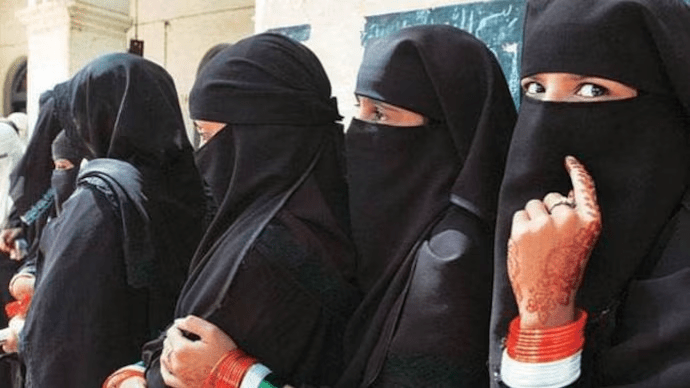
In a landmark decision on Wednesday, the Supreme Court of India affirmed that a divorced Muslim woman is entitled to maintenance from her former husband under Section 125 of the Code of Criminal Procedure (CrPC). The ruling, delivered by a bench comprising Justices BV Nagarathna and Augustine George Masih, clarifies the application of secular law in matters of maintenance for divorced Muslim women, emphasizing that the Muslim Women (Protection of Rights on Divorce) Act 1986 will not prevail over the provisions of the CrPC.
Case Background
The ruling came in response to a petition filed by a man challenging a directive to pay interim maintenance to his divorced wife under Section 125 CrPC. The man argued that the Muslim Women Act 1986 should be applied instead. However, the bench dismissed the petition, underscoring the applicability of the secular law over the specific provisions of the 1986 Act.
Key Highlights of the Ruling
- Maintenance Under Section 125 CrPC:
- The Supreme Court reiterated that Section 125 CrPC, which mandates maintenance for wives, children, and parents, is a secular provision applicable to all citizens irrespective of their religion. This provision ensures that a divorced Muslim woman can claim maintenance from her former husband.
- The Supreme Court reiterated that Section 125 CrPC, which mandates maintenance for wives, children, and parents, is a secular provision applicable to all citizens irrespective of their religion. This provision ensures that a divorced Muslim woman can claim maintenance from her former husband.
- Muslim Women Act 1986 vs. CrPC:
- The bench clarified that the Muslim Women (Protection of Rights on Divorce) Act 1986 does not supersede the secular provisions of the CrPC. Thus, a divorced Muslim woman can seek maintenance under Section 125 CrPC, even if the 1986 Act provides for other remedies.
- The bench clarified that the Muslim Women (Protection of Rights on Divorce) Act 1986 does not supersede the secular provisions of the CrPC. Thus, a divorced Muslim woman can seek maintenance under Section 125 CrPC, even if the 1986 Act provides for other remedies.
- Additional Remedies:
- The court also noted that if a woman gets divorced during the pendency of the application for maintenance, she can additionally take recourse to the 2019 Act, which offers further remedies alongside those available under Section 125 CrPC.
Implications of the Ruling
This ruling holds significant implications for the rights of divorced Muslim women in India. By affirming the application of Section 125 CrPC, the Supreme Court has reinforced the principle of secularism in the legal framework governing maintenance. This ensures that divorced Muslim women have access to maintenance without being limited by religious-specific laws.
The decision also highlights the judiciary’s role in safeguarding the rights of women, providing them with financial security and support post-divorce. It underscores the importance of a uniform legal provision that transcends religious boundaries, promoting equality and justice for all citizens.
Conclusion
The Supreme Court’s ruling on maintenance for divorced Muslim women is a progressive step towards upholding the principles of secularism and gender justice in India. By dismissing the petition that sought to limit maintenance under the Muslim Women Act 1986, the court has affirmed that all women, irrespective of their religion, are entitled to maintenance under the secular provisions of Section 125 CrPC. This landmark decision not only strengthens the legal rights of divorced Muslim women but also sets a precedent for future cases, ensuring that justice prevails above all.
For more updates and detailed analysis, stay tuned to News Now Nation.
Follow us on social media for real-time news updates:

