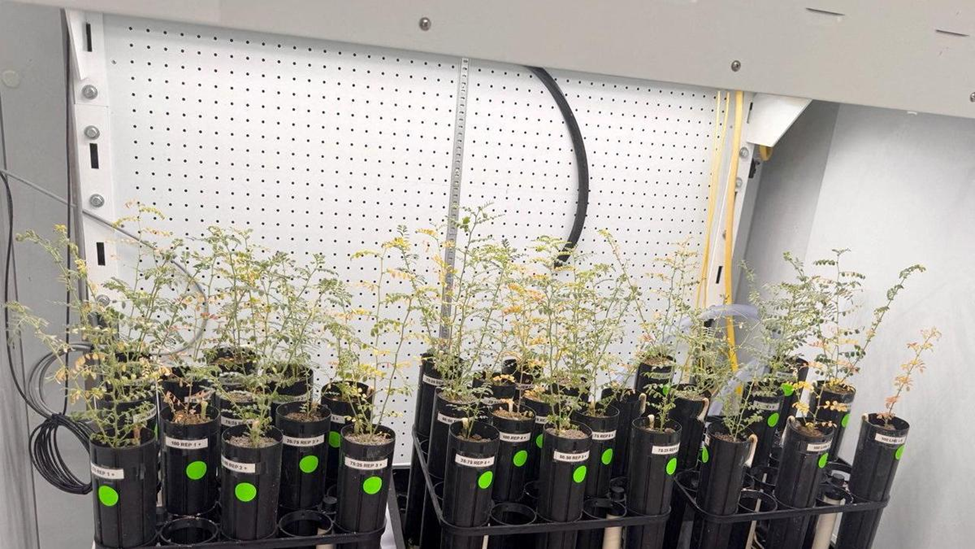
As global space agencies prepare for long-duration missions to the Moon, scientists are exploring one of the most important questions for human survival beyond Earth: how astronauts will produce food in space. In a significant scientific breakthrough, researchers have successfully grown chickpeas in soil designed to simulate lunar conditions, marking a key step toward sustainable agriculture on the Moon.
The experiment represents an important milestone in the emerging field of space farming. As future lunar missions aim to establish long-term human presence on the Moon, the ability to grow food locally will become essential for supporting astronauts and reducing reliance on supplies transported from Earth.
The Challenge of Growing Food in Space
Transporting food from Earth to the Moon is expensive and logistically challenging. Space missions must minimize weight and cargo volume, making it impractical to carry large quantities of food for extended missions. Scientists believe that growing crops directly in extraterrestrial environments could provide a sustainable solution for future lunar bases.
However, agriculture on the Moon presents unique challenges. Unlike Earth’s soil, lunar soil—known as lunar regolith—is composed mainly of crushed rock and dust formed by billions of years of meteorite impacts. It lacks organic matter, microorganisms and nutrients typically found in terrestrial soil. Lunar regolith
These characteristics make it extremely difficult for plants to grow under natural lunar conditions. Researchers have therefore been working to develop methods that can transform this mineral-rich but biologically inactive material into a suitable growing medium for crops.
Chickpeas Chosen for Space Farming Research
In the latest research, scientists selected chickpeas as the experimental crop due to their nutritional value and resilience. Chickpeas are rich in protein, fibre and essential vitamins, making them a valuable food source for astronauts during long-duration space missions. Chickpea
Researchers conducted the experiment in a controlled laboratory environment using simulated lunar soil that mimics the chemical and physical properties of real moon dust. The soil mixture was combined with vermicompost—a nutrient-rich fertilizer produced by earthworms—and beneficial fungi to improve plant growth conditions.
The seeds were planted in several soil mixtures containing different percentages of simulated lunar soil. The results revealed that chickpeas were able to grow successfully in soil containing up to 75 percent lunar simulant mixed with organic material.
Plants grown in these mixtures were able to develop flowers and produce harvestable seeds, demonstrating that crops could potentially be cultivated in lunar environments with appropriate soil conditioning techniques.
The Role of Microorganisms in Plant Growth
One of the most important aspects of the experiment was the use of beneficial fungi that formed symbiotic relationships with the chickpea plants. These microorganisms helped the plants absorb nutrients more efficiently while reducing the uptake of harmful metals present in the simulated lunar soil.
The fungi also improved soil structure by binding loose particles together, making the lunar simulant behave more like Earth soil. This process helped the plants survive under otherwise harsh growing conditions.
Scientists observed that plants grown with fungal treatment survived longer and performed better than those grown without microbial support. This discovery highlights the potential role of microorganisms in enabling agriculture in extraterrestrial environments.
Limitations and Safety Testing
Although the experiment produced promising results, researchers emphasize that several challenges still remain before crops can be safely grown and consumed on the Moon.
One of the major concerns is the presence of heavy metals in lunar soil. Simulated lunar regolith contains elements such as iron and aluminium, which may accumulate in plants during growth. Scientists are currently conducting additional tests to determine whether the chickpeas grown in the experiment are safe for human consumption.
Another challenge involves improving soil fertility. Pure lunar soil lacks organic matter and biological activity, meaning that additional nutrients and microorganisms will likely be required to support sustainable plant growth.
Importance for Future Lunar Missions
The study comes at a time when multiple countries are preparing to return astronauts to the Moon. Programs such as NASA’s Artemis mission and China’s lunar exploration initiatives aim to establish long-term human presence on the lunar surface within the coming decades.
If astronauts are to live and work on the Moon for extended periods, producing food locally will be essential for maintaining a reliable life-support system. Plants could serve multiple functions beyond food production, including generating oxygen and recycling carbon dioxide through photosynthesis.
Scientists believe that research on space agriculture could eventually enable the development of self-sustaining ecosystems on the Moon and even on Mars.
A Step Toward Sustainable Space Exploration
While growing chickpeas in simulated moon soil may seem like a small scientific experiment, it represents an important step toward solving one of the biggest challenges in human space exploration.
The research demonstrates that with the right combination of soil treatments, microorganisms and environmental controls, it may be possible to cultivate crops beyond Earth.
As humanity moves closer to establishing a permanent presence on the Moon, innovations in space agriculture will play a crucial role in supporting astronauts and enabling long-term exploration.
For more updates regarding business, technology and science related news, follow newsnownation.com.
