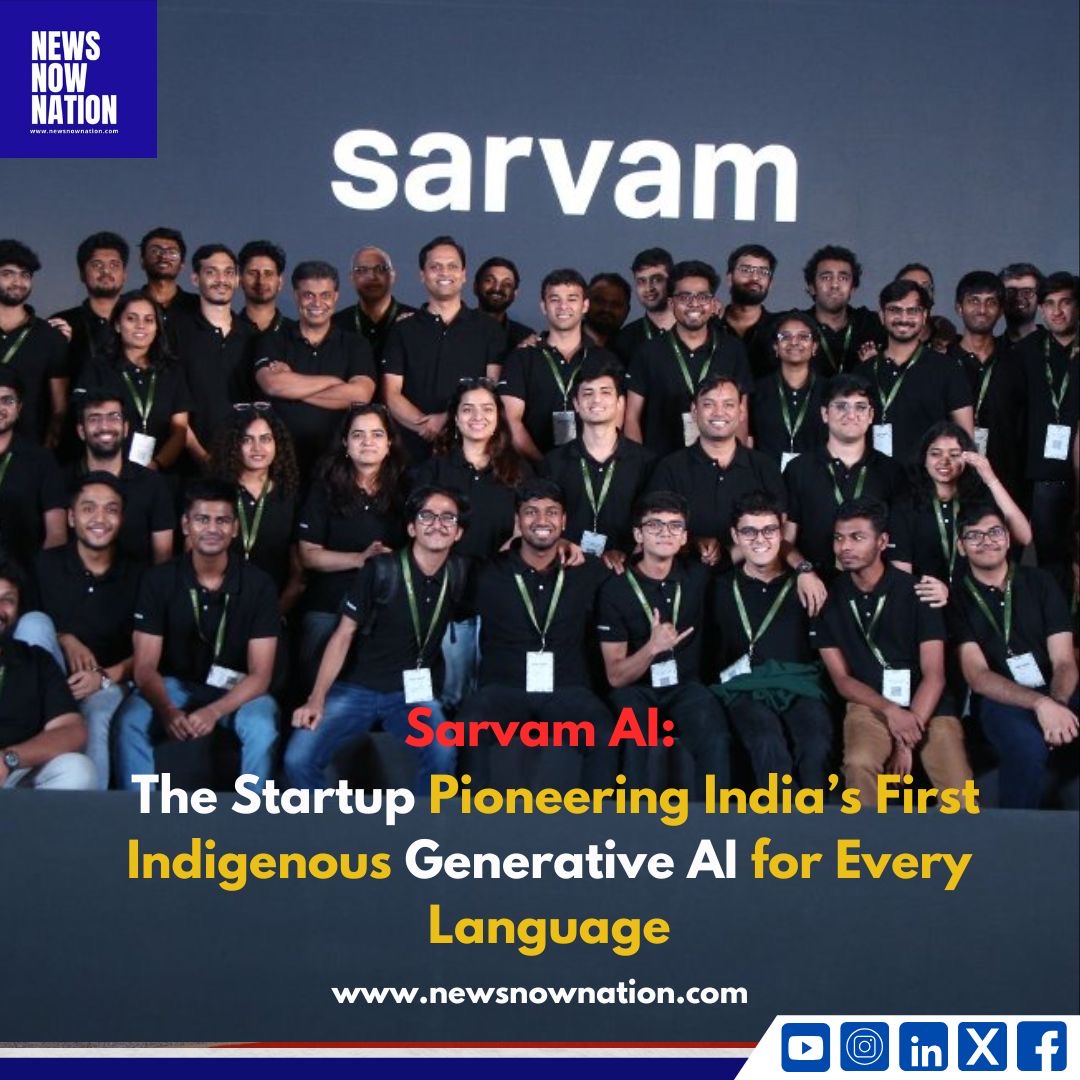
India’s artificial intelligence ecosystem, Sarvam AI, a homegrown startup, is making headlines by developing the country’s first indigenous generative AI model that supports multiple Indian languages. The Bengaluru-based startup is spearheading efforts to bridge the linguistic gap in AI-driven communication, ensuring that cutting-edge technology is accessible to a diverse population across the nation.
Bringing AI to India’s Linguistic Diversity
India, with its 22 officially recognized languages and hundreds of dialects, poses a unique challenge for AI-driven language models. Most global generative AI platforms, such as ChatGPT, Bard, and Claude, primarily focus on English and a few widely spoken languages, leaving a significant portion of India’s population underserved. Sarvam AI aims to change that by creating a model that understands and generates text in multiple Indian languages, making AI more inclusive and accessible.
The startup’s goal is to build an AI ecosystem that caters to local needs, allowing businesses, government agencies, and individuals to interact with AI in their preferred language. From content creation to customer service and even educational tools, Sarvam AI’s platform is expected to revolutionize how Indians engage with AI.
A Deep Tech Focus with Local Roots
Sarvam AI was founded by a team of AI researchers and technology entrepreneurs who recognized the growing need for an India-centric approach to generative AI. The startup has been developing its AI models using vast datasets sourced from Indian languages, ensuring that the AI understands cultural nuances, regional dialects, and linguistic diversity.
Unlike traditional translation-based AI models, which often struggle with contextual accuracy, Sarvam AI is training its model from the ground up with native language inputs. This ensures better accuracy, improved comprehension, and a more natural user experience when interacting in languages like Hindi, Tamil, Bengali, Marathi, Telugu, and others.
Government and Industry Support
The Indian government has been actively promoting initiatives in AI and digital transformation, and startups like Sarvam AI stand to benefit from policies encouraging indigenous technological innovation. Programs such as the Digital India initiative and the National Language Translation Mission align with Sarvam AI’s objectives, providing a supportive ecosystem for growth.
Industry leaders have also taken notice of the startup’s ambitions. Reports suggest that venture capital firms and technology giants are closely monitoring Sarvam AI’s progress, with potential investments on the horizon. As India pushes toward self-reliance in AI and emerging technologies, Sarvam AI’s work could play a crucial role in shaping the country’s digital future.
Applications Across Multiple Sectors
Sarvam AI’s generative model has the potential to transform several industries.
- Education: AI-powered tutoring in regional languages can help bridge learning gaps, especially in rural areas.
- Customer Support: Businesses can deploy AI chatbots that communicate seamlessly with customers in their native language.
- Media and Content Creation: AI-generated content in Indian languages can boost digital accessibility and reach for news portals, blogs, and entertainment platforms.
- Healthcare: AI-driven tools can assist doctors and patients by providing medical information in vernacular languages, enhancing healthcare accessibility.
- E-Governance: Government agencies can leverage AI to improve citizen engagement through multilingual digital services.
Challenges and Future Prospects
Despite its promising prospects, Sarvam AI faces significant challenges. Training AI models for multiple Indian languages requires extensive linguistic datasets, which are not always readily available. Additionally, ensuring that the AI maintains contextual accuracy and cultural sensitivity remains a complex task.
However, with increasing support from government initiatives, growing investor interest, and a rising demand for localized AI solutions, Sarvam AI is well-positioned to overcome these hurdles. The startup is expected to expand its research and development efforts, further refining its AI models and scaling its impact across India.
As generative AI continues to evolve globally, India’s homegrown efforts, led by Sarvam AI, signal a new era of technological self-sufficiency. By prioritizing linguistic inclusivity, the startup is not just building an AI model—it is laying the foundation for a digital revolution that ensures no language is left behind.

