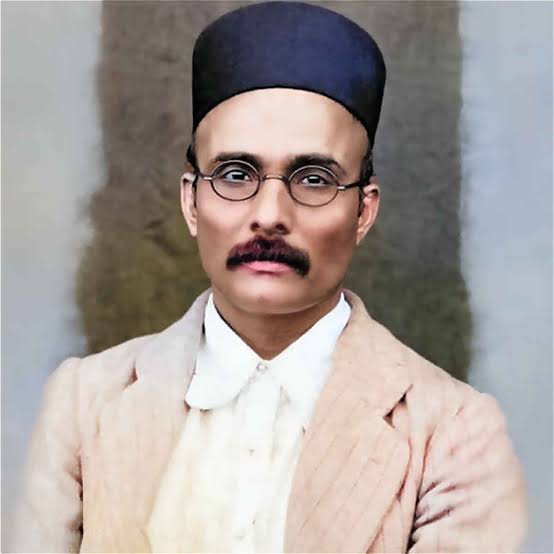
On February 26, India pays tribute to Veer Savarkar on his death anniversary, honoring his unwavering dedication to the country’s independence and his contributions as a nationalist, writer, and social reformer. A visionary leader, Vinayak Damodar Savarkar was not just a freedom fighter but also a thinker who laid the foundation for India’s cultural nationalism.
A Life Dedicated to the Nation
Born on May 28, 1883, in Nashik, Maharashtra, Savarkar was drawn toward revolutionary activities from a young age. He was deeply influenced by the growing nationalist movement and took an active role in mobilizing youth against British rule. His strong belief in armed resistance led him to establish the Abhinav Bharat Society, which aimed to overthrow colonial rule through revolutionary means.
One of his most significant contributions was his book “The First War of Indian Independence,” which challenged the British portrayal of the 1857 revolt as a mere mutiny. Savarkar argued that it was India’s first organized fight for independence, inspiring future revolutionaries like Bhagat Singh and Subhas Chandra Bose.
Imprisonment and Endurance at Cellular Jail
Savarkar’s revolutionary activities led to his arrest in 1909. He was sentenced to two life imprisonments (50 years in total) and sent to the infamous Cellular Jail in the Andaman and Nicobar Islands. There, he endured inhumane torture, forced labor, and solitary confinement. Despite these hardships, he remained resilient, writing extensively on nationalism and reform.
His prison writings became a source of inspiration for many freedom fighters. His mercy petitions to the British government remain a subject of debate, but many historians argue that his strategic approach helped secure his release and allowed him to continue contributing to the national cause outside prison.
Contributions to Social Reform
Beyond the freedom struggle, Savarkar was a strong advocate for social reforms. He believed that for India to truly progress, it needed to shed its rigid caste system and embrace unity. Some of his key reform initiatives included:
- Abolition of untouchability – He actively campaigned against caste-based discrimination and encouraged Dalits to enter temples.
- Promotion of scientific temper – Savarkar emphasized rational thinking and opposed superstitions that hindered social progress.
- Encouraging military strength – He urged Indians to develop military skills and self-reliance, foreseeing the importance of defense preparedness for an independent nation.
The Ideology of Hindutva
One of Savarkar’s most influential works was his book “Hindutva: Who is a Hindu?” published in 1923. In it, he defined Hindutva as more than just a religious identity; he saw it as a cultural and national identity. His ideas on cultural nationalism remain a significant part of India’s political discourse even today.
While his views on Hindutva have been widely debated, his core message was about unity and national pride. He believed that all Indians, regardless of religion, should embrace the nation’s cultural heritage and work towards its progress.
Savarkar’s Legacy and Impact
Veer Savarkar passed away on February 26, 1966, but his legacy continues to shape India’s nationalist thought. His contributions to the independence movement, his fight against social evils, and his vision for a self-reliant India make him a towering figure in history.
While he remains a controversial figure, admired by many and debated by others, his dedication to India’s freedom struggle and nation-building efforts is undeniable.
On this death anniversary, let us remember Veer Savarkar’s resilience, courage, and vision for a united and independent India. His story serves as a reminder that patriotism goes beyond words—it requires action, sacrifice, and unwavering commitment to the nation’s progress.

