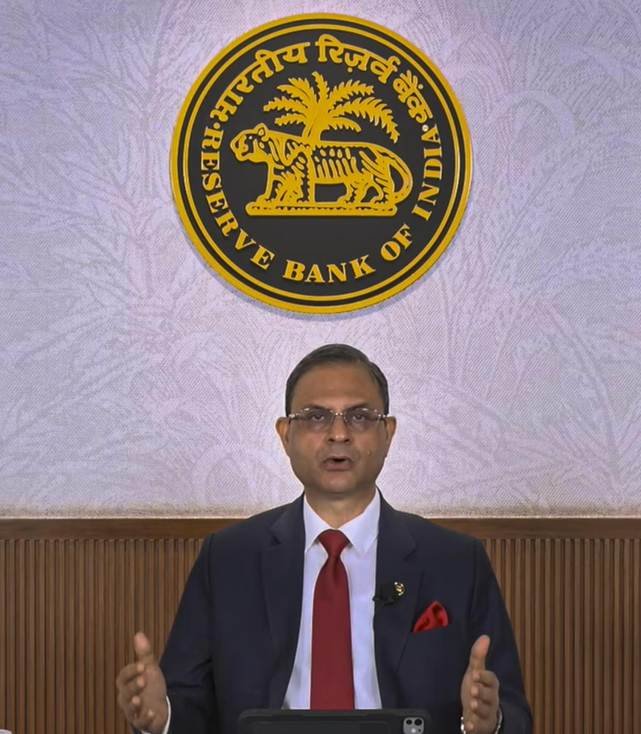
Key Highlights of RBI Monetary Policy April 2026
The Reserve Bank of India (RBI) has decided to keep the repo rate unchanged at 5.25% following the Monetary Policy Committee (MPC) meeting held on April 8, 2026. This marks a continued pause in rate adjustments as the central bank adopts a cautious and data-driven approach in response to rising global uncertainties and domestic economic considerations.
The decision was taken unanimously by the MPC, reflecting a balanced stance between supporting economic growth and controlling inflation. The RBI has maintained a “neutral” policy stance, allowing flexibility to respond to evolving macroeconomic conditions.
The central bank’s move comes at a time when global geopolitical tensions, particularly due to the ongoing conflict in West Asia, have created volatility in crude oil prices, currency markets, and supply chains. These external pressures have introduced new risks to India’s economic outlook, prompting the RBI to prioritize stability over aggressive policy changes.
India’s GDP growth forecast for the financial year 2026–27 has been revised to 6.9%, slightly lower than previous projections, indicating a cautious outlook amid global headwinds. Inflation is expected to average around 4.6%, remaining within the RBI’s target band of 2% to 6%, although risks remain due to fluctuating commodity prices and supply disruptions.
The unchanged repo rate means that borrowing costs for consumers and businesses are likely to remain stable in the short term. Home loan borrowers, in particular, will continue to benefit from steady EMIs, providing temporary relief in a volatile economic environment. However, experts suggest that this phase of stability may not last indefinitely if inflationary pressures increase in the coming months.
At the same time, depositors and investors may see a gradual shift in interest rates offered by banks. Despite the RBI holding rates, financial institutions could adjust fixed deposit rates based on liquidity conditions and competition in the banking sector.
The RBI Governor emphasized that the central bank remains vigilant and prepared to act as needed. The current stance reflects a “wait-and-watch” strategy, where future policy decisions will depend on incoming data related to inflation, growth, and global developments.
Another critical factor influencing the RBI’s decision is the stability of the Indian rupee. Recent geopolitical tensions have led to currency fluctuations, and the central bank has taken steps to manage volatility and maintain financial stability. The RBI’s approach indicates its commitment to safeguarding macroeconomic fundamentals while ensuring sufficient liquidity in the system.
From a broader perspective, India continues to be one of the fastest-growing major economies, supported by strong domestic demand, infrastructure development, and government spending. However, external challenges such as rising oil prices, global conflicts, and potential supply chain disruptions remain key concerns.
The RBI’s decision to hold rates steady also signals confidence in the current economic trajectory, while acknowledging the need for caution. By maintaining policy continuity, the central bank aims to provide stability to financial markets and avoid sudden shocks to the economy.
Looking ahead, market participants and economists expect the RBI to remain data-dependent, with any future rate changes likely to be influenced by inflation trends and global economic conditions. If inflation rises beyond acceptable levels, the central bank may consider tightening measures, while weaker growth could prompt a more accommodative stance.
In conclusion, the RBI’s April 2026 monetary policy reflects a strategic balance between growth and inflation management. The decision to hold the repo rate at 5.25% underscores the importance of stability in uncertain times, while keeping options open for future policy adjustments.
For more updates regarding business-related news, follow newsnownation.com.
