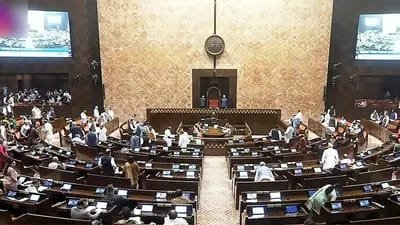
New Delhi — The Election Commission of India (ECI) has formally announced the schedule for the biennial elections to the Rajya Sabha, the Upper House of Parliament, with 37 seats across 10 states slated to go to polls on March 16, 2026. The announcement marks a key moment in India’s parliamentary calendar as political parties prepare for nominations, scrutiny, and campaigning ahead of the date.
According to the Election Commission, the process will begin with the filing of nominations, followed by scrutiny and withdrawals, before candidates face the electorate. While Rajya Sabha members are elected indirectly by state legislators under a system of proportional representation by means of a single transferable vote, the filing window and procedural timelines have now been formally set to ensure a smooth and transparent election cycle.
Polling for these Rajya Sabha seats will take place on March 16, with counting and results anticipated the same day. The entire election process, including administrative formalities, nominations and final declarations, is expected to be completed by March 20, 2026. The biennial elections are being held to fill seats becoming vacant as terms expire in April 2026.
This year’s Rajya Sabha election holds significance due to its timing and the distribution of seats across politically diverse states. States such as Maharashtra, Bihar, Tamil Nadu, West Bengal, Odisha, Assam, Telangana, Chhattisgarh, Haryana, and Himachal Pradesh are among those slated to fill vacancies due to members retiring or completing their terms. Each state’s legislative assembly strength and party composition will influence the outcome, shaping numerical balances in the Upper House.
In Maharashtra, where seven seats are expected to fall vacant, political parties are already exploring nomination strategies. Meanwhile, states such as Bihar and Tamil Nadu, with six seats each, will see intense internal consultation as parties weigh their options based on assembly numbers and alliances. West Bengal’s five seats and Odisha’s four are also drawing focus, as parties attempt to solidify their presence within the Rajya Sabha.
The Rajya Sabha, officially known as the Council of States, plays a crucial role in India’s legislative framework. Unlike the Lok Sabha, whose members are directly elected by the public, Rajya Sabha members are chosen by elected representatives of state legislative assemblies. This indirect method underscores the influence of state politics on national legislative dynamics. Parties with strong state legislative presence often leverage their position to secure more seats in the Upper House, preserving or enhancing their bargaining power on national policies and reforms.
Political analysts suggest that these biennial elections could have downstream effects on legislative priorities and national political strategy. The Rajya Sabha is a forum where key bills, constitutional amendments, and policy decisions are debated and passed. As parties position themselves ahead of these elections, the aggregation of seats could shift power dynamics, potentially impacting the government’s ability to push through contentious reforms or negotiate support for major agendas.
The election announcement also comes at a time when multiple state assembly elections and national political developments are unfolding across India, indicating a year of sustained electoral activity. The Rajya Sabha elections will be a pivotal chapter in 2026’s political calendar, bringing focus to both state legislative strength and national party strategy.
For more detailed updates, candidate lists, and real-time results from the Rajya Sabha elections, visit NewsNowNation.com and stay connected with our comprehensive coverage of Indian political developments.
