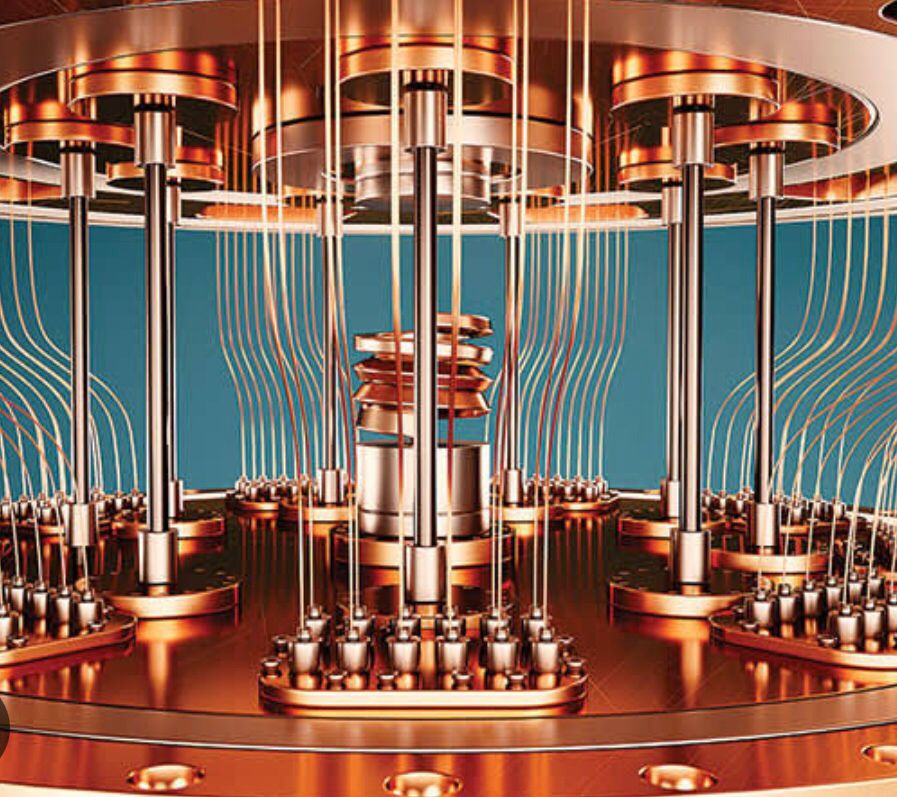
In the world of information technology, classical computers have created pathways to explore new paradigms. Technologies have evolved, and we are exploring better processes and ways to leverage upon data. Quantum computing finds its unique place in this sphere as a revolutionary technology that uses ‘qubits’ as its building blocks as opposed to bits used in classical computing to represent information as either 0s or 1s.
Qubits can exist in multiple states simultaneously employing the principles of superposition and entanglement that can perform calculations exponentially faster than its classical counterparts. Although it would be too early to say that quantum computing offers answers where traditional computing fails, the range of solutions it delivers can open myriad of possibilities. Through this article, we try to understand the essence of quantum computing by highlighting its core principles, applications, and challenges.
Quantum Principles
It is through the underlying principles of superposition and entanglement that quantum computing achieves its computational power. While superposition allows qubits to exist in multiple states simultaneously, entanglement provides the connection between the states of two or more qubits in a way where the state of one qubit influences the state of another. These principles enable quantum computers to perform many calculations instantaneously, even when separated by a distance.
Applications
Quantum computing holds immense promise in the future and is likely to make its presence felt in various fields, including cryptography, drug discovery, artificial intelligence, and optimization. Using a variety of algorithms to conduct measurements and observations, quantum computing finds its application in cryptography where factoring large numbers to render encryption is crucial. Conversely, deploying the principles of quantum entanglement, we can ensure secure communication.
In optimization, quantum algorithms have the potential to solve complex optimization problems. These cater to the fields of logistics, finance, operations, and supply chain management, where quantum computers can explore multiple solutions simultaneously, thereby, drastically reducing computation time and increasing efficiency.
Drug screening and discovery is another area that could benefit substantially from quantum computing. Simulating molecular interactions at the quantum level is a complex task, but through quantum computers the possibility to simulate them accurately accelerates, leading to breakthroughs in the medical sector.
Challenges
Alongside its tremendous potential, we must accept the challenges presented by quantum computing. It is understood that qubits are delicate and error-prone since they can get influenced by factors like temperature fluctuations and electromagnetic interference. To overcome them, we must evolve our error-correcting codes and improve fault-tolerant quantum systems. Since problems get more complex, scaling up quantum systems is another challenge to overcome the limited qubits available in current quantum devices. Additionally, building and maintaining quantum computers is expensive and demands specialized expertise.
Conclusion
Quantum computing is a consequential leap forward in the world of computation. And while it is still in its nascent stages, where it is prone to technical challenges, the potential it holds across various industries is immense and transformative. As humankind continues to push the quantum realm, we can expect a future where quantum computers are pivotal to finding simple solutions to complex problems. In essence, the quantum revolution is underway and it holds a crucial key to unlock the future of technology further.

Author – Yajat Panjeta
Millennium School

