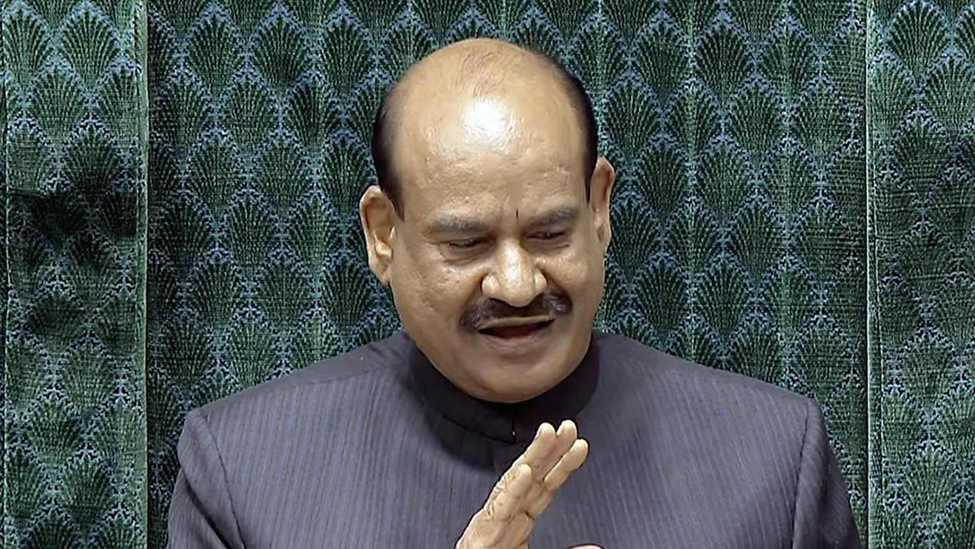
The second phase of the 2026 Budget Session of Parliament began on March 9 with heightened political tensions, as the Lok Sabha prepared to deliberate on a rare and controversial motion seeking the removal of Speaker Om Birla. The development has set the stage for a fiery debate between the ruling National Democratic Alliance (NDA) government and opposition parties, highlighting the growing political confrontation inside the House.
The resolution seeking the Speaker’s removal was submitted by opposition Members of Parliament, primarily led by the Congress and supported by several opposition parties. According to parliamentary procedures, a notice for such a motion requires the support of multiple MPs and must be submitted at least 14 days before it is taken up for discussion in the House. In this case, the notice reportedly carries the signatures of more than 100 MPs who have raised concerns about the functioning of the Speaker during the earlier phase of the Budget Session.
Opposition’s Allegations against the Speaker
Opposition leaders have accused Speaker Om Birla of displaying partisan conduct while presiding over the Lok Sabha. They argue that several opposition MPs were prevented from speaking during key debates, including the discussion on the Motion of Thanks to the President’s Address. Some members also alleged that disciplinary actions taken against opposition MPs during the earlier phase of the session were unfair and disproportionately targeted their parties.
These accusations became the foundation for the resolution seeking Birla’s removal from office. Opposition parties claim that the Speaker, who is expected to maintain neutrality while conducting parliamentary proceedings, failed to uphold the principles of impartiality and fairness.
However, leaders of the ruling BJP and the government have strongly rejected these allegations. Government representatives have defended Birla’s conduct, stating that he has consistently upheld parliamentary rules and procedures while maintaining order in the House.
Rare Parliamentary Procedure
Motions to remove the Speaker are extremely rare in Indian parliamentary history. While such notices have been submitted in the past, no Lok Sabha Speaker has ever been successfully removed through such a resolution. Historically, similar motions were moved against earlier Speakers, including G.V. Mavalankar, Hukam Singh, and Balram Jakhar, but none resulted in their removal from office.
Under Article 94(c) of the Constitution, a Speaker can be removed from office by a resolution passed by the Lok Sabha with an effective majority of the House. The procedure also allows the Speaker to defend himself during the debate on the motion. However, the Speaker cannot preside over the House while the resolution concerning his removal is being discussed.
Because of this rule, the proceedings during the debate are typically conducted by another presiding officer from the panel of chairpersons.
Political Significance of the Debate
The debate on the motion is expected to become one of the most politically charged moments of the current parliamentary session. The opposition sees it as an opportunity to raise broader concerns about parliamentary functioning and the treatment of opposition voices in the House.
Meanwhile, the government has criticized the move, arguing that it undermines constitutional institutions and disrupts legislative work. Political leaders from both sides have issued strong statements ahead of the session, indicating that the debate could witness intense exchanges on the floor of the Lok Sabha.
Both the ruling party and the opposition have issued whips to their Members of Parliament, directing them to be present in the House during the debate and vote. This reflects the political importance of the issue and the desire of both sides to demonstrate their strength in Parliament.
Broader Context of the Budget Session
The second phase of the Budget Session is also expected to address several important policy matters and legislative proposals. Alongside the debate on the Speaker’s position, Parliament is likely to discuss key national and international developments, including geopolitical concerns and economic challenges.
However, the motion against the Speaker has already become the central political issue of the session. Analysts believe that the outcome of the debate may not change the Speaker’s position due to the numerical strength of the ruling alliance in the Lok Sabha, but the discussion itself could have significant political implications.
The debate provides opposition parties with a platform to highlight their grievances regarding parliamentary procedures, while the ruling party is likely to use the opportunity to defend the functioning of the House under Birla’s leadership.
Impact on Parliamentary Functioning
The controversy surrounding the motion also raises broader questions about the functioning of parliamentary institutions in India. The role of the Speaker is considered crucial in maintaining the balance between the government and the opposition during legislative debates.
Traditionally, the Speaker is expected to rise above party politics once elected to the position and ensure that parliamentary proceedings are conducted in a fair and orderly manner. Any challenge to the Speaker’s neutrality therefore becomes a significant political and constitutional issue.
As the Lok Sabha begins deliberations on the motion, all eyes will be on how the debate unfolds and whether it further intensifies political divisions within Parliament.
Regardless of the outcome, the issue has already become a defining moment of the 2026 Budget Session, reflecting the evolving dynamics of India’s parliamentary democracy.
Follow for more updates regarding business related news in newsnownation.com.
