Pakistan’s economy has been facing significant challenges, including a rapid devaluation of its currency and a record fall in foreign exchange reserves. These issues have placed immense pressure on the country to address its debt repayment and navigate the current economic crisis. To comprehend the situation fully, it is crucial to delve into the details of why Pakistan finds itself in such a predicament.
Factors Contributing to Pakistan’s Economic Situation:
Pakistan is widely regarded as a developing country, and there are several reasons for its economic struggles. One primary factor is the lack of productivity. Pakistan has been unable to meet global demands promptly or in some cases unable to produce certain goods altogether. This can be attributed to various reasons, including the country’s low literacy rate, poor employment opportunities, and inefficient allocation of resources.
The Challenge of Current Account Deficit:
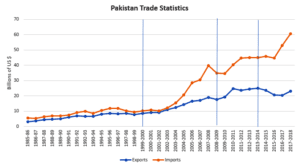
Pakistan has consistently struggled with a current account deficit, a situation that arises when a country’s imports exceed its exports within a given year. Pakistan exports not only goods and services but also a significant amount of labor. Despite this, Pakistan’s exports have barely surpassed their imports over the past 75 years. This trade imbalance poses a significant challenge to the country’s economic stability.
Dependency on Imported Goods:
A major issue for Pakistan is its heavy reliance on imported goods for everyday use. Approximately one-fourth of the goods consumed by Pakistanis, such as cars, lenses, and belt buckles, are imported. Additionally, the lack of productivity in Pakistan’s agriculture sector has led to the importation of basic food items, including pulses (daal). This dependency on imports further strains the country’s economy.
Lack of Productivity and Education:
The recurring theme of inadequate productivity in Pakistan can be largely attributed to the country’s education system. Pakistan has long struggled with a low literacy rate, consistently remaining below 60%. Furthermore, the growth rate of literacy has been stagnant or, at best, shown minimal improvement over the past 15-20 years. This lack of education directly impacts productivity. For instance, a farmer who purchases genetically modified seeds but cannot read the instructions for their proper use will struggle to achieve the desired results. Such situations lead to waste of resources, time, and money.
Skill Development and Employment Opportunities:
Pakistan faces a significant challenge in providing adequate skills training and employment opportunities to its population. Many Pakistanis work abroad, particularly in countries like the UAE and the UK, but due to a lack of specialized skills, they often earn minimum wages. This deficiency can be traced back to the foundation of the education system, which fails to provide basic skills training for occupations such as barbers, electricians, and plumbers. Additionally, Pakistan’s delayed entry into the field of information technology (IT) has put it at a disadvantage. Unlike India, which established IT institutes in the 1950s, Pakistan entered the industry relatively late. As a result, its IT exports amount to only 2 billion US dollars compared to India’s 200 billion US dollars. The shortage of skilled tech professionals in Pakistan further hampers its progress in this sector.
Infrastructure and Financial Aid Challenges:
Pakistan faces significant hurdles in rebuilding its basic infrastructure, improving facilities, and securing financial aid. Reversing the current economic downturn requires substantial efforts and the guidance of a stable and capable leadership. Overcoming these challenges and building a stronger economy will require starting from scratch and implementing comprehensive reforms.
In conclusion, Pakistan’s economy has experienced a downward trajectory due to a combination of factors, including low productivity, educational shortcomings, a persistent current account deficit, and a delayed entry into key industries. Addressing these challenges and achieving economic stability will require concerted efforts, long-term reforms, and the support of capable leadership.