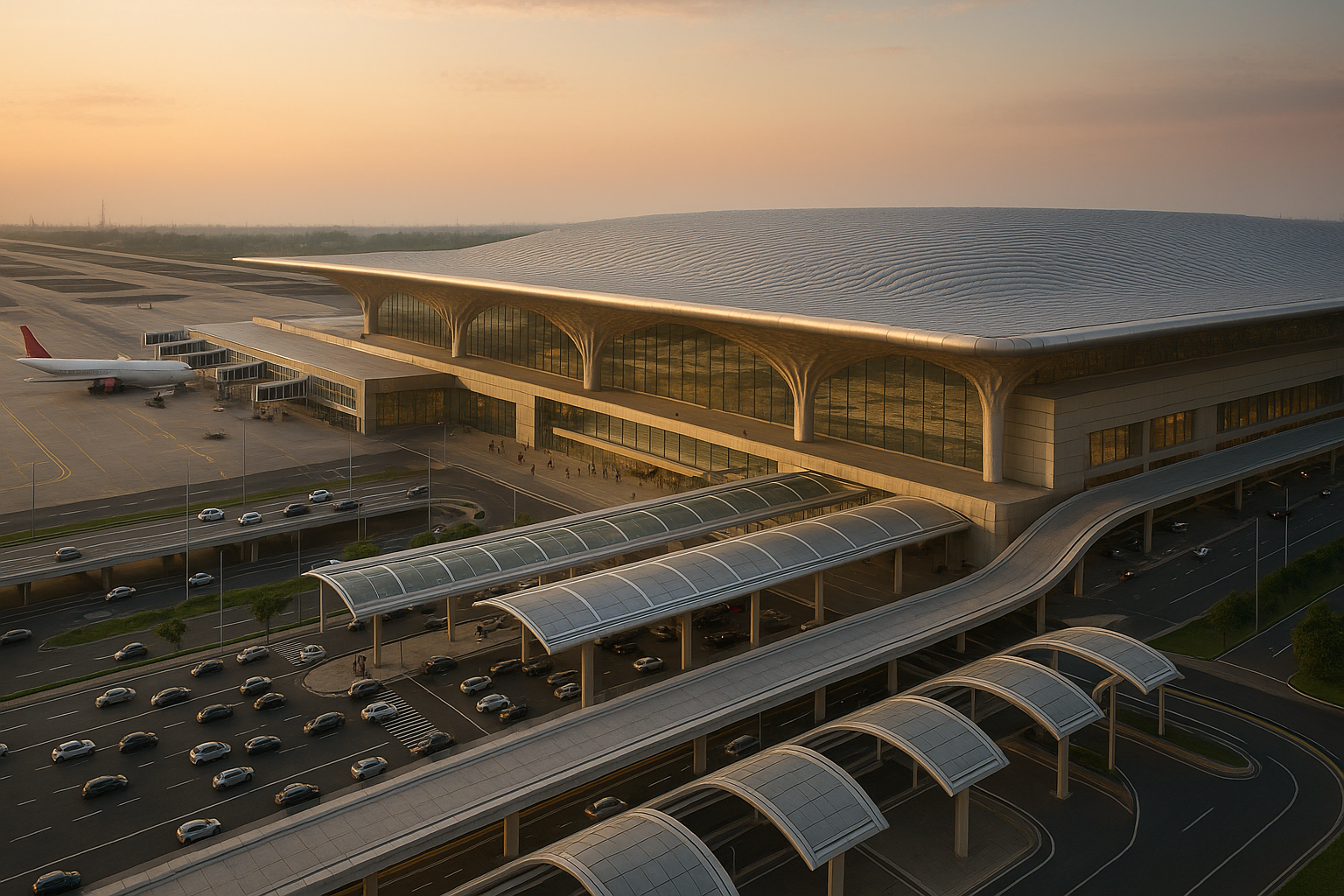
Navi Mumbai International Airport (NMIA), Mumbai’s much-anticipated second international airport, is on the cusp of commencing operations. With around 94–95% construction complete, the airport is targeting September 30, 2025 for inauguration of its first phase, featuring one terminal and one runway, along with advanced passenger amenities and connectivity infrastructure.
State of Completion and Operational Launch
Maharashtra Chief Minister Devendra Fadnavis recently confirmed that approximately 94% of physical construction is complete, spanning runway, terminal structure, interiors and supporting airside systems, with final touches under way. While work remains on interiors and safety systems, authorities are confident of meeting the deadline of September 30 for initial commercial operations.
Phase-1 will include Terminal 1 with capacity to handle about 2 crore passengers annually, initially serving domestic flights and gradually scaling up. IndiGo, Akasa Air and possibly other carriers have expressed interest in beginning operations from day one.
Key Features: Tech, Capacity & Connectivity
NMIA aims to set new benchmarks in airport infrastructure. Among its unique features:
• World’s fastest baggage claim system in its initial operation phase.
• General aviation terminal – one of the largest planned, with dozens of stands and hangars.
• Cargo capacity in first phase: approximately 0.8 million tonnes/year, split between domestic and international cargo terminals.
• Planned expansion to four terminals and two parallel runways by full eventual build-out (circa 2030-2032) with ability to handle up to 90 million passengers annually.
Connectivity is being designed to integrate NMIA seamlessly with regional transport networks:
• A 9-km elevated corridor being constructed for direct road access.
• Proposed Metro Line-8 (Gold Line) linking Chhatrapati Shivaji Maharaj International Airport (CSMIA) to NMIA.
• The Mumbai Trans Harbour Link (Atal Setu) will reduce travel times from South Mumbai to Ulwe area dramatically.
Flight Operations & Phased Growth
In its early phase, NMIA is expected to begin with around 60 daily flights, focusing mostly on domestic destinations. Within six months, that number is projected to rise to 300 flights per day, as carriers scale up services.
The Airports Authority of India (AAI) has issued several NOTAMs (Notices to Airmen) indicating the runway will be unavailable for some periods through mid- and late September as final safety and flight validation procedures are completed.
Challenges Ahead
While NMIA is nearing completion, some hurdles remain:
• Ensuring all safety certifications, regulatory approvals, instrument landing systems etc., are fully compliant before commercial operations begin.
• Transport connectivity in surrounding areas (access roads, last-mile connectivity) must match the airport’s scale to avoid bottlenecks.
• Managing phased ramp-up, especially responding to demand, airline scheduling, and operational traffic flows, so that passenger experience is not compromised.
Why NMIA Matters for India (Especially Indian Travellers)
For Indian travellers, businesses, and the aviation sector, Navi Mumbai International Airport represents more than new infrastructure. It is:
• A relief valve for CSMIA, which is reaching capacity constraints and facing congestion, delays, and load-bearing limits.
• A boost to regional economy: NMIA will create jobs, improve connectivity for towns in Raigad, Thane, eastern Mumbai and Pune, and drive growth in logistics, hospitality, tourism.
• A step forward in modernisation: biometrics, digital check-in, automated systems, faster baggage processing are part of its design, promising a more seamless travel experience.
Conclusion
Navi Mumbai’s new international airport is set to transform India’s aviation landscape. With almost all infrastructure in place and ambitious targets set, the opening of Phase-1 by September 30 marks a critical milestone. For Indian citizens, frequent flyers, business travellers and regional stakeholders, NMIA promises faster flights, reduced crowding, more airline options and better connectivity. As NMIA takes off, its success or challenges will set templates for future greenfield airports across India.
-By NewsNowNation Editorial Team

