Mumbai’s iconic hotel receives a massive civic notice over barricades installed after the 26/11 terror attacks, raising important questions about security, public infrastructure, legal compliance, and urban governance.
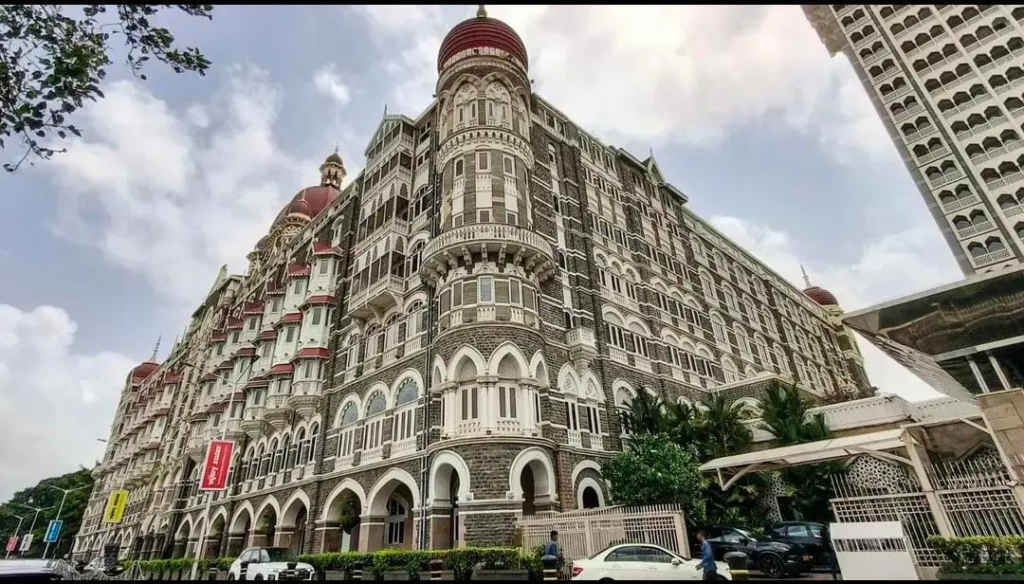
The Brihanmumbai Municipal Corporation (BMC) has issued a notice amounting to nearly ₹22 crore to Mumbai’s iconic Taj Mahal Palace Hotel for barricades that were installed around the property following the devastating 26/11 Mumbai terror attacks. The development has triggered widespread discussion across legal, civic, business, and hospitality circles, as the notice concerns security measures that have remained in place for nearly two decades.
According to reports, the barricades were placed around sections of the hotel located along public roads and footpaths to prevent unrestricted vehicle access after the 2008 terrorist attack. Authorities claim that the occupation of public space attracted municipal charges over the years, which have now accumulated into a demand of approximately ₹22 crore.
The Taj Mahal Palace Hotel became one of the primary targets during the 26/11 Mumbai terror attacks in November 2008. The coordinated assault claimed the lives of more than 160 people and left hundreds injured, making it one of the darkest chapters in India’s modern history. Following the attack, extensive security upgrades were introduced around the property, including permanent surveillance systems, access control mechanisms, and protective barricades intended to safeguard guests, employees, and visitors.
Over the years, these security arrangements became a familiar part of the landscape surrounding the hotel. However, the BMC maintains that portions of these installations occupied municipal roads and footpaths, making them subject to civic regulations and associated fees. Municipal officials have reportedly stated that the outstanding amount represents accumulated charges for the continued use of public space over several years.
Hotel management has sought relief from the civic body by requesting a waiver of the charges. Their argument is believed to be based on the extraordinary circumstances under which the barricades were installed. The security measures were introduced not for commercial expansion but as a response to one of the country’s most significant terror incidents, with public safety remaining the primary objective.
The issue has now evolved into a larger discussion that extends beyond a financial notice. Legal experts believe the matter may require careful examination of municipal laws governing the occupation of public land, emergency security provisions, and the responsibilities of both private property owners and civic authorities during exceptional situations.
For the hospitality industry, the case highlights the growing challenge of balancing security requirements with regulatory compliance. Premium hotels, airports, commercial complexes, corporate headquarters, and other high-risk establishments often implement enhanced security infrastructure in coordination with law enforcement agencies. Questions are now being raised regarding whether such protective measures should attract standard civic charges when they serve broader public safety objectives.
Urban planners also point out that Indian cities increasingly face the challenge of accommodating heightened security without permanently restricting public movement. Footpaths and roads are public assets meant for unrestricted use, yet certain sensitive locations require additional protection. The Taj Hotel case could therefore influence future policies governing security infrastructure around strategically important buildings across the country.
Business analysts believe the financial impact of the notice itself may not significantly affect a large hospitality group such as Indian Hotels Company Limited (IHCL), which operates the Taj brand. However, the legal and administrative outcome could establish an important precedent for similar cases involving commercial establishments and public infrastructure.
Another significant aspect of the case is the relationship between civic administration and national security. Following major security incidents, local authorities, police agencies, and private institutions often work together to implement preventive measures. If such arrangements continue for several years, questions naturally arise regarding ownership, maintenance responsibilities, financial liabilities, and long-term regulatory approvals.
Public opinion remains divided. Many citizens believe that security arrangements introduced after the 26/11 attacks should not attract heavy financial penalties because they were established to protect lives and critical infrastructure. Others argue that even security installations must comply with municipal regulations, especially when public land is occupied for extended periods.
Legal observers suggest that the matter could eventually be resolved through administrative discussions, a waiver, revised assessment, or judicial intervention if required. The final outcome will likely depend on official records, permissions granted at the time of installation, applicable municipal laws, and any special provisions related to national security.
The controversy has also renewed attention toward the continuing legacy of the 26/11 attacks. Nearly two decades later, the event continues to shape security policies across India’s hospitality sector. Hotels, shopping centres, transportation hubs, and major commercial establishments have significantly strengthened surveillance, access control, baggage screening, and emergency preparedness since the attacks.
For businesses operating in sensitive sectors, the case serves as an important reminder that security enhancements should always be supported by appropriate statutory approvals and periodic regulatory reviews. Compliance with local civic regulations remains essential, even when infrastructure is installed for public protection.
The coming weeks are expected to bring further clarity as discussions continue between the hotel management and municipal authorities. Whether the notice is reduced, waived, legally challenged, or settled through mutual agreement, the decision is likely to influence future policy discussions involving security infrastructure and municipal governance across India.
The Taj Mahal Palace Hotel remains one of India’s most recognised hospitality landmarks and an enduring symbol of resilience following the 26/11 attacks. As this matter progresses, industry stakeholders, civic authorities, legal professionals, and business leaders will closely watch its implications for security policy, urban planning, and regulatory compliance.
For more updates on business, corporate, infrastructure, policy, and economy-related news, follow NewsNowNation.com.
