Employment Gaps and Implementation Challenges
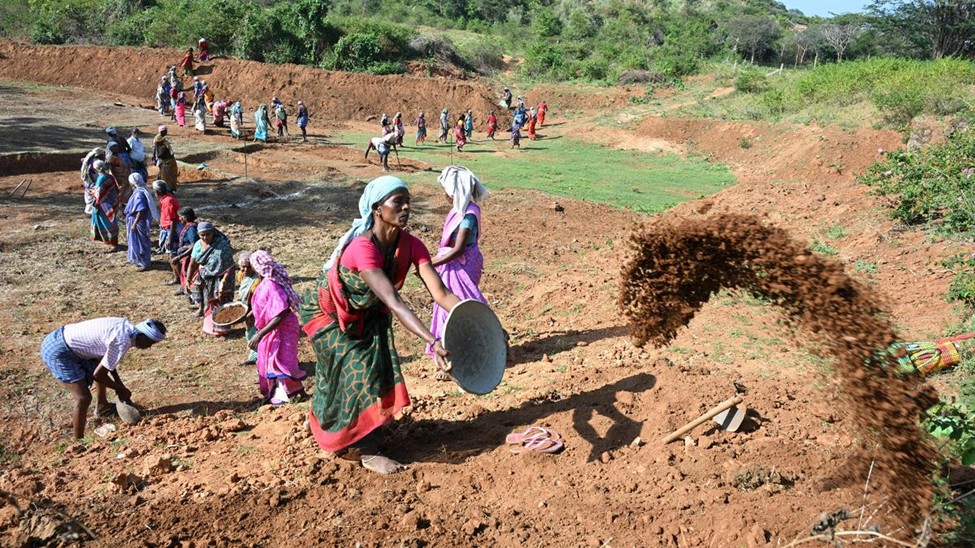
The Mahatma Gandhi National Rural Employment Guarantee Act (MGNREGA), one of India’s largest social welfare schemes, is once again at the centre of debate as reports emerge of workers being denied employment despite assurances from the Centre regarding the scheme’s continuity. The situation has raised concerns about the gap between policy commitments and ground-level implementation, especially in rural areas where the scheme plays a critical role in livelihood security.
MGNREGA was introduced with the objective of providing at least 100 days of guaranteed wage employment in a financial year to rural households. Over the years, it has become a lifeline for millions of families, particularly during times of economic stress. However, recent reports indicate that many registered workers are struggling to find work even after submitting formal applications.
According to ground reports, workers in several States have alleged that their job requests are either not being recorded properly or are being delayed without clear reasons. In some cases, workers claim that despite repeated attempts to seek employment, they have not received any work allocation. This has led to growing frustration among rural labourers who depend heavily on the scheme for their income.
The Centre has maintained that MGNREGA remains a demand-driven scheme and that funds are being released as per requirements. Officials have reiterated that there is no plan to discontinue or reduce the scope of the programme. Despite these assurances, the experiences reported from the field suggest that systemic issues may be affecting implementation.
One of the key concerns highlighted is the issue of delayed payments. Workers have often faced long waiting periods before receiving their wages, which discourages participation and reduces trust in the system. In rural economies where daily earnings are essential for survival, such delays can have serious consequences.
Another issue is the lack of awareness and administrative efficiency at the local level. Experts point out that local authorities play a crucial role in processing job applications, allocating work and ensuring timely payments. Any bottlenecks at this level can directly impact the effectiveness of the scheme.
The mismatch between demand and availability of work has also been cited as a major factor. In certain regions, there may be limited projects available under MGNREGA, resulting in fewer opportunities for workers. This highlights the need for better planning and identification of works that can generate employment while contributing to rural development.
Civil society organisations and activists have raised concerns over what they describe as “suppressed demand” for work. They argue that the official data may not fully capture the actual number of people seeking employment under the scheme. If job applications are not properly recorded, it creates an inaccurate picture of demand and reduces accountability.
The situation also brings attention to budgetary allocations for the scheme. While the government continues to support MGNREGA, there have been discussions about whether the allocated funds are sufficient to meet the growing demand for rural employment. As economic uncertainties persist, more people may turn to the scheme for support.
MGNREGA has historically played a crucial role in providing a safety net during crises such as droughts, economic downturns and the COVID-19 pandemic. Its importance lies not only in providing employment but also in creating durable assets such as roads, water conservation structures and rural infrastructure.
However, the current challenges suggest that there is a need for stronger monitoring and accountability mechanisms. Ensuring that job applications are registered accurately, work is allocated promptly and wages are paid on time are essential for maintaining the credibility of the programme.
Experts suggest that technology can play a role in improving transparency. Digital tracking of job applications and payments could help reduce delays and ensure that workers receive their entitlements without unnecessary hurdles.
At the same time, strengthening local governance and capacity building of officials can improve implementation. Training programmes and better coordination between different levels of administration can help address operational challenges.
The issue also has broader implications for rural development and economic stability. When workers are unable to access employment under MGNREGA, it affects not only their income but also local economies that depend on rural spending.
The situation underscores the importance of bridging the gap between policy intent and execution. While the government’s commitment to the scheme is clear, ensuring its effective implementation on the ground remains a key challenge.
As discussions around MGNREGA continue, stakeholders are calling for measures to improve transparency, accountability and efficiency. Addressing these concerns will be crucial in ensuring that the scheme continues to serve as a reliable support system for rural households.
The ongoing debate serves as a reminder that welfare programmes must be continuously evaluated and strengthened to meet the needs of the people they are designed to serve.
Follow for more updates regarding business related news in newsnownation.com.
