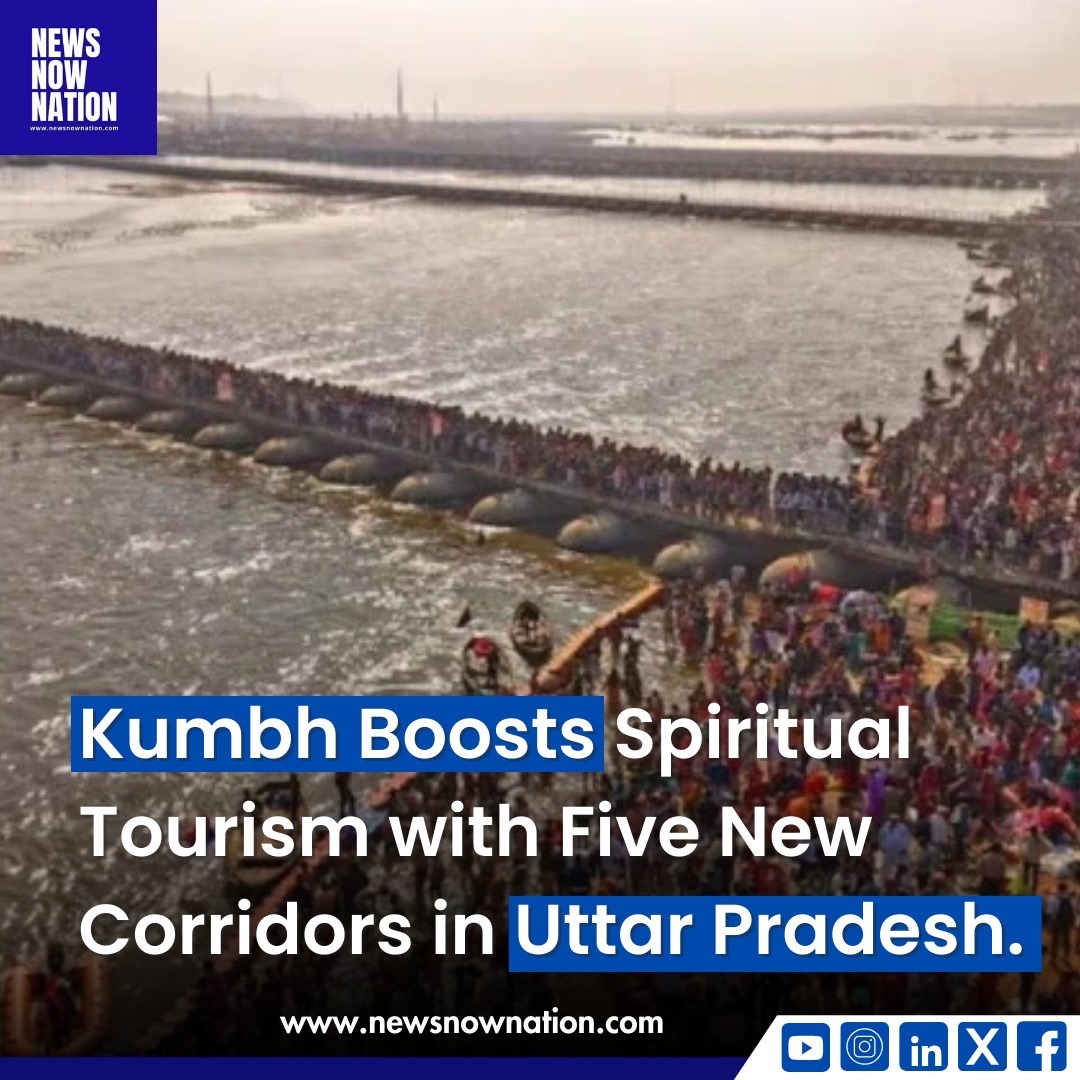
The Maha Kumbh has opened new doors for spiritual tourism in Uttar Pradesh, further solidifying the state’s position as a major religious hub. Recognizing the immense potential of religious tourism, the Uttar Pradesh government has taken a significant step by developing five major spiritual corridors aimed at enhancing connectivity between prominent pilgrimage sites.
These newly developed corridors will enable seamless travel for pilgrims visiting sacred destinations across the state. The initiative is expected to boost tourism, improve infrastructure, and strengthen Uttar Pradesh’s cultural and spiritual heritage.
On Thursday, Uttar Pradesh Chief Minister Yogi Adityanath visited Prayagraj and acknowledged the contributions of police personnel, sanitation workers, healthcare staff, boatmen, media professionals, and transport operators, expressing gratitude for their role in ensuring the smooth execution of the grand festival.
He also emphasized the importance of the five newly developed spiritual corridors, which will allow devotees to easily access major pilgrimage destinations. This project is expected to provide a major boost to religious tourism in Uttar Pradesh, benefiting both pilgrims and local economies.
Five Key Spiritual Corridors in Uttar Pradesh
The Uttar Pradesh government has introduced five important corridors that will transform the way pilgrims travel within the state. These corridors will provide direct connectivity to temples and religious landmarks, making spiritual journeys more convenient and accessible.
1. Prayagraj-Vindhyachal-Kashi Corridor
- This corridor connects Prayagraj to Vindhyachal Devi Dham and extends further to Kashi (Varanasi).
- Vindhyachal Devi Dham is one of the Shaktipeeths, revered by Shakti devotees.
- The corridor also covers Kashi Vishwanath Temple, a major pilgrimage site for Lord Shiva devotees.
- It serves as a major route for pilgrims and tourists seeking spiritual experiences.
2. Prayagraj-Lucknow-Naimisharanya Corridor
- This corridor links Prayagraj to Naimisharanya via Lucknow, improving access to one of the most sacred pilgrimage sites in Hinduism.
- Naimisharanya Dham is known as the meditation site of 88,000 sages and is closely associated with Lord Brahma, Lord Vishnu, Goddess Sati, and Lord Shiva.
- Devotees believe that visiting this site helps in attaining spiritual enlightenment.
3. Prayagraj-Rajapur (Banda)-Chitrakoot Corridor
- This corridor is significant for Lord Ram devotees, as it connects Prayagraj to Chitrakoot Dham, a site linked to Lord Ram’s exile.
- The route passes through Rajapur (Banda), the birthplace of Goswami Tulsidas, the revered poet-saint and author of Ramcharitmanas.
- Major spiritual landmarks along this corridor include Kamadgiri Parvat, Ramghat, and Hanuman Dhara.
4. Prayagraj-Ayodhya-Gorakhpur Corridor
- This corridor connects Prayagraj, Ayodhya, and Gorakhpur, linking key sites associated with Lord Ram and the Gorakhnath tradition.
- Pilgrims can take a holy dip at Sangam in Prayagraj and visit Lete Hanuman Temple, Akshayvat, and Saraswati Koop before proceeding to Ayodhya for Lord Ram Lalla’s darshan.
- From Ayodhya, the corridor extends to Gorakhpur, where devotees can seek blessings at the Gorakhnath Temple, a site associated with the Nath sect.
5. Prayagraj-Mathura-Vrindavan-Shuk Teerth Corridor
- This corridor enables pilgrims to travel from Prayagraj to Mathura-Vrindavan via the Bundelkhand Expressway.
- Mathura and Vrindavan are revered as the birthplace and childhood home of Lord Krishna.
- The corridor extends to Shuk Teerth, the sacred site of Maharishi Shukracharya, adding another layer of religious significance.
- Devotees believe that visiting these places offers spiritual fulfillment and divine blessings.
A Major Boost for Religious Tourism in Uttar Pradesh
With the launch of these corridors, Uttar Pradesh is set to strengthen its position as India’s leading spiritual tourism hub. The development of better road networks and enhanced connectivity will encourage more pilgrims to visit these sacred sites, benefiting local communities and businesses.
The project aligns with the state government’s broader vision to promote India’s rich cultural heritage and ensure that pilgrims can undertake their religious journeys with ease. Additionally, the initiative is expected to generate employment opportunities in sectors such as transportation, hospitality, and local trade.
The success of Maha Kumbh 2025 will further demonstrate how Uttar Pradesh is evolving as a global center for religious tourism, attracting devotees not just from India but from across the world.
With these corridors, the age-old traditions and spirituality of Uttar Pradesh will remain preserved while making religious travel more accessible, comfortable, and organized for future generations.

