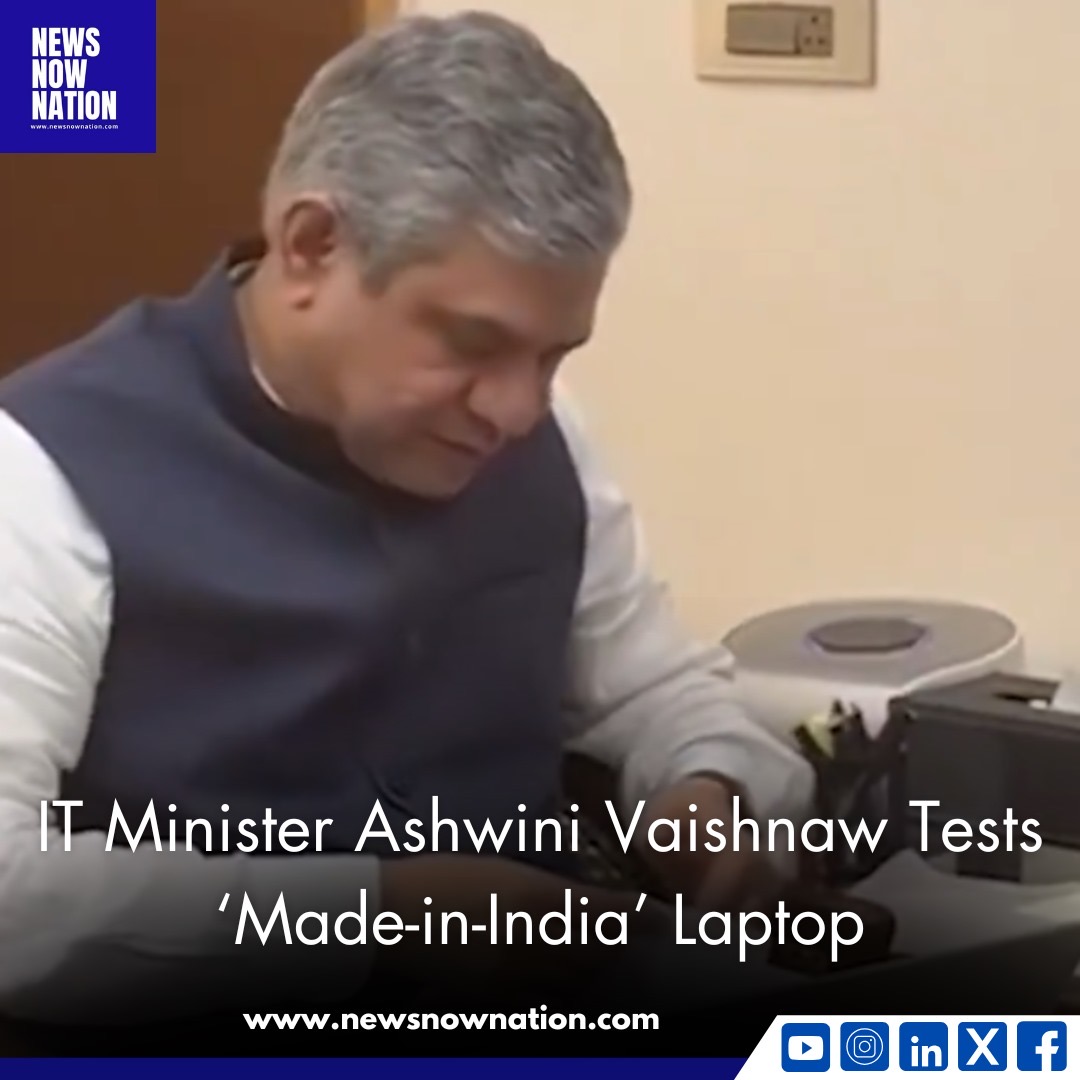
In a major step toward self-reliance in electronics manufacturing, Union Minister for Electronics and IT, Ashwini Vaishnaw, recently tested a ‘Made-in-India’ laptop. This development aligns with the government’s Make in India and Atmanirbhar Bharat initiatives, which aim to promote domestic manufacturing and reduce dependency on imports.
India’s Push for Local Electronics Manufacturing
India has been actively working to strengthen its local electronics production capabilities, especially in the laptop and IT hardware sector. The government has introduced various policies, including production-linked incentive (PLI) schemes, to encourage both domestic and international companies to set up manufacturing units within the country.
Vaishnaw’s demonstration of the ‘Made-in-India’ laptop underscores the progress being made in local manufacturing. While specific details about the laptop’s features, manufacturer, and availability have not been disclosed, the initiative signals India’s commitment to becoming a global hub for electronics production.
https://x.com/ashwinivaishnaw/status/1894806229085810824?s=46
Reducing Import Dependence and Strengthening Supply Chains
Currently, India imports a significant portion of its laptops and IT hardware, primarily from China and other countries. With increasing demand for personal computing devices and growing concerns about supply chain vulnerabilities, the government is pushing for local production to ensure self-sufficiency.
The move to manufacture laptops domestically is expected to have multiple benefits:
- Boosting Local Industry: Encouraging Indian companies and multinational brands to set up factories in India will generate employment and create a robust supply chain.
- Cost Reduction: By reducing import dependence, locally manufactured laptops could become more affordable for Indian consumers.
- National Security: Ensuring that critical hardware is produced within the country minimizes risks related to cybersecurity and foreign control over essential technology.
PLI Scheme and Industry Participation
The government’s PLI scheme for IT hardware has attracted global tech giants, including Dell, HP, Acer, and Lenovo, to expand their assembly and manufacturing operations in India. Additionally, Indian brands such as HCL and Dixon Technologies are stepping up efforts to compete in the market.
Under the PLI scheme, companies receive financial incentives based on their production output, helping them scale operations and make manufacturing in India more viable. The scheme is expected to create thousands of jobs and position India as a key player in the global electronics supply chain.
Challenges in Domestic Laptop Manufacturing
Despite the enthusiasm around local manufacturing, there are several challenges that India needs to address:
- Component Sourcing: While assembly units are being set up, many key components such as processors, RAM, and batteries are still imported. Developing a local semiconductor and component ecosystem is crucial.
- Skilled Workforce: The industry requires skilled engineers and technicians to maintain high production standards. Training programs and investments in technical education are essential.
- Global Competition: Indian manufacturers will need to compete with established global brands in terms of quality, pricing, and innovation.
What This Means for Indian Consumers
For Indian consumers, the introduction of a ‘Made-in-India’ laptop could mean more affordable options with better service and warranty support. If local manufacturing scales up successfully, consumers may also see a wider range of products designed specifically for Indian needs, such as rugged designs for harsh conditions, multilingual keyboards, and enhanced cybersecurity features.
Future Prospects and Expectations
The testing of the indigenous laptop by IT Minister Ashwini Vaishnaw marks a significant step toward making India self-reliant in electronics manufacturing. However, for this initiative to succeed in the long run, the government will need to ensure continued policy support, investment in R&D, and infrastructure development.
In the coming months, more details are expected regarding the laptop’s pricing, specifications, and production capacity. If successfully implemented, this initiative could pave the way for India to become a global manufacturing powerhouse in the IT hardware sector.

