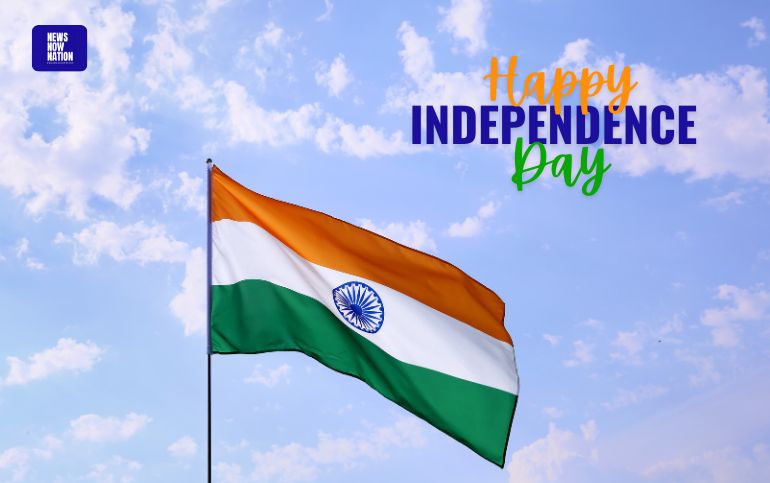
India’s Independence Day, celebrated on August 15th every year, is a day of immense pride and joy for every Indian. It marks the end of nearly 200 years of British colonial rule and the birth of a free and independent India. As the nation prepared to celebrate its 78th Independence Day on August 15, 2023, it’s essential to delve deeper into the history of this significant day. Here are some interesting facts about India’s Independence Day that highlight the richness of this historical event.
1. Mahatma Gandhi Could Not Celebrate the First Independence Day in Delhi
While the entire country celebrated the much-awaited freedom on August 15, 1947, Mahatma Gandhi, the father of the nation, was notably absent from the celebrations in Delhi. Instead, he was in Bengal, fasting in an effort to put an end to the intense Hindu-Muslim riots that had broken out during that period. Gandhi’s commitment to peace and communal harmony kept him away from the official celebrations, underscoring his lifelong dedication to the nation’s unity.
2. The Origin of the Tri-Color Flag
The Indian national flag, with its three distinct colors of saffron, white, and green, and the Ashoka Chakra in the center, is a symbol of the country’s freedom and pride. The design of the flag is based on the Swaraj Flag, which was created by Pingali Venkayya, a freedom fighter and a farmer from Machilipatnam in Andhra Pradesh. Initially introduced as a symbol of resistance against British rule, the flag evolved into the national emblem of the newly independent India.
3. India’s National Anthem Was Adopted Three Years After Independence
Interestingly, India did not have an official national anthem at the time of its independence. The song “Jana Gana Mana,” written by Rabindranath Tagore in 1911, was already popular, but it was not officially adopted as the national anthem until January 24, 1950, three years after the country had gained its independence. The anthem beautifully encapsulates the spirit of India and its unity in diversity.
4. Why August 15 Was Chosen for India’s Independence
The choice of August 15 as the date for India’s independence was not arbitrary. It was selected by Lord Louis Mountbatten, the last Viceroy and the first Governor-General of independent India. Mountbatten was granted the authority by the British Parliament to transfer power to Indians by June 1948. However, fearing widespread violence and unrest, he advanced the date to August 15, 1947. Mountbatten also reportedly chose this date because it coincided with the second anniversary of Japan’s surrender to the Allied Forces during World War II.
5. Pakistan’s Independence Day Falls a Day Before India’s
While India celebrates its Independence Day on August 15, Pakistan observes its Independence Day on August 14. The reason for this is practical: Lord Mountbatten, the last Viceroy of undivided India, was required to attend both the Indian and Pakistani independence ceremonies. To accommodate his presence, Pakistan’s Independence Day was set for August 14, 1947, just one day before India’s.
6. Five Other Countries Celebrate Their Independence on August 15
India is not alone in celebrating its independence on August 15. Five other countries also commemorate their independence on this date, albeit in different years. These countries include Bahrain, North Korea, South Korea, the Republic of Congo, and Liechtenstein. Each of these nations has its unique history and reasons for choosing August 15 as their Independence Day, making the date a significant one globally.
7. The First Independence Day Wasn’t a Nationwide Holiday
Although Independence Day is now a national holiday in India, the first Independence Day in 1947 wasn’t uniformly observed as a holiday across the country. While celebrations were held in Delhi and other major cities, many people, particularly in rural areas, went about their daily routines, unaware of the enormity of the day. Over the years, however, August 15 has come to be recognized as a day of great national importance, celebrated with fervor across every part of the country.
8. The Midnight Hour Speech
One of the most iconic moments of India’s Independence Day is Jawaharlal Nehru’s “Tryst with Destiny” speech, delivered at the stroke of midnight on August 14-15, 1947. In this historic address, Nehru spoke of India’s long journey to freedom, the challenges ahead, and the hopes and dreams of the nation. The speech is still remembered as a defining moment in India’s history and is often quoted during Independence Day celebrations.
Stay tuned to News Now Nation for updates and more news.
Follow us on social media for real-time news updates:

