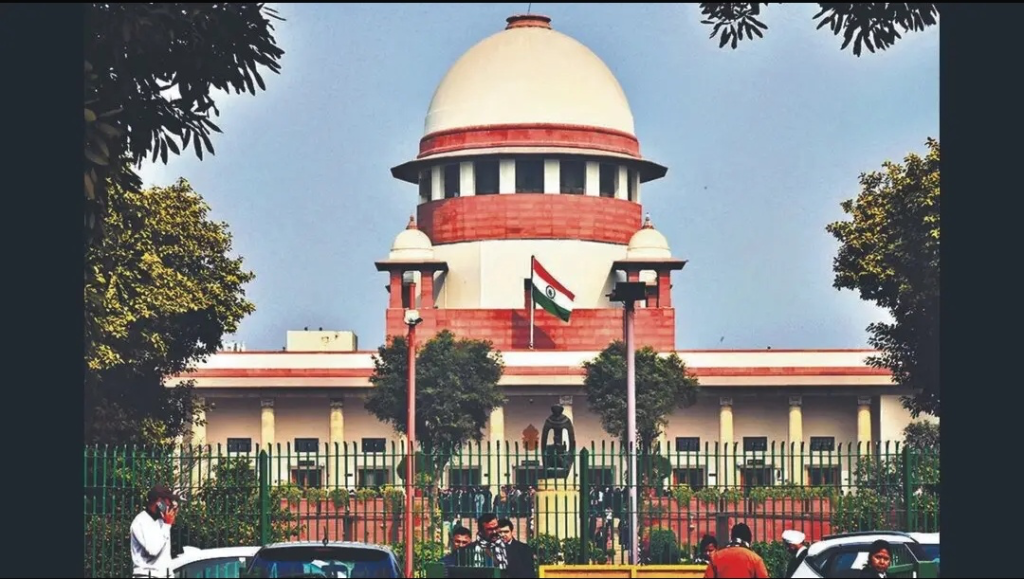
Supreme Court Rejects Challenge to Maharashtra’s 2025 Reservation Rotation Rules
The Supreme Court of India has rejected a petition challenging Maharashtra’s revised rules governing the rotation of constituencies reserved for Scheduled Castes (SC) and Scheduled Tribes (ST) in local body elections. In an important observation, the court stated that no voter or election candidate has a vested right to demand that a particular constituency must be declared a reserved seat for SC or ST communities.
The decision concerns the Maharashtra Zilla Parishads and Panchayat Samitis (Manner and Rotation of Reservation of Seats) Rules, 2025. These rules establish the process for determining and rotating reserved constituencies in elections to rural local government institutions across Maharashtra. The judgment has brought renewed attention to the legal framework governing electoral reservations, the powers of state governments and the implementation of reservation policies in local democratic institutions.
The petition was filed by Rupali Indrabhushan Sonde, who challenged Rule 12 of the 2025 rules after the Bombay High Court’s Nagpur Bench had previously dismissed her challenge on September 19, 2025. The matter reached the Supreme Court through a special leave petition, questioning whether the revised rotation mechanism could undermine the principle of reservation by restarting the existing cycle.
The Supreme Court considered the arguments and found no sufficient reason to interfere with the government’s revised mechanism. It dismissed the petition, observing that the reservation of particular constituencies is governed by the applicable legal framework and that neither an individual voter nor a candidate can claim an entitlement to a specific constituency being reserved.
What Was the Dispute Over Maharashtra’s Reservation Rotation Policy?
The dispute primarily centred on the implementation of Rule 12 of the Maharashtra Zilla Parishads and Panchayat Samitis (Manner and Rotation of Reservation of Seats) Rules, 2025. The provision establishes that the general election conducted after the commencement of the new rules will be considered the first election for the purpose of determining the rotation of reserved seats.
The revised provision effectively establishes a fresh reference point for calculating the rotation of constituencies reserved for SC and ST candidates. This became controversial because some petitioners believed that resetting the existing rotation cycle could affect constituencies that had not received reserved status in previous elections.
The petitioner argued that her constituency had never been reserved and was approaching the point at which it could become eligible for reservation under the earlier rotation arrangement. According to the challenge, introducing a fresh starting point could make the existing rotation exercise ineffective and potentially prevent certain constituencies from receiving reserved status in future elections.
The argument also raised concerns about fairness and equality under Article 14 of the Indian Constitution, which guarantees equality before the law and equal protection of the laws. The petitioner questioned whether the revised arrangement could create an arbitrary situation in which constituencies with comparatively smaller SC/ST populations might repeatedly miss opportunities for reservation.
During the proceedings, the petitioner’s counsel, Senior Advocate Vipin Sanghi, highlighted the potential consequences of resetting the rotation process. The argument focused on the possibility that certain constituencies could remain outside the reservation framework despite having previously been expected to receive reserved status according to the earlier rotation cycle.
However, the Supreme Court did not accept the argument as sufficient grounds to invalidate the revised provision. The court emphasised that the reservation framework guarantees proportionate representation based on the relevant population figures rather than an individual constituency’s permanent or guaranteed claim to reserved status.
Supreme Court Explains the Government’s Authority Over Seat Rotation
While examining the legal challenge, the Supreme Court highlighted the distinction between the constitutional principle of reservation and the administrative mechanism used to implement it. Reservation for Scheduled Castes and Scheduled Tribes in local government institutions is intended to ensure appropriate representation of these communities in democratic decision-making.
However, the court observed that the Constitution and applicable rules do not establish a permanent entitlement for any particular constituency to remain reserved or become reserved in a specific election cycle.
The judgment also addressed the government’s authority to determine the manner and timeframe for implementing the rotation mechanism. According to the court, although the law provides for proportionate reservation and rotation of seats, the specific process through which the rotation is carried out falls within the government’s discretion, subject to the applicable legal framework.
The court rejected the argument that changing the reference point for rotation automatically makes the entire reservation mechanism meaningless. It found no reason to conclude that Rule 12 was contrary to the concept of reservation or rotation of seats.
This observation is significant because local body elections involve several administrative and demographic considerations. Constituency boundaries, population distribution and the number of seats available for reservation can influence how the reservation process is implemented.
The court’s reasoning also indicates that the reservation of seats should be understood as part of a broader legal and administrative framework rather than as an individual entitlement attached permanently to a particular geographical area.
At the same time, the decision does not eliminate the principle of reservation for SC and ST communities. The requirement of proportionate reservation continues to operate under the applicable constitutional and statutory provisions.
What the Verdict Means for Local Body Elections
The Supreme Court’s decision has implications for the administration of rural local body elections in Maharashtra, particularly elections to Zilla Parishads and Panchayat Samitis.
These institutions play an important role in local governance, rural development, public infrastructure, community welfare and the implementation of government programmes. Representation through reserved constituencies is an important component of ensuring that historically disadvantaged communities participate in local democratic institutions.
The revised rotation mechanism will determine how reserved constituencies are identified in the upcoming election cycle under the 2025 rules. Since the next general election after the commencement of the amended rules is treated as the starting point, the earlier rotation history will not automatically determine the reservation status of every constituency.
For candidates, this means that previous expectations about a particular constituency becoming reserved cannot independently establish a legal right to that status. The reservation process will have to follow the applicable rules and the government’s notified framework.
For voters, the ruling clarifies that the legal entitlement is not to have their individual constituency reserved for a particular category. Instead, the broader reservation framework is designed to ensure representation in proportion to the relevant population within the local body.
The decision also brings attention to the importance of transparency and consistency in implementing reservation policies. Although the court has recognised the government’s discretion over the rotation mechanism, the process must continue to operate within the boundaries of the law.
Importantly, the Supreme Court clarified that dismissal of the petition would not prevent the petitioner from submitting a representation to the Maharashtra government seeking reconsideration of the reservation rotation scheme in accordance with law.
This leaves room for the government to examine the concerns raised regarding the implementation of the revised mechanism without changing the outcome of the Supreme Court proceedings.
A Significant Development in India’s Electoral Reservation Framework
The ruling is an important development in the ongoing discussion surrounding electoral reservations and the functioning of local democratic institutions in India. It reinforces the distinction between the constitutional objective of providing representation to Scheduled Castes and Scheduled Tribes and the administrative process used to determine which constituencies will be reserved during a particular election.
The decision also highlights that reservation policies must be implemented according to established legal provisions, population considerations and the rules governing the relevant local government institutions.
For Maharashtra, the immediate focus will remain on implementing the 2025 reservation rotation rules and determining the reserved constituencies for the upcoming local body elections. The government will also have to consider any representations submitted regarding the functioning of the revised system.
For the wider political and legal landscape, the judgment offers an important clarification on the rights of voters and candidates in relation to reserved constituencies. It establishes that the reservation of a particular constituency cannot be claimed as a vested individual right, even though the broader constitutional framework of proportionate representation and reservation remains applicable.
As local governance continues to play a significant role in India’s democratic structure, the implementation of reservation policies will remain an important issue for political parties, candidates, voters and administrative authorities.
The Supreme Court’s decision therefore provides clarity on the legal position surrounding constituency reservation and rotation, while leaving the door open for administrative reconsideration of the scheme through the appropriate legal process.
Follow NewsNowNation.com for more updates on business, economy, government policies, corporate developments, markets and important national news.
