New Delhi/Dubai, August 21, 2025
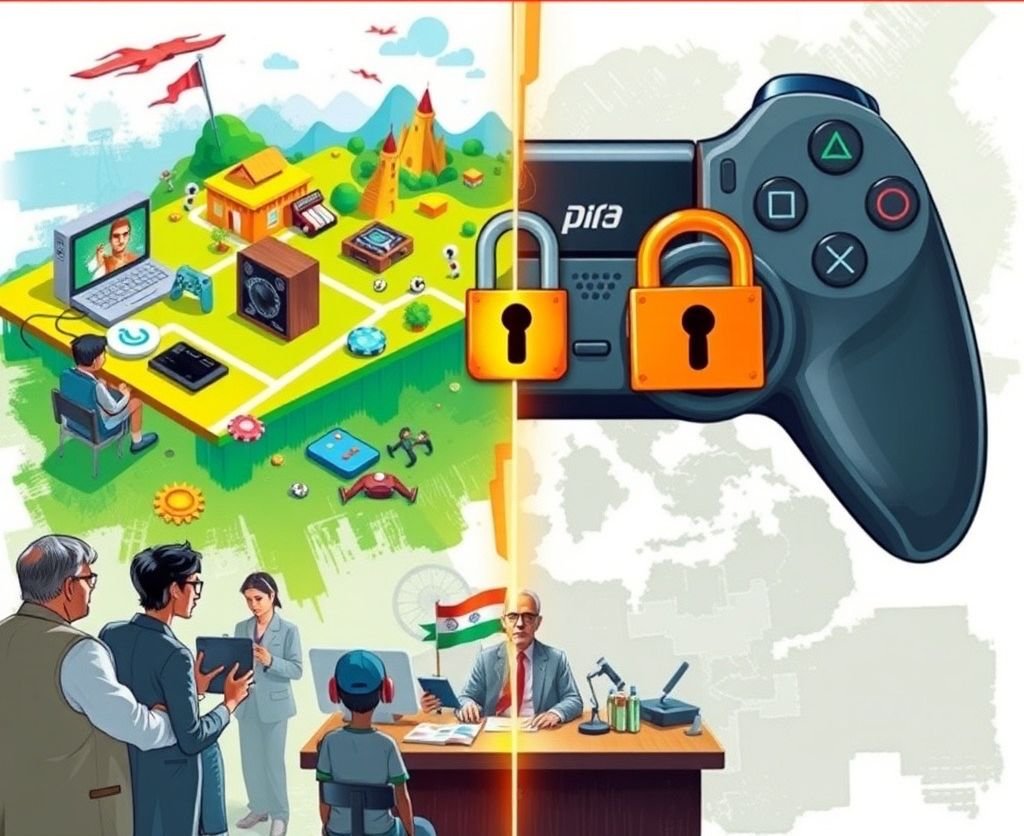
In a seismic shift for India’s booming digital economy, the Lok Sabha’s passage of the Online Gaming Bill 2025 has ignited widespread alarm over potential 2 lakh job losses and the shutdown of over 400 gaming startups, as the proposed gaming ban targets real money gaming platforms amid concerns of addiction and financial risks. 1 Industry leaders warn that this real money gaming ban could erase billions in revenue and cripple India’s position as a global gaming hub, while proponents highlight the need to curb gaming addiction that reportedly costs Indians Rs 20,000 crore annually in losses. 15
The Scale of India’s Gaming Industry and Imminent Threats from the Ban
India’s online gaming sector, valued at over Rs 2 lakh crore, has been a cornerstone of the digital economy, generating Rs 31,000 crore in annual revenue and contributing more than Rs 20,000 crore in taxes. 17 With a user base exceeding 50 crore gamers—up from 36 crore in 2020—the industry has grown at a staggering 20% compound annual growth rate (CAGR), attracting Rs 25,000 crore in foreign direct investment (FDI) by June 2022. 17 However, the Online Gaming Bill 2025, passed on Wednesday, imposes a blanket ban on real money gaming, threatening to dismantle this ecosystem and trigger massive job losses in gaming industry roles spanning developers, designers, streamers, and IT professionals. 2 Experts estimate that the proposed gaming ban could put 200,000 jobs at risk, including direct employment in over 400 companies that may face shutdowns. 7 “The bill, if enacted, would destroy over 2 lakh jobs, result in over 400 companies shutting down, and weaken India’s position as a digital innovator,” stated a joint letter from industry bodies like the All India Gaming Federation (AIGF), E-Gaming Federation (EGF), and Federation of India Fantasy Sports (FIFS) to Home Minister Amit Shah. 6 This real money gaming ban not only jeopardizes gaming startups but also risks a Rs 15,000-20,000 crore revenue loss for the government, pushing users toward illegal gambling platforms that evade taxes and regulations. 18 Statistics paint a grim picture: the sector, projected to double by 2028, employs lakhs in skill gaming and e-sports, with real money gaming accounting for a significant chunk of the $23-25 billion industry. 0 Employees are already exploring shifts to IT and healthcare sectors, often at lower pay, as the gaming ban puts lakhs of jobs in uncertainty. 2 On social media platforms like X (formerly Twitter), users echo these concerns, with petitions under #DontKillSkill urging the government to reconsider the blanket ban to protect jobs and innovation in India’s digital economy. 27
Expert Opinions and the Dual Edge of the Online Gaming Bill 2025
While the proposed gaming ban aims to address gaming addiction risks—citing psychological harm, money laundering, and financial fraud—critics argue it overlooks the distinction between skill gaming and chance-based gambling. 5 “A ban kills India’s startups and drives users to illegal networks,” said Karnataka IT Minister Priyank Kharge, highlighting over 2,000 gaming startups and 2 lakh jobs in IT, AI, and design at stake. 11 Industry insiders warn that the real money gaming ban could boost illegal offshore operators, siphoning funds abroad and exacerbating tax revenue loss. 21 On the flip side, the bill promotes e-sports and social gaming, potentially creating new avenues for job growth in non-monetary segments. 3 The e-sports sector, hailed by the bill, could see a boost, with platforms pivoting to advertising and subscriptions, fostering sustainable models amid the gaming ban. 25 Data from Reuters indicates the Indian gaming market could reach $3.6 billion by 2029, but the ban’s focus on youth protection might redirect FDI toward safer, regulated areas. 24 Analysts like those from Lumikai emphasize that while the real money gaming ban threatens $6 billion in annual FDI, it could pivot investments to e-sports, benefiting over 130,000 skilled workers. 25 However, the immediate fallout includes reduced sponsorships for sports like cricket, with fantasy gaming revenue hits affecting endorsements and grassroots leagues. 13
Broader Implications for India and UAE Audiences
The proposed gaming ban’s ripple effects extend beyond job losses in gaming industry, potentially stifling India’s digital economy ambitions under Prime Minister Narendra Modi’s $1 trillion vision. 20 For UAE audiences, where gaming and e-sports are rapidly expanding, India’s move serves as a cautionary tale: balancing regulation against innovation is key to avoiding similar tax revenue loss and gaming startups shutdowns. 8 As Dubai emerges as a tech hub, lessons from India’s Online Gaming Bill 2025 could influence policies to protect youth from gaming addiction while preserving jobs and FDI in the sector. In conclusion, while the real money gaming ban addresses critical issues like addiction and financial harm, its potential for 2 lakh job losses and economic disruption demands a nuanced approach. Progressive regulation, rather than a blanket prohibition, could safeguard India’s gaming industry, ensuring sustained growth and opportunities for millions in the digital economy. As debates rage, the bill’s final implementation will shape the future of skill gaming and e-sports in India and inspire similar frameworks in the UAE, driving a safer yet thriving regional gaming landscape.
-By NewsNowNation Editorial Team

