Engineering Innovation Meets Wildlife Conservation on the Delhi-Mumbai Expressway
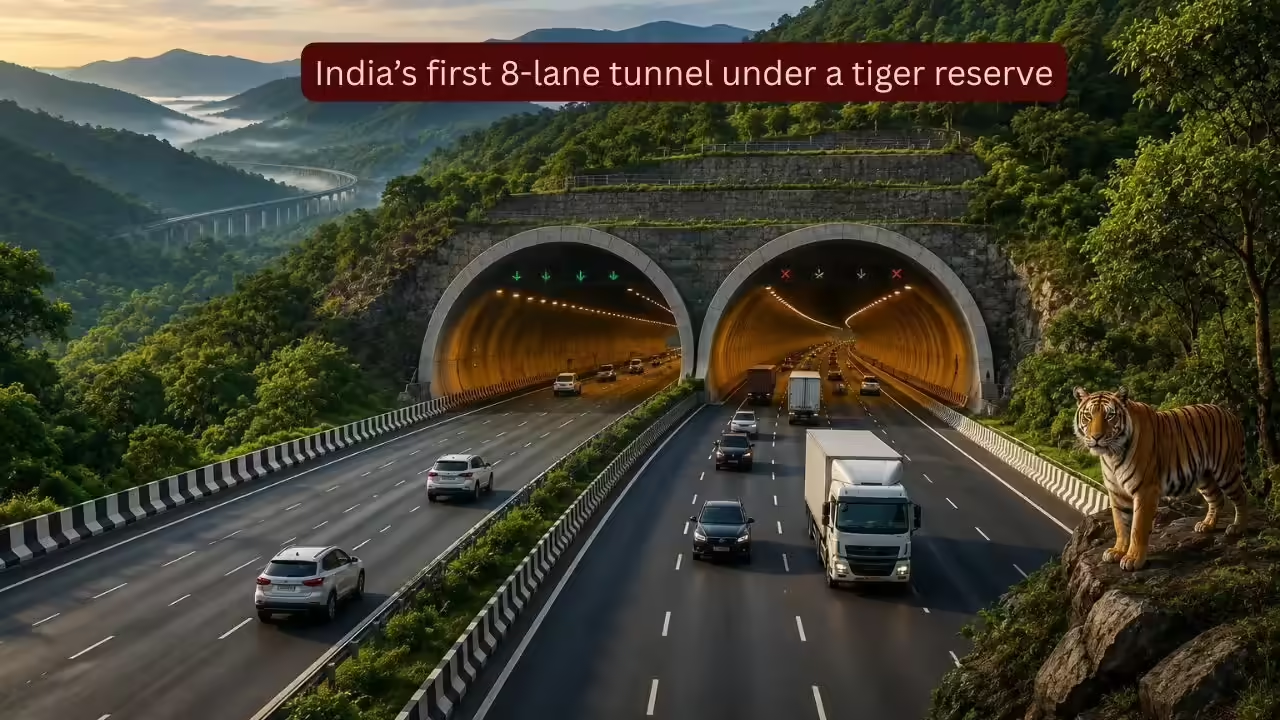
India has achieved a significant milestone in infrastructure development with the opening of the country’s first eight-lane tunnel constructed beneath a tiger reserve. Located on the Delhi-Mumbai Expressway corridor and passing under the Mukundra Hills Tiger Reserve in Rajasthan, the project represents a rare combination of large-scale transportation development and wildlife conservation.
The opening of the tunnel marks a new chapter in India’s infrastructure journey, demonstrating how modern engineering solutions can be used to improve connectivity while minimizing environmental impact. As one of the most ambitious highway projects in the country, the Delhi-Mumbai Expressway is expected to transform travel, logistics, trade, and economic activity across several states.
A Unique Solution for Wildlife Protection
The newly operational tunnel has been designed to allow uninterrupted movement of vehicles while ensuring that wildlife movement above ground remains undisturbed. This approach addresses one of the most common challenges associated with infrastructure projects near protected ecological zones. Instead of creating barriers that fragment habitats, the tunnel preserves the natural landscape and allows animals to move freely within the reserve.
The Mukundra Hills Tiger Reserve is one of Rajasthan’s important protected areas and is home to a variety of wildlife species, including tigers, leopards, sloth bears, deer, and numerous bird species. Protecting these ecosystems while improving transportation infrastructure required extensive planning, environmental assessments, and advanced engineering techniques.
Strengthening Connectivity Through the Delhi-Mumbai Expressway
The tunnel forms a key section of the Delhi-Mumbai Expressway, a mega infrastructure project designed to improve connectivity between India’s national capital region and its financial capital. Once fully operational, the expressway is expected to reduce travel time significantly, lower transportation costs, and enhance freight movement across multiple industrial and commercial corridors.
Infrastructure experts have highlighted the tunnel as an example of how transportation networks can be developed in environmentally sensitive regions without compromising conservation goals. The project reflects a growing emphasis on sustainable infrastructure, where economic development and environmental protection are considered complementary objectives rather than competing priorities.
Advanced Engineering and Safety Features
The construction process involved specialized engineering methods to ensure structural stability while minimizing disturbances to the surrounding ecosystem. Advanced monitoring systems, ventilation infrastructure, safety mechanisms, and traffic management technologies have been integrated into the tunnel to provide a secure and efficient travel experience.
For India, the successful completion of this project demonstrates the growing capability of domestic engineering and construction sectors to execute complex infrastructure developments that meet international standards. It also highlights the importance of integrating sustainability considerations into large-scale public projects.
Economic Benefits and Regional Growth
Apart from its engineering significance, the project is expected to generate substantial economic benefits. Improved road connectivity generally contributes to faster movement of goods, lower logistics costs, increased tourism opportunities, and enhanced regional development. Businesses operating along the Delhi-Mumbai corridor are likely to benefit from reduced transit times and improved supply chain efficiency.
India’s logistics sector has been undergoing rapid transformation in recent years through investments in highways, freight corridors, ports, airports, and multimodal transport networks. Projects such as the Delhi-Mumbai Expressway play a crucial role in supporting the country’s long-term economic growth ambitions by strengthening physical infrastructure and reducing transportation bottlenecks.
Adopting Global Best Practices in Sustainable Infrastructure
The tunnel also reflects the increasing adoption of global best practices in infrastructure planning. Around the world, countries are exploring innovative approaches to balance development needs with environmental preservation. Wildlife crossings, green bridges, ecological corridors, and underground transport systems have emerged as effective solutions for reducing the impact of infrastructure on natural habitats.
Environmentalists and infrastructure planners alike have welcomed the tunnel as a positive example of responsible development. While economic growth remains a national priority, there is increasing recognition that long-term prosperity depends on preserving biodiversity and maintaining healthy ecosystems.
Boosting Tourism and Accessibility
The opening of the tunnel comes at a time when India continues to invest heavily in transportation infrastructure as part of broader efforts to improve ease of doing business, attract investment, and strengthen regional connectivity. Enhanced transport networks contribute directly to economic competitiveness by enabling faster movement of people, products, and services.
Tourism is another sector expected to benefit from improved accessibility. Rajasthan remains one of India’s most visited states, attracting both domestic and international travelers. Better road infrastructure can improve travel experiences while supporting local businesses, hospitality providers, and tourism-related services.
A Model for Future Infrastructure Projects
As infrastructure projects become larger and more complex, the integration of environmental safeguards is likely to become increasingly important. The success of the Mukundra Hills tunnel could serve as a model for future projects located near ecologically sensitive areas across the country.
The project demonstrates that development and conservation do not have to be mutually exclusive. Through careful planning, innovative engineering, and a commitment to sustainability, it is possible to create infrastructure that serves economic needs while preserving natural ecosystems.
Conclusion
India’s first eight-lane tunnel beneath a tiger reserve stands as a symbol of this balanced approach. By improving connectivity, supporting economic growth, and protecting wildlife habitats, the project represents a significant achievement in modern infrastructure development and a noteworthy step forward in sustainable nation-building.
For more updates on business, economy, infrastructure, startups, technology, and policy developments, follow News Now Nation at www.newsnownation.com.

