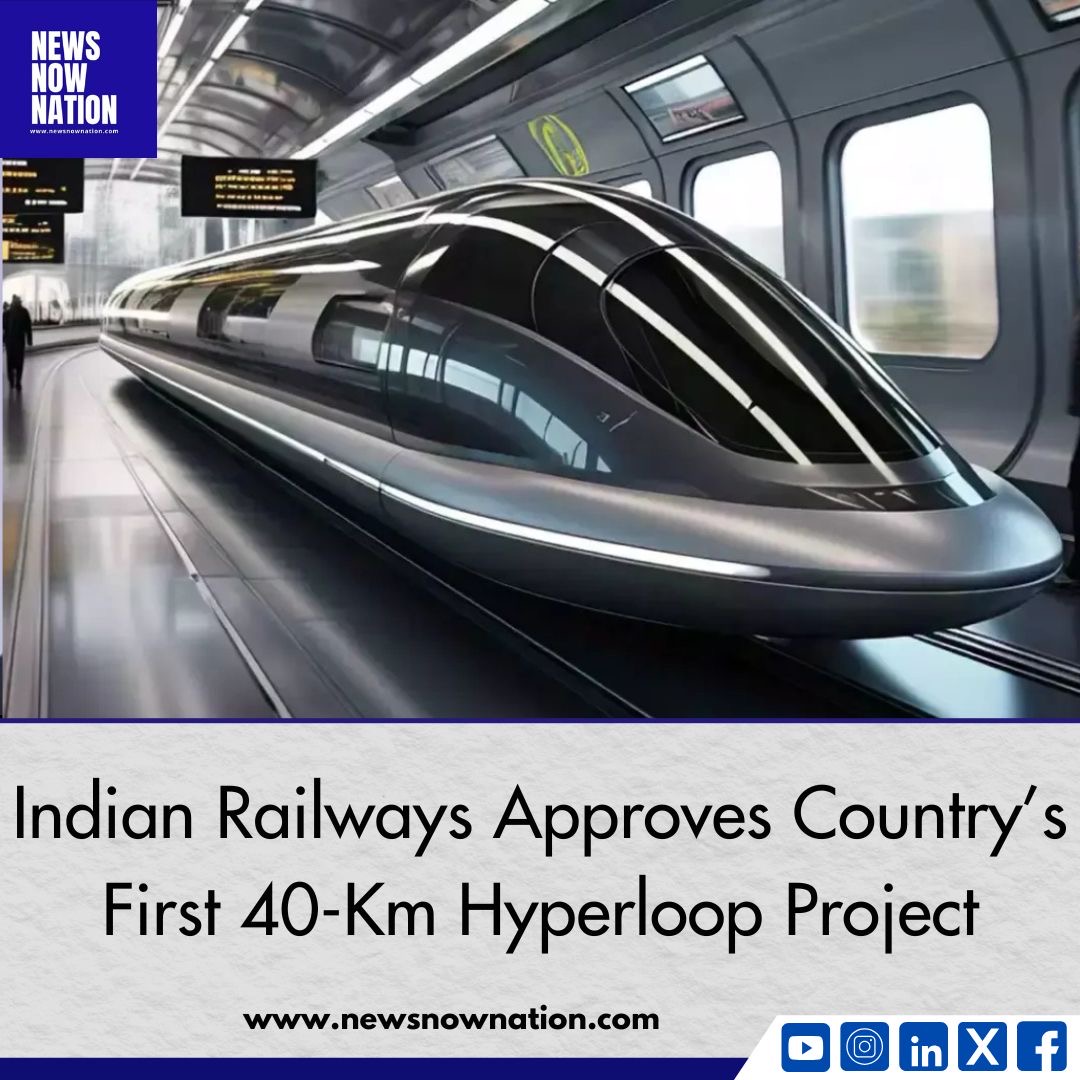
India is set to take a major step toward futuristic transportation with the approval of its first 40-kilometer hyperloop project. The Indian Railways has cleared the tracks for this groundbreaking initiative, which could revolutionize the country’s transport infrastructure. Hyperloop technology, known for its ultra-fast travel speeds and energy efficiency, promises to redefine the way people commute, significantly reducing travel time between major destinations.
What is Hyperloop Technology?
Hyperloop is an advanced transportation system that uses magnetic levitation and near-vacuum tubes to propel passenger or cargo pods at high speeds. Unlike traditional trains, hyperloop systems minimize air resistance and friction, enabling speeds of up to 1,200 km/h. This futuristic mode of transport, first conceptualized by Elon Musk, has been gaining global traction, with various countries exploring its feasibility.
India’s First Hyperloop Corridor
The newly approved hyperloop project in India will span 40 kilometers, marking a historic milestone in the country’s transportation sector. While specific details regarding the route, timeline, and costs are yet to be fully disclosed, this decision signifies the government’s commitment to embracing next-generation mobility solutions.
Benefits of Hyperloop in India
The introduction of hyperloop technology in India could bring several transformative benefits:
- Drastic Reduction in Travel Time: With speeds potentially exceeding 1,000 km/h, hyperloop corridors could cut travel durations between cities from hours to minutes.
- Sustainability: Unlike conventional trains or air travel, hyperloop systems rely on clean energy sources and produce minimal carbon emissions.
- Decongestion of High-Traffic Routes: By offering an alternative to road and rail transport, hyperloop can reduce congestion on highways and railway networks.
- Boost to Economic Growth: The project is expected to create jobs, attract investments, and drive innovation in India’s transportation and infrastructure sectors.
Challenges Ahead
Despite its potential, hyperloop technology still faces several hurdles, including:
- High Initial Costs: Developing hyperloop infrastructure requires substantial financial investment, making large-scale deployment a challenge.
- Regulatory and Safety Approvals: As a relatively new mode of transport, hyperloop systems must undergo rigorous testing and regulatory scrutiny before becoming operational.
- Land Acquisition Issues: Like other large infrastructure projects in India, acquiring land for hyperloop corridors may present obstacles.
India’s Vision for Hyperloop
With Indian Railways backing the project, the country is inching closer to becoming a global leader in hyperloop technology. If successfully implemented, this initiative could pave the way for more hyperloop corridors, connecting major cities and revolutionizing travel across India.
As the project progresses, more details on its development, investment partners, and expected launch dates will emerge. For now, India’s first hyperloop approval signals a bold step toward the future of ultra-fast, sustainable transportation.

