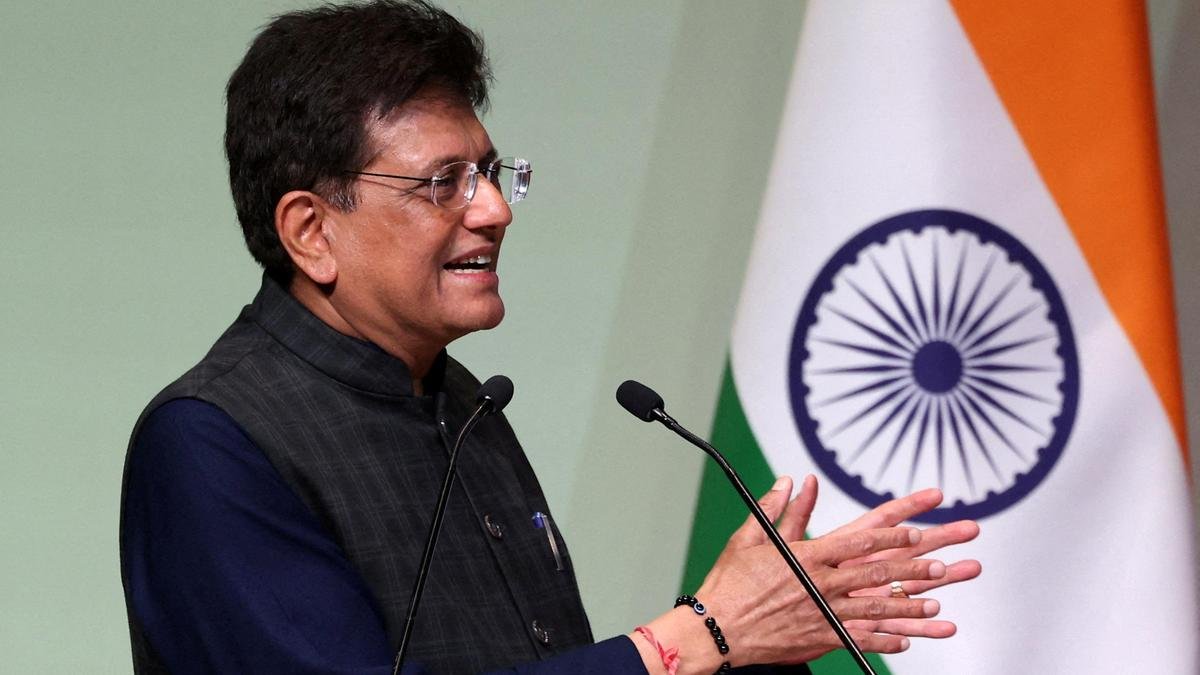
India and the United Kingdom have taken another significant step toward implementing their landmark Free Trade Agreement (FTA), as Union Commerce and Industry Minister Piyush Goyal begins a high-level visit to Britain. The meetings are focused on accelerating the agreement’s implementation, strengthening bilateral trade, and creating new opportunities for businesses, manufacturers, startups, and investors in both countries.
The visit comes after months of negotiations that culminated in one of India’s most comprehensive trade agreements with a major developed economy. Industry leaders believe the partnership has the potential to redefine commercial ties between the two nations while opening new avenues for investment, technology collaboration, and economic growth.
A Landmark Agreement Nears Implementation
The India–UK Free Trade Agreement represents one of the most ambitious trade partnerships negotiated by India in recent years. The agreement is expected to reduce tariffs across several sectors while making it easier for businesses to access each other’s markets.
Commerce Minister Piyush Goyal’s visit to the United Kingdom is aimed at discussing implementation timelines, regulatory coordination, and strategies to ensure businesses can quickly benefit from the agreement.
Officials from both countries have emphasized that the partnership extends beyond trade. It also focuses on innovation, advanced manufacturing, digital technology, clean energy, education, and skilled workforce mobility.
For businesses on both sides, smoother market access could translate into increased exports, stronger supply chains, and expanded commercial partnerships.
Boosting Indian Businesses and Exporters
Indian exporters are expected to be among the biggest beneficiaries of the agreement.
Industries including textiles, pharmaceuticals, engineering goods, food processing, gems and jewellery, automotive components, information technology, and professional services could gain improved access to one of Europe’s largest consumer markets.
Small and medium enterprises (SMEs) may also benefit from simplified procedures and expanded opportunities to participate in international trade.
Business organizations have welcomed the progress, noting that greater market access can improve competitiveness while encouraging companies to scale globally.
The agreement also sends a positive signal to international investors looking at India as a long-term manufacturing and innovation destination.
New Opportunities for Startups and Innovation
The partnership is expected to create fresh opportunities for startups operating across technology, fintech, artificial intelligence, clean energy, healthcare, and digital services.
With stronger economic cooperation, entrepreneurs from both countries could find it easier to collaborate through research partnerships, investment programs, and innovation ecosystems.
India’s growing startup ecosystem has become one of the world’s largest, while the United Kingdom remains a global hub for venture capital, financial services, and technology innovation.
Closer cooperation between these ecosystems could encourage greater cross-border investment and knowledge exchange.
Industry experts believe innovation partnerships will become an increasingly important component of future trade relationships.
Strengthening a Strategic Economic Partnership
Trade between India and the United Kingdom has expanded steadily over recent years, supported by increasing business collaboration and investment.
The agreement reflects a broader commitment to building resilient supply chains, encouraging sustainable economic development, and supporting long-term commercial cooperation.
Government representatives from both countries have highlighted sectors such as renewable energy, advanced manufacturing, education, financial services, digital infrastructure, and green technologies as areas with significant growth potential.
As global businesses diversify supply chains, India is emerging as an increasingly attractive destination for investment, manufacturing, and technology development.
The trade agreement could further strengthen that position.
What Comes Next
The current discussions are expected to focus on final implementation mechanisms, ensuring businesses understand how to utilize the agreement effectively once it comes into force.
Industry groups are also likely to engage with policymakers to maximize the benefits available to exporters, manufacturers, startups, and investors.
While implementation will take place in phases, both governments have indicated their commitment to ensuring that businesses begin experiencing tangible benefits as quickly as possible.
The agreement is expected to contribute not only to increased trade volumes but also deeper economic cooperation across multiple sectors.
Conclusion
Commerce Minister Piyush Goyal’s visit to Britain marks another important milestone in strengthening India–UK economic relations. As the landmark trade agreement moves closer to implementation, businesses, startups, exporters, and investors stand to benefit from greater market access, increased collaboration, and stronger commercial ties.
The partnership reflects the growing importance of international cooperation in driving innovation, investment, and sustainable economic growth. For both India and the United Kingdom, the agreement represents a forward-looking framework designed to support prosperity for years to come.
For more updates on business, startups, technology, innovation, sustainability, and global developments, visit NewsNowNation at https://newsnownation.com/.
India UK Trade Deal, India UK FTA, Piyush Goyal UK Visit, UK Business and Trade, India Exports, Bilateral Trade, Startup India, International Trade, India UK Partnership, Free Trade Agreement, Global Business, Economic Growth, Trade Relations, Manufacturing India, NewsNowNation

