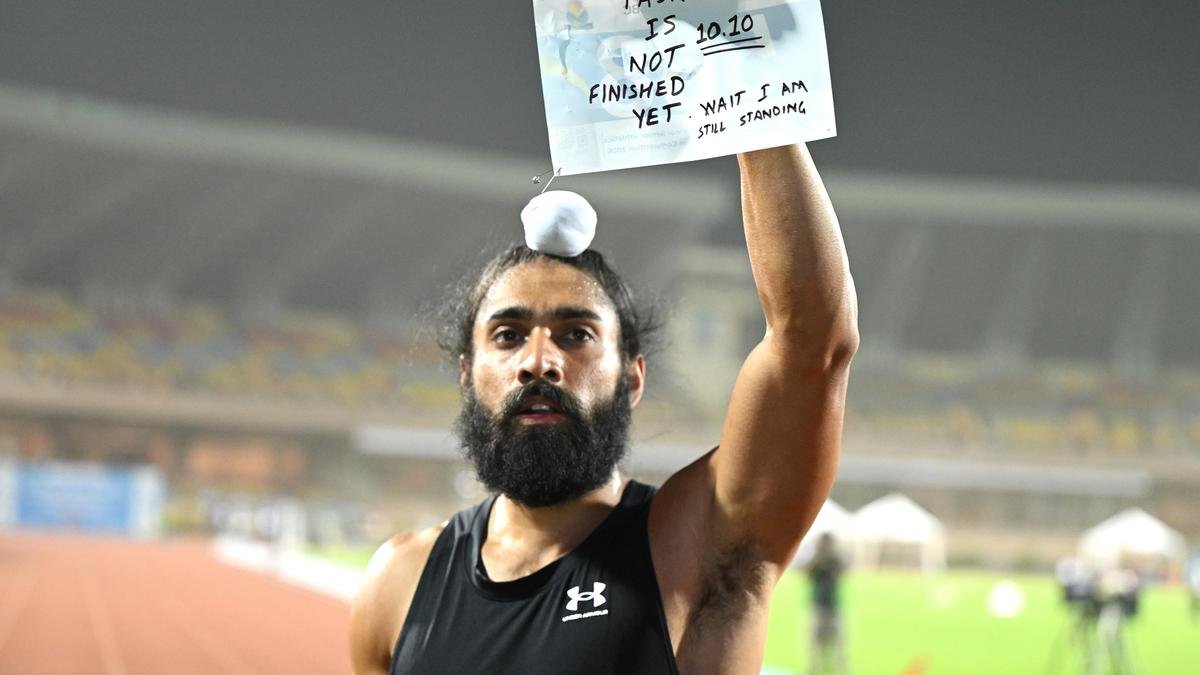
Indian athletics witnessed a landmark moment when Gurindervir Singh clocked an extraordinary 10.09 seconds in the men’s 100-metre sprint at the National Senior Athletics Federation Competition in Ranchi. The performance not only established a new national record but also made him the first Indian athlete to break the 10.10-second barrier in the event. The achievement immediately placed Gurindervir among the most significant names in Indian track and field history and generated renewed excitement about the future of sprinting in the country.
The record-breaking run came during a remarkable competition that saw the national record change hands multiple times. Just a day earlier, Gurindervir had set a new national mark before fellow sprinter Animesh Kujur briefly surpassed it. The rivalry between the two athletes has brought unprecedented attention to Indian sprinting and demonstrated the rapid progress being made in the discipline.
For decades, Indian athletics has produced champions in middle-distance running, field events, and race walking, but the 100-metre sprint remained an area where the country struggled to achieve international recognition. Gurindervir’s breakthrough performance has changed that narrative and offered fresh optimism for Indian athletics.
The significance of Gurindervir’s achievement extends beyond a national record. Sprinting is one of the most competitive events in global athletics, and improvements are often measured in hundredths of a second. For years, India’s national record remained relatively stagnant compared to the progress being witnessed in other parts of the world.
Anil Kumar’s long-standing national record stood as a benchmark for more than two decades before a new generation of sprinters began pushing the limits. Within a short period, Indian athletes have moved from chasing the 10.20-second barrier to breaking 10.10 seconds. This rapid progression indicates that Indian sprinting is entering a new phase of development.
Gurindervir’s performance also secured qualification standards for major international competitions, including upcoming continental and multi-sport events. More importantly, it demonstrated that Indian athletes can now compete at a level that was previously considered unattainable in sprinting.
His achievement reflects years of disciplined training, scientific coaching, improved facilities, and increasing support systems available to elite athletes. It also highlights the role of professional training programs and institutional backing in helping athletes achieve world-class performances.
While Gurindervir’s record is historic from an Indian perspective, the global landscape of sprinting remains highly competitive. The men’s 100-metre event continues to be dominated by athletes from countries with long-established sprinting traditions, particularly Jamaica and the United States.
World Athletics statistics indicate that many nations have produced athletes capable of running below the 10-second mark, a benchmark widely regarded as the elite standard in sprinting. Gurindervir’s 10.09-second performance represents a major leap forward for India, but it also highlights the distance that remains between Indian sprinters and the world’s absolute best performers.
The world record of 9.58 seconds, set by Usain Bolt, remains one of the most remarkable achievements in sporting history. Although comparisons between Gurindervir and Bolt have naturally emerged following the national record, athletics experts emphasize that India’s progress should be measured against its own developmental journey rather than direct comparisons with global legends.
The encouraging aspect is that Indian sprinting is now moving in the right direction. Consistent improvements, stronger competition among domestic athletes, and greater exposure to international events can help bridge the gap over time.
One of the biggest reasons behind the recent surge in Indian sprinting standards is the emergence of healthy competition among athletes. The rivalry between Gurindervir Singh and Animesh Kujur has created an environment where athletes continuously push each other toward better performances.
Historically, many successful sporting nations have benefited from strong domestic competition. When athletes regularly compete against rivals capable of challenging records, performance standards improve naturally. The recent sequence of record-breaking performances in Indian sprinting demonstrates the value of such competition.
This rivalry has also attracted greater public attention to athletics, a sport that often struggles for visibility in a cricket-dominated sporting landscape. Increased media coverage, sponsorship interest, and public support can contribute significantly to the growth of sprinting and track and field events across India.
Young athletes watching these performances now have role models who have demonstrated that national records can be broken and new standards can be established.
Experts believe that achieving sustained success in sprinting requires a comprehensive ecosystem that includes coaching, sports science, nutrition, recovery facilities, and international exposure. While natural talent remains important, modern sprinting is increasingly dependent on scientific preparation and long-term athlete development.
India has made considerable progress in these areas over the past decade. High-performance centres, private sports foundations, government initiatives, and improved training infrastructure have created better opportunities for athletes to develop their potential.
The challenge now is to build on recent successes and create a larger pipeline of elite sprinters capable of competing internationally. If current trends continue, India could produce athletes capable of challenging for medals at major continental championships and potentially making deeper impacts on the global stage.
Gurindervir Singh’s historic 10.09-second run represents more than a national record. It symbolizes a changing era in Indian athletics, where athletes are increasingly challenging long-standing limitations and proving that international standards are within reach.
His famous message after the race captured the sentiment perfectly: the task is not finished yet. For Gurindervir, for Indian sprinting, and for the next generation of athletes, the journey toward global competitiveness is still ongoing. The finish line may be far away, but India is running faster than ever before.
Follow NewsNowNation.com for more updates on business news, sports achievements, startup developments, leadership insights, and global trends.

