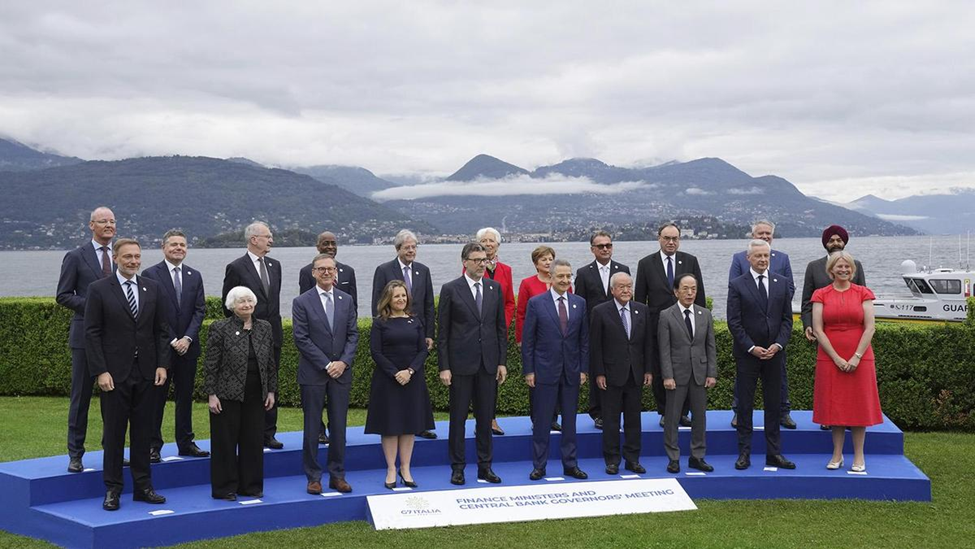
Global energy markets are once again facing heightened uncertainty as the Group of Seven (G7) nations consider releasing emergency oil reserves to stabilize rising crude prices. The move comes at a time when geopolitical tensions and supply disruptions have triggered a sharp surge in global oil prices, raising concerns about inflation, economic growth, and energy security across the world.
According to reports, finance ministers from the G7 countries are holding discussions about a coordinated release of oil from strategic reserves, a step that would be carried out in coordination with the International Energy Agency (IEA). The discussions aim to address the sharp spike in oil prices that has been triggered by escalating geopolitical tensions and supply concerns in the global energy market.
Oil Prices Surge Amid Global Tensions
The recent surge in crude oil prices has been significant. Reports indicate that global oil prices have risen by more than 25 percent in a short period, reaching levels not seen since mid-2022. The surge has been largely attributed to geopolitical developments in the Middle East and fears of disruptions in oil supply routes.
Energy markets reacted sharply to the uncertainty, with Brent crude and West Texas Intermediate (WTI) prices climbing well above the $100 per barrel mark. Such price spikes often trigger concerns about inflation because energy costs influence multiple sectors of the global economy, including transportation, manufacturing, and logistics.
For countries that rely heavily on imported crude oil, rising prices can increase fiscal pressure and impact domestic fuel prices. Governments around the world are therefore closely monitoring the developments in the energy market.
Strategic Petroleum Reserves: A Global Safety Mechanism
Strategic petroleum reserves play a crucial role in maintaining energy stability during times of crisis. These reserves are stockpiles of crude oil maintained by governments to be used during emergencies such as supply disruptions, wars, or major natural disasters.
The International Energy Agency coordinates a collective emergency system among its member countries. Together, these countries hold approximately 1.2 billion barrels of oil in public reserves that can be released to stabilize markets during severe supply disruptions.
If the G7 countries decide to move forward with the proposal, experts believe the release could range between 300 million and 400 million barrels of oil. Such a release would represent roughly 25 to 30 percent of the total strategic reserves held by IEA member countries.
A coordinated action of this scale would be one of the largest emergency oil releases in history and would send a strong signal to global markets.
How an Emergency Oil Release Helps Stabilize Markets
When oil prices surge rapidly, it often leads to economic uncertainty and market volatility. A coordinated release of oil reserves can help increase short-term supply and calm market fears.
Even the announcement of a potential release can have an immediate psychological effect on the market. Traders and investors may respond by adjusting their expectations, which can lead to a temporary decline in crude prices.
Historically, the IEA has coordinated emergency releases only a few times. These include major events such as the 1991 Gulf War, the aftermath of Hurricane Katrina in 2005, the Libyan civil war in 2011, and supply disruptions during the Russia-Ukraine conflict.
In each of these situations, the coordinated release of strategic reserves helped stabilize oil markets and ease pressure on global energy supplies.
Impact on Global Economy
The rising cost of crude oil has far-reaching implications for the global economy. Higher energy prices typically lead to increased production costs for businesses and higher transportation costs for consumers.
Inflation can rise as a result, forcing central banks to reconsider monetary policies. In many cases, rising oil prices have historically contributed to economic slowdowns or recessions.
Financial markets have already reacted to the recent oil price spike, with global stock markets experiencing volatility as investors assess the potential economic impact. Energy-intensive sectors such as aviation, logistics, and manufacturing are particularly sensitive to rising fuel prices.
Implications for Energy Security
The current situation highlights the importance of energy security for nations around the world. Governments are increasingly focusing on building strategic reserves, diversifying energy sources, and investing in renewable energy technologies to reduce dependence on imported oil.
For developing economies, energy price volatility can significantly impact economic stability. As a result, coordinated actions by global economic powers such as the G7 are closely watched by policymakers and financial markets alike.
The discussions among G7 finance ministers demonstrate how global cooperation plays a critical role in responding to energy crises. By working together through institutions like the International Energy Agency, major economies can coordinate responses to supply disruptions and help stabilize global markets.
What Comes Next
While discussions are ongoing, the decision to release emergency oil reserves will depend on how global energy markets evolve in the coming weeks. If supply disruptions continue and prices remain elevated, coordinated intervention could become more likely.
However, experts also point out that strategic reserve releases are usually temporary solutions designed to manage short-term shocks. Long-term stability in the energy market ultimately depends on restoring supply chains and reducing geopolitical tensions.
For now, the global energy market remains highly sensitive to geopolitical developments, and policymakers continue to evaluate options to maintain stability.
Follow for more updates regarding business related news in newsnownation.com.
