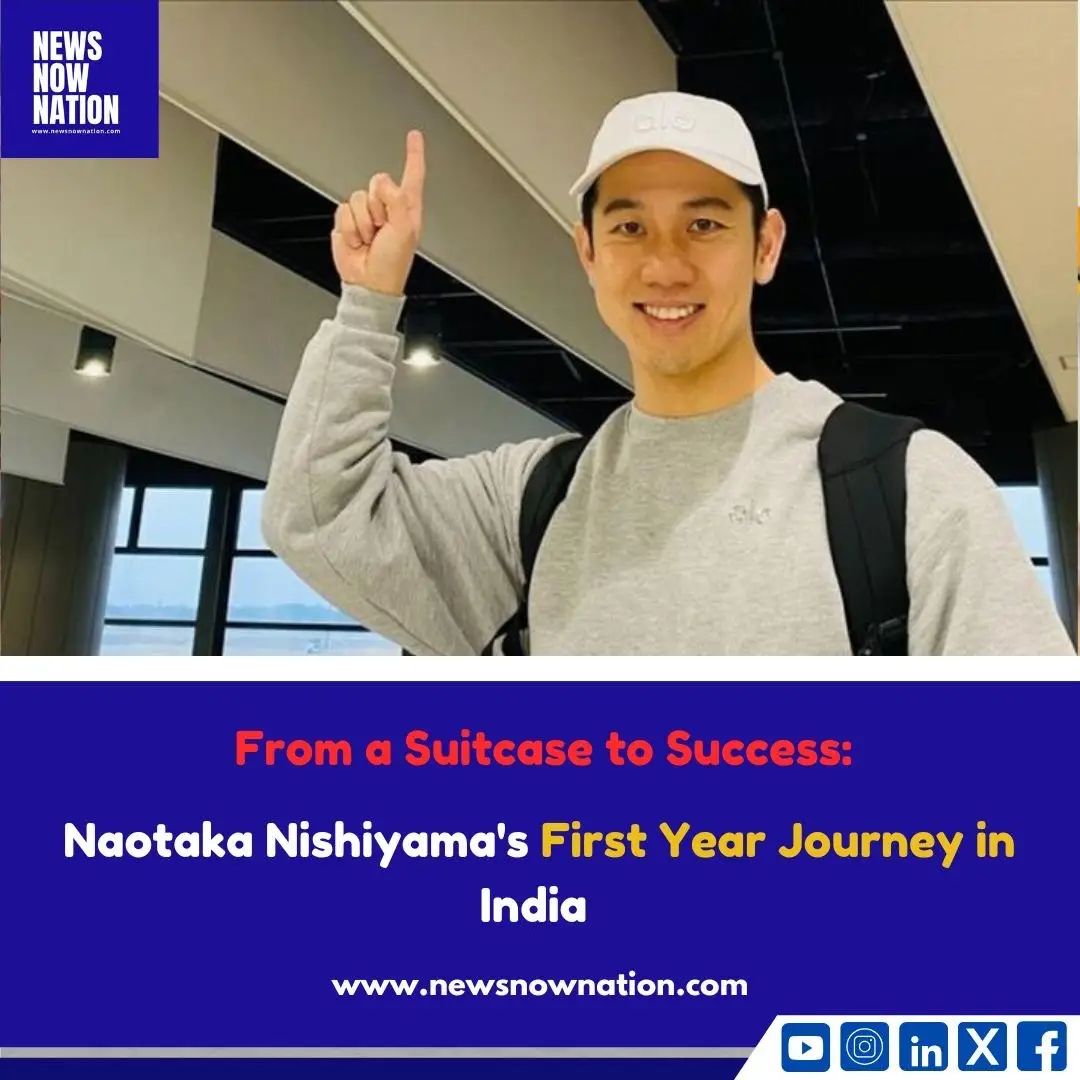
Naotaka Nishiyama, the founder and CEO of Tech Japan, recently took to LinkedIn to share his experiences and reflections after spending a year in India. His journey, which began on March 25, 2024, when he left Tokyo International Airport with just a suitcase, has been one of adaptation, learning, and growth. Upon landing in Bengaluru in the early hours of March 26, 2024, Nishiyama stepped into a world vastly different from what he had known in Japan.
A Leap of Faith
For Nishiyama, moving to India was not just a business decision but a personal and professional transformation. Unlike most Japanese professionals in India who work in corporate roles within the automotive, electronics, or banking sectors, Nishiyama is a startup founder trying to build something from the ground up. This often led to surprised reactions from locals, many of whom assumed he was associated with big Japanese brands like Toyota or Suzuki. Instead, he would explain that he runs Talendy, a company focused on talent and innovation, which often piqued curiosity.
The decision to relocate was driven by Nishiyama’s deep belief in India’s potential as a global leader in technology and business. Instead of operating from the comfort of his home country, he chose to immerse himself in India’s unique entrepreneurial ecosystem, determined to understand its culture, work ethics, and market dynamics firsthand.
Adapting to a New Environment
One of the biggest challenges Nishiyama faced was adapting to India’s diversity. Unlike Japan, which is relatively homogeneous, India is a melting pot of languages, religions, and cultures. This diversity, while initially overwhelming, soon became one of the aspects he admired most about the country.
“In India, there are so many different values, but somehow, the country stays united. It’s like a miracle,” Nishiyama shared. He was particularly fascinated by the way Indians balance competition with collaboration. While people strive for individual success, they also uphold a strong sense of community and support, something he believes gives India a unique edge in global leadership.
Building a Business in India
For Nishiyama, simply visiting India for business was not enough. He wanted to be part of the system, build relationships with local talent, and establish a strong foundation for his company. Over the past year, he has been assembling a team in India, aiming to create an organization that can make a meaningful impact.
His experience has reaffirmed his belief that India is on the path to becoming a dominant force in the global economy. He pointed to the success of Indian-origin leaders such as Sundar Pichai (CEO of Google) and Satya Nadella (CEO of Microsoft) as evidence that India has the capability to produce world-class business and technology leaders.
However, he also acknowledged the challenges that come with doing business in India. Bureaucracy, infrastructure, and regulatory hurdles can be complex, requiring patience and adaptability. But Nishiyama sees these as opportunities rather than obstacles. He believes that for foreign entrepreneurs to succeed in India, they must embrace the country’s dynamic nature and be willing to learn from its people.
A Vision for the Future
Looking ahead, Nishiyama is excited about what the future holds for his company and for India as a whole. He sees India not just as a market but as a place where groundbreaking ideas can be developed and exported to the rest of the world. His ultimate goal is to contribute to India’s growing influence on the global stage, not just as an investor but as an active participant in its innovation ecosystem.
Reflecting on his journey, Nishiyama is grateful for the opportunities and challenges he has encountered. He believes that India’s potential is limitless and that the world needs Indian leadership now more than ever. His story serves as an inspiration for aspiring entrepreneurs looking to take bold steps and explore new horizons.

