A foreign traveller has sparked a major discussion on social media after sharing an unexpected comparison between her experiences in India and London. The traveller, identified as Emma, said she felt less stressed about using her phone in public while travelling across India than she usually does in London.
Her experience quickly gained attention online because it challenged common assumptions and warnings often associated with international travel in India. Before arriving in the country, Emma had reportedly heard familiar advice about keeping a close watch on personal belongings, avoiding the public display of expensive devices and remaining alert while moving through crowded places.
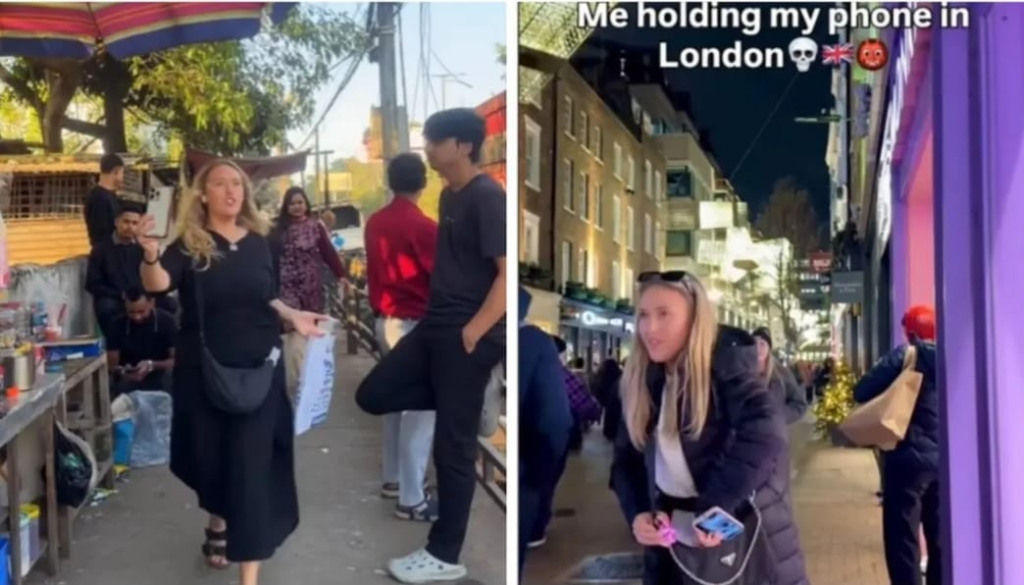
However, her personal experience during her journey turned out to be different from what she had expected.
Emma travelled through several destinations in India, including Kerala, Varkala, Guwahati and Meghalaya. During her trip, she documented her journey and filmed videos in public places. According to her social media post, she found herself walking around with her phone in her hand without constantly worrying that someone might steal it.
The traveller compared this feeling with her experience in London, where she said she is generally more conscious about keeping her phone secure. Her comparison has since become a talking point across social media, with users debating travel safety, public perception and the difference between expectations and personal experiences.
Foreign Traveller’s India Experience Challenges Earlier Warnings
Before visiting India, Emma had heard several warnings that many international tourists receive before travelling to a new country. Such advice often includes keeping valuables hidden, remaining aware of surroundings and avoiding unnecessary use of expensive gadgets in public.
Emma said her actual journey challenged the narrative she had heard before travelling.
While visiting places including Varkala in Kerala, Guwahati and Meghalaya, she said she was able to film freely and walk around with her phone without experiencing the constant concern she had expected. The traveller explained that she did not have the continuous feeling that she needed to keep checking her belongings.
This sense of comfort became the central point of her viral social media video.
The comparison became particularly striking when she described how she handles her phone in London. According to Emma, she feels much more conscious about securing her device there. Her remarks reflected her own experience and were not presented as a universal conclusion about either India or London.
Emma also made it clear that every destination has risks and that her experience should not be interpreted as a claim that any country is completely free from crime or safety concerns. Instead, her post focused on the gap between what she had expected before travelling and what she personally experienced during her time in India.
That distinction is important because travel safety can vary significantly depending on the city, neighbourhood, time of day and individual circumstances. A positive experience for one traveller does not automatically represent the experience of every visitor. At the same time, Emma’s story shows how direct travel experiences can sometimes challenge widely held perceptions.
Viral Video Sparks Debate Over India and London Safety Perceptions
The foreign tourist’s comments quickly attracted attention online. Many social media users welcomed her observations and said international travellers often discover a different side of India after visiting the country themselves.
Others responded more cautiously, pointing out that travellers should remain alert in every major city and tourist destination. The discussion highlighted the complexity of comparing safety between two countries based on one person’s experience.
India is a vast country with major metropolitan areas, small towns, coastal destinations, mountain regions and rural communities. Experiences can differ greatly between locations. The same is true for London, where conditions and safety concerns can vary across neighbourhoods and public spaces.
Emma’s video became popular because it offered a personal perspective rather than a formal safety ranking. She was describing how she felt while using her phone during her journey and how that feeling differed from her usual behaviour in London.
Her account also reflects the growing influence of travel content on public perceptions. Social media platforms allow travellers to share real-time experiences that may support, question or completely challenge existing assumptions about a destination.
For potential tourists, such first-hand accounts can influence travel decisions. However, travellers are still advised to use normal precautions, protect valuable belongings and remain aware of their surroundings regardless of the country they visit.
Social Media and the Changing Image of Travel in India
India continues to attract international travellers because of its cultural diversity, landscapes, food, history and wide range of destinations. From coastal locations such as Varkala to the natural beauty of Meghalaya and the urban character of Guwahati, the country offers very different experiences within a single journey.
Emma’s travel route appears to have played an important role in shaping her perception. She visited different regions and shared her experience through videos, giving her audience a direct view of the places she explored.
The viral response to her comments also shows how international perceptions of destinations can change through personal stories. For years, many travellers have relied on guidebooks, television reports and online warnings before visiting unfamiliar countries. Today, travel creators and ordinary tourists can share experiences directly with global audiences.
This does not mean that social media videos should replace official travel advice or basic precautions. Personal stories are subjective and cannot provide a complete picture of safety in an entire country. Still, they can add important context by showing experiences that may not always receive widespread attention.
Emma’s comments have resonated because they reverse a commonly expected comparison. Rather than saying she felt more worried about her phone in India, she said she experienced greater stress about phone security in London.
The statement naturally attracted strong reactions because both India and the United Kingdom are frequently discussed through different social and cultural perceptions. Her video encouraged people to reconsider whether popular assumptions always match the reality experienced by individual travellers.
Personal Experience Becomes a Wider Conversation on Travel Safety
The discussion surrounding the viral video goes beyond one tourist and one mobile phone. It raises broader questions about how people form opinions about countries they have never visited.
Warnings, news reports, social media posts and stories from other travellers can all shape expectations. Sometimes those expectations are confirmed, while at other times direct experience produces a very different impression.
Emma’s journey across India appears to have changed her own expectations. She said travelling through the country challenged the warnings she had heard before arriving. The freedom she felt while filming and carrying her phone became one of the most memorable parts of that contrast.
At the same time, the traveller acknowledged that risks exist everywhere. This clarification has become an important part of the conversation because it prevents the story from becoming a simplistic claim that one country is completely safe while another is not.
The viral response demonstrates how strongly people react to international comparisons, especially when they involve safety, tourism and national image. Supporters viewed the video as a positive example of India being experienced differently from common stereotypes. Others stressed that travellers should not become careless based on a single viral story.
Both perspectives underline the importance of balanced travel awareness.
The central message of Emma’s experience is that personal encounters can sometimes differ sharply from expectations. Her journey through Kerala, Varkala, Guwahati and Meghalaya left her feeling more relaxed about using her phone than she had anticipated, while her comparison with London turned that observation into a widely discussed social media story.
As the video continues to attract attention, it serves as another example of how traveller experiences can influence conversations about destinations, public safety and international perceptions.
For more updates regarding business-related news, follow newsnownation.com.
