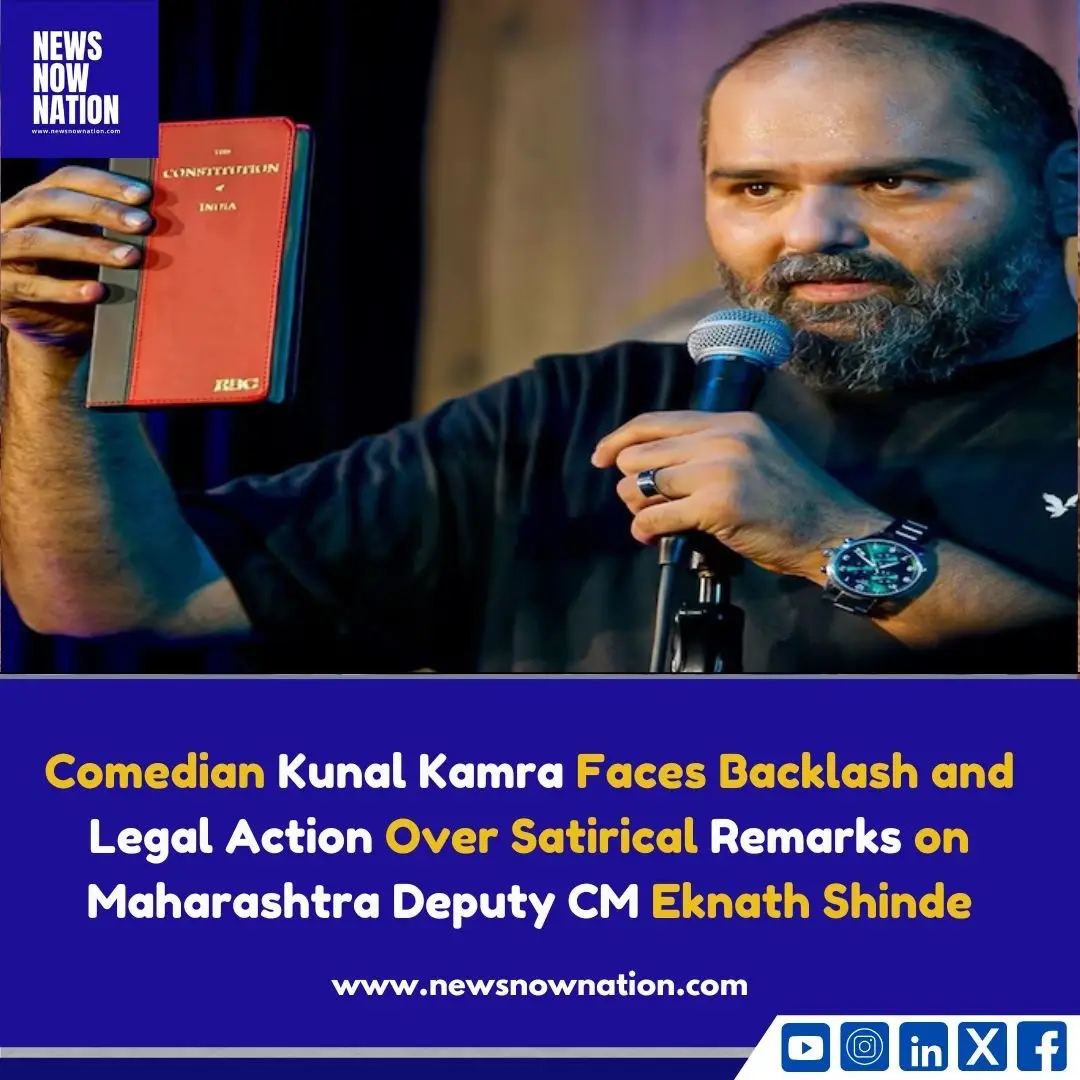
Stand-up comedian Kunal Kamra, known for his sharp political satire, has once again found himself at the center of controversy. His recent remarks about Maharashtra’s Deputy Chief Minister, Eknath Shinde, have sparked significant backlash, leading to legal action and protests. The incident has reignited debates over freedom of speech, the role of satire in democracy, and the boundaries of political criticism in India.
What Happened?
During a recent stand-up performance in Mumbai, Kunal Kamra made comments that humorously critiqued Eknath Shinde’s political journey and governance. His remarks, intended as satire, reportedly did not sit well with certain political groups and supporters of Shinde. Following the performance, a complaint was filed against Kamra, accusing him of defamation and spreading misinformation.
The controversy escalated when political activists staged protests outside the comedy venue, demanding an apology from Kamra. Some reports indicate that a group of protestors vandalized a comedy club in Mumbai, although there is no official confirmation on whether this was directly linked to Kamra’s remarks.
Legal Action Against Kamra
Soon after the incident, a formal complaint was lodged against Kunal Kamra, and legal proceedings were initiated. The complaint alleges that Kamra’s statements were defamatory and could incite unrest. While legal experts debate whether the case falls under the purview of free speech, authorities have indicated that they are reviewing the matter.
Kamra, who has faced legal scrutiny before for his outspoken criticism of political figures, responded to the situation through social media. In a statement, he defended his right to satire, arguing that humor is a legitimate form of political expression. He also questioned why comedians are frequently targeted for their opinions while politicians often make controversial remarks without consequences.
Public Reactions and Debate on Free Speech
The incident has divided public opinion. Supporters of Kunal Kamra argue that satire and political humor are essential in a democratic society and that taking legal action against comedians sets a dangerous precedent. Several journalists, artists, and free speech advocates have condemned the legal action, calling it an attempt to silence dissent.
On the other hand, critics believe that Kamra’s comments were disrespectful and crossed the line between humor and defamation. Some politicians and their supporters argue that public figures should be held accountable for their words, regardless of whether they are comedians or political leaders.
The Role of Satire in a Democracy
Satire has long been a powerful tool for critiquing those in power. In India, comedians like Kunal Kamra, Varun Grover, and Munawar Faruqui have frequently used humor to highlight political and social issues. However, recent incidents suggest that political satire is becoming an increasingly risky profession, with several comedians facing legal troubles, social media harassment, or show cancellations.
The broader debate revolves around where to draw the line between humor and offense. While satire is protected under freedom of speech, legal interpretations of what constitutes defamation, sedition, or hate speech remain subjective. This has led to inconsistent actions against public figures, with some facing legal consequences while others are ignored.
The controversy surrounding Kunal Kamra’s remarks on Eknath Shinde highlights the ongoing tensions between political expression and legal restrictions in India. Whether or not Kamra faces serious legal consequences, the incident has sparked renewed discussions on free speech, artistic freedom, and the evolving nature of political satire in the country.
As the case progresses, it remains to be seen whether this will serve as a turning point in how India handles political humor or if it will reinforce existing trends of restricting satirical voices.

