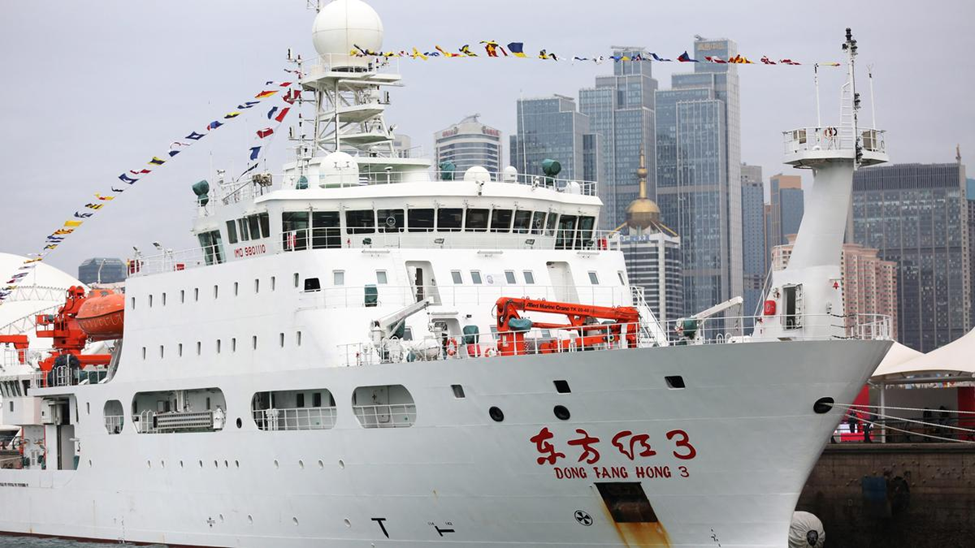
Strategic Expansion Beneath the Seas
China’s increasing efforts to map the ocean floor have drawn global attention, particularly amid rising geopolitical tensions with the United States. The large-scale mapping initiative, which involves detailed surveys of underwater terrain, is being viewed by experts as a strategic move to strengthen submarine warfare capabilities and expand maritime influence.
Ocean floor mapping, also known as seabed mapping, involves collecting high-resolution data on underwater landscapes, including ridges, trenches and sediment layers. This information plays a crucial role in naval operations, especially for submarines that rely on stealth and terrain awareness to operate effectively.
China has significantly expanded its deep-sea research and exploration activities in recent years, deploying advanced survey vessels and underwater equipment across key maritime regions. These efforts are not limited to scientific research but are increasingly linked to military preparedness and strategic planning.
The ability to understand the seabed in detail offers a tactical advantage in submarine warfare. Submarines can use underwater terrain to hide from detection, navigate safely and position themselves strategically during operations. Detailed maps allow naval forces to identify optimal routes, avoid obstacles and exploit natural features for concealment.
China’s focus on ocean mapping comes at a time when submarine capabilities are becoming central to modern naval strategy. Both China and the United States are investing heavily in underwater warfare technologies, including nuclear-powered submarines, autonomous underwater vehicles and advanced sonar systems.
The mapping initiative is particularly significant in contested regions such as the South China Sea and the Pacific Ocean. These areas are of strategic importance due to their proximity to major shipping routes, natural resources and military bases. By enhancing its understanding of these regions, China aims to strengthen its operational capabilities and assert its presence.
Experts believe that ocean mapping data could also be used to support the deployment of underwater sensors and communication networks. These systems can help detect enemy submarines, monitor maritime activity and enhance situational awareness in critical zones.
At the same time, the initiative raises concerns among other nations, especially the United States and its allies. The prospect of China gaining a detailed understanding of underwater environments is seen as a potential shift in the balance of naval power.
Submarine warfare is often described as a “silent” domain, where operations are conducted out of sight and detection is extremely challenging. In such an environment, information becomes a decisive factor. The side with better knowledge of underwater terrain and conditions is likely to have a significant advantage.
China’s investment in ocean mapping is part of a broader strategy to enhance its maritime capabilities. The country has been expanding its naval fleet, building advanced warships and increasing its presence in international waters. These developments reflect a long-term effort to establish itself as a dominant maritime power.
In addition to military applications, ocean mapping also has scientific and economic benefits. It can support research on marine ecosystems, help identify mineral resources and improve understanding of geological processes. However, the dual-use nature of this data makes it difficult to separate civilian and military objectives.
The United States, which has long maintained a strong naval presence globally, is closely monitoring these developments. American defense officials have expressed concerns about the potential implications of China’s activities, particularly in terms of submarine operations and underwater surveillance.
The growing focus on underwater capabilities highlights the evolving nature of global security. While traditional forms of warfare remain relevant, new domains such as cyber, space and underwater environments are becoming increasingly important.
The competition between major powers is no longer confined to land and air. The oceans, which cover more than 70% of the Earth’s surface, are emerging as a critical arena for strategic competition.
International experts have called for greater transparency and cooperation in ocean exploration activities to prevent misunderstandings and reduce the risk of conflict. However, given the strategic importance of underwater data, such cooperation remains challenging.
The situation also underscores the importance of technological advancement in defense strategies. Countries that invest in research, innovation and data collection are better positioned to adapt to changing security dynamics.
For India and other regional powers, these developments serve as a reminder of the need to strengthen maritime capabilities and safeguard national interests. The Indian Ocean region, in particular, is gaining strategic importance and requires careful monitoring.
As China continues its ocean mapping efforts, the global community will be watching closely to assess the long-term implications. The balance between scientific exploration and military strategy will remain a key issue in the coming years.
The evolving dynamics of underwater warfare and maritime strategy highlight the complex challenges facing the international community. Ensuring stability and security in this domain will require a combination of technological capability, diplomatic engagement and strategic foresight.
Follow for more updates regarding business related news in newsnownation.com
