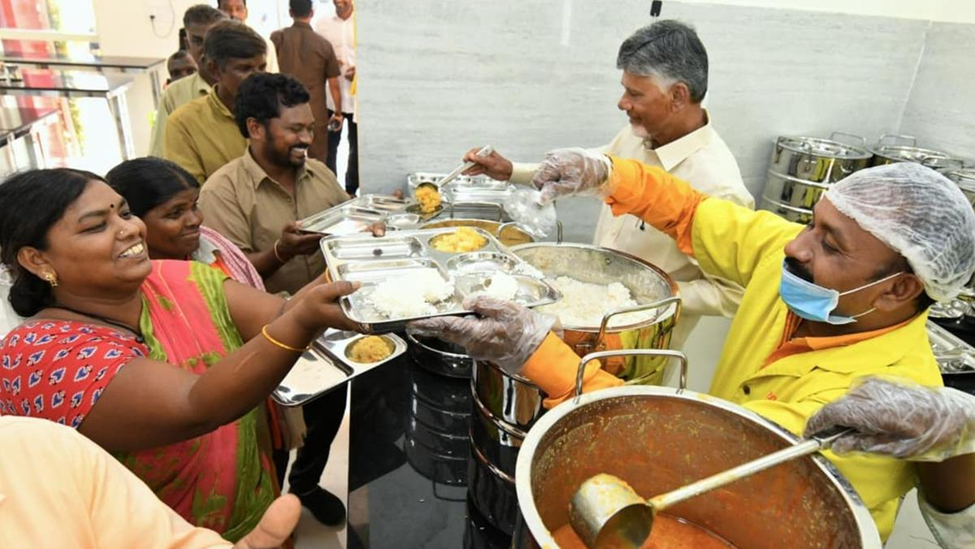
Massive expansion takes total Anna Canteens to 269, strengthening food security and welfare outreach across rural Andhra Pradesh
The Andhra Pradesh government has taken another significant step toward strengthening food security and public welfare with the inauguration of 62 rural Anna Canteens in Palnadu district. Chief Minister N. Chandrababu Naidu formally launched the initiative, marking a major expansion of the state’s subsidized food program. With this addition, the total number of Anna Canteens across Andhra Pradesh has now reached 269, reflecting the administration’s renewed focus on inclusive development and welfare-oriented governance.
The Anna Canteen scheme, originally conceptualized to provide hygienic and affordable meals to economically weaker sections, has become a cornerstone of the state’s social infrastructure. By extending this initiative into rural areas, the government aims to bridge the accessibility gap that has long existed between urban and rural populations. These newly inaugurated canteens are expected to serve daily wage workers, farmers, elderly citizens, and other vulnerable groups who often struggle to secure consistent and nutritious meals.
Each Anna Canteen operates with a clear objective—to provide breakfast, lunch, and dinner at highly subsidized rates. The meals are designed to meet basic nutritional standards while remaining affordable for the poorest sections of society. This initiative not only addresses hunger but also ensures dignity for individuals who might otherwise rely on inconsistent food sources. In rural areas like Palnadu, where income instability is a common challenge, such interventions can have a transformative impact on everyday life.
The expansion also highlights the government’s emphasis on decentralized development. By focusing on districts like Palnadu, which have historically faced economic challenges, the administration is signaling its intent to ensure that welfare schemes reach the grassroots level. The presence of Anna Canteens in rural areas reduces the need for migration to urban centers in search of basic amenities, thereby supporting local economies and communities.
From an economic perspective, the scheme generates employment opportunities at multiple levels. Local staff are engaged in cooking, serving, and managing operations, while supply chains are strengthened through the procurement of food materials. This creates a ripple effect, benefiting small vendors, farmers, and transport providers. The initiative, therefore, goes beyond food distribution and contributes to local economic activity.
The timing of this expansion is also crucial. Rising food prices and inflation have placed additional pressure on low-income households across India. In such a scenario, access to affordable meals becomes not just a welfare measure but an essential support system. The Anna Canteens act as a buffer against economic stress, ensuring that no individual has to compromise on basic nutrition due to financial constraints.
Moreover, the government has emphasized maintaining quality and hygiene standards across all canteens. Proper monitoring mechanisms are being implemented to ensure consistency in food preparation and service. Clean cooking environments, safe drinking water, and regular inspections are part of the operational framework, reinforcing public trust in the scheme.
The political and social significance of the initiative cannot be overlooked. Welfare schemes like Anna Canteens often play a key role in shaping public perception and governance credibility. By expanding the network, the administration is reinforcing its commitment to people-centric policies. It also sets a benchmark for other states looking to implement similar programs aimed at addressing hunger and poverty.
Public response to the initiative has been largely positive. Beneficiaries have expressed relief and appreciation for the availability of affordable meals in their localities. For many families, the canteens reduce the daily burden of cooking expenses, allowing them to allocate resources to other essential needs such as education and healthcare. This indirect financial relief can significantly improve overall quality of life.
Looking ahead, the success of the Anna Canteen expansion in Palnadu could pave the way for further scaling across other districts. Continuous monitoring, feedback mechanisms, and operational efficiency will be critical in ensuring long-term sustainability. If implemented effectively, the model has the potential to evolve into a nationwide example of how targeted welfare programs can address fundamental human needs.
The inauguration of 62 rural Anna Canteens is more than just a numerical milestone; it represents a strategic effort to strengthen social security and promote equitable access to resources. As Andhra Pradesh continues to invest in welfare-driven initiatives, the focus remains clear—ensuring that development reaches every section of society, regardless of geography or income level.
For more updates regarding business and impactful development news, follow newsnownation.com.
