
Author: Rudransh Soni
Hey readers, this research did not strike me so easily; rather, it has a connection with an incident that I want to share with you. A week back, my father and I were spending some time on our terrace. It was quite hot, and after a few moments, it started feeling even hotter. My father suddenly said, “Yaar, weather has changed a lot. Earlier summers were not this hot.” At that time, I was working on my laptop for some school work. On hearing my father’s statement, my researcholic mind started to think after a long time, and I got a completely new topic to work on. And here I am to talk about climate — but not just any boring climate research and blah blah blah. This time, I connected climate worries with the technology already working behind the scenes. Sounds new, right?…
Climate change has become one of the greatest challenges faced by humanity in the twenty-first century. Rising temperatures, changing weather patterns, increasing greenhouse gas emissions, and environmental degradation affect ecosystems and societies worldwide. Scientists and policymakers continue searching for innovative methods capable of slowing these impacts. Artificial Intelligence (AI), once considered merely a branch of computer science, is increasingly becoming an important instrument in addressing environmental issues. AI systems can analyze enormous amounts of information at high speed, identify patterns, and support decision-making in ways difficult for traditional systems.AI models can process large climate datasets collected from satellites, sensors, and weather stations. Machine learning algorithms identify hidden relationships between variables and help researchers predict weather changes, temperature patterns, floods, droughts, and extreme environmental events. Better predictions can improve disaster preparedness and reduce human and economic losses. Energy production remains one of the largest contributors to greenhouse gas emissions. AI-supported smart grids help optimize energy distribution and increase efficiency. Artificial Intelligence can predict energy demand and support renewable energy systems such as solar and wind power by balancing supply and demand. Agriculture consumes significant amounts of water and resources. AI technologies support precision farming by helping farmers monitor crop conditions, detect diseases, reduce unnecessary pesticide use, and improve irrigation systems. Such practices may reduce waste while improving productivity.AI technologies combined with satellite imaging and computer vision can identify deforestation, monitor biodiversity, detect pollution patterns, and provide early warnings for natural disasters. Early detection systems can assist governments and communities in reducing damage and improving response efforts. Despite its advantages, Google launched Flood Hub, an AI-based flood forecasting system. It analyzes satellite images, river levels, weather stations, and historical data to predict floods up to 7 days in advance. It expanded to dozens of countries including parts of Asia and Africa. AI itself raises important concerns. Large-scale AI systems require substantial computational resources and energy consumption. Questions related to ethics, data quality, technological accessibility, and environmental impact remain significant. Therefore, AI should be viewed as a supportive tool rather than a complete solution. Environmental intelligence company Kayrros created AI systems that combine satellite data and machine learning to identify methane-emitting sites. Methane is a powerful greenhouse gas, and detecting leaks quickly can reduce climate impact. The relationship between Artificial Intelligence and climate action represents both opportunity and responsibility. AI provides powerful analytical capabilities, but meaningful progress depends equally upon government policies, international cooperation, and public awareness. Simon Stiell, the UN climate chief, believes that AI could become a ‘gamechanger’ if developed responsibly, reflecting the idea that AI should support, rather than replace, human efforts in climate action.”
Artificial Intelligence alone cannot solve climate change; however, it can strengthen humanity’s ability to understand and respond to environmental challenges. The future may depend on combining technological innovation with responsible human action.
Figures and Statistics
Every single of my research feels incomplete without Statistics. The following charts and statistics support the discussion on AI and climate change.
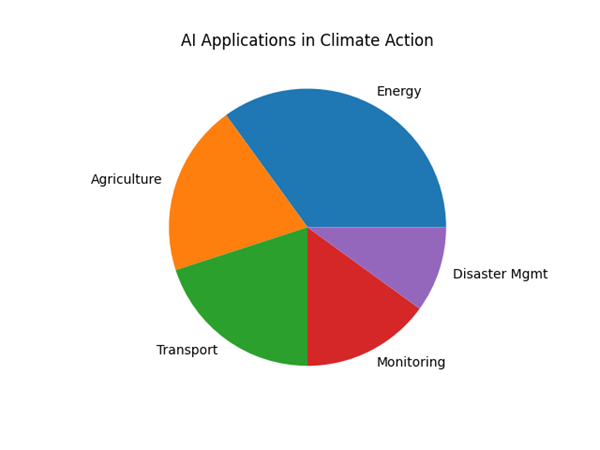
Figure 1: Major areas where AI contributes toward climate action.
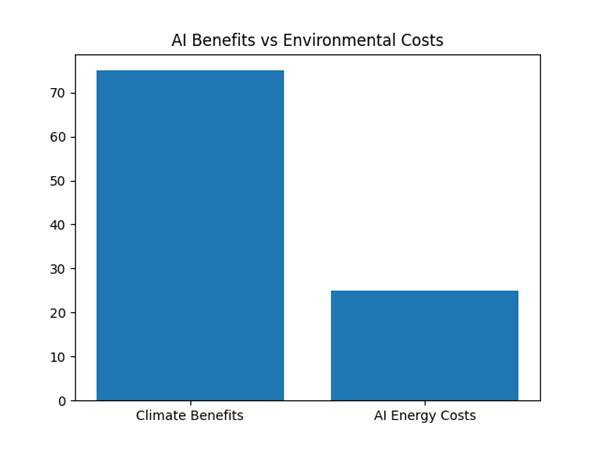
Figure 2: Relative illustration of AI benefits compared with environmental costs.
Key Observations:
• Data centres consume around 1.5% of global electricity.
• AI improves renewable energy optimization and climate prediction.
• Machine learning increasingly supports environmental monitoring.
References
International Energy Agency (IEA)
ScienceDirect
JSTOR
MIT News
Nature Research

