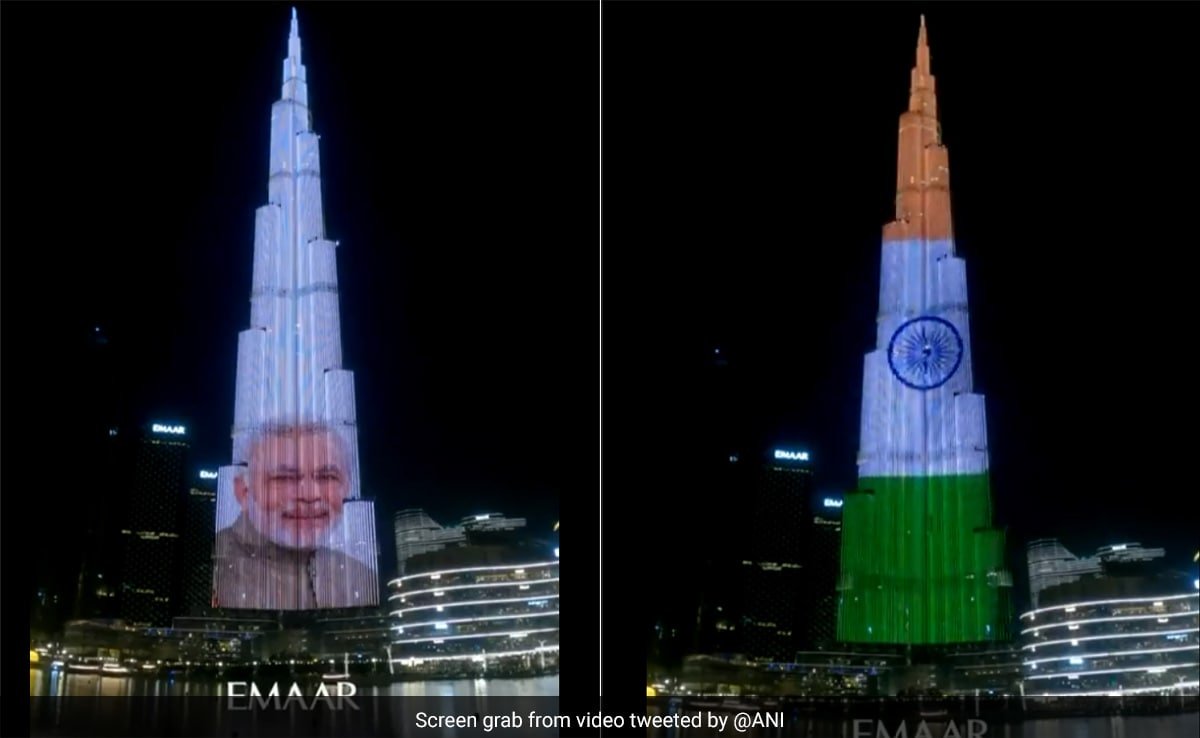
As Prime Minister Narendra Modi marked his 75th birthday on September 17, 2025, Dubai’s Burj Khalifa—among the world’s most iconic landmarks—was lit with his portrait and India’s tricolour. The spectacular display was more than a birthday homage: it symbolised deepening India-UAE ties, rising global recognition of India’s diplomatic clout, and the growing importance of soft power in the country’s international image.
A Night of Lights and Diplomatic Signals
In the evening skies over Dubai, the Burj Khalifa illuminated PM Modi’s images, “Happy Birthday” slogans, and the saffron, white and green of India’s flag.  Earlier in the day, UAE President Sheikh Mohamed bin Zayed Al Nahyan extended birthday wishes on social media, underlining the “mutually beneficial India–UAE partnership which continues to attain new heights in all areas.”  Modi responded, expressing gratitude “for the warm wishes,” and emphasizing the bond between the two nations.
Global Reach, Local Pride
While the Burj Khalifa tribute carried strong visual and symbolic weight, it also revealed several trends:
• Diplomacy through spectacle: Landmark illuminations are increasingly used as tools of diplomatic signalling. In this instance, the UAE’s gesture reinforces bilateral ties with India in culture, trade, diaspora engagement, and political alignment.
• Soft power amplification: Such public displays promote India’s global image, especially among its expatriate communities in the Gulf, and help send messages of recognition and respect on global platforms.
• Social media engagement: The event generated widespread coverage, photos, and video clips across platforms—X, Instagram, Twitter—with Indians and diaspora communities sharing and amplifying the image. The visual appeal of the Burj Khalifa lighting added to trending topics around PM Modi’s 75th birthday.
Bilateral Relations Context
India and the UAE have cultivated a strong strategic partnership over the past years—with cooperation spanning energy, technology, investment, infrastructure, and expatriate welfare. The lighting of the Burj Khalifa is another manifestation of that relationship’s warmth. It complements recent agreements and joint initiatives, and helps maintain momentum in political as well as people-to-people dimensions.
Reactions and Reflections
World leaders, UAE officials, diaspora groups, and ordinary citizens all joined in the wish list. The UAE President’s message, shared on social media platforms, emphasized India’s progress and encouraged continued collaboration. Others noted that such visibility—on one of the tallest buildings in the world—demonstrates recognition of India’s international ascent. Some analysts, however, view these gestures with caution, pointing out that symbolism must be backed by policy and outcomes in areas like trade imbalance, labour rights for expatriates, and environmental cooperation.
Conclusion: What It Means for India
For Indian readers, the Burj Khalifa tribute is more than just a light show—it’s affirmation of India’s growing global presence. It underlines how international partners value India’s leadership and cultural reach. As India navigates its position in global affairs—balancing diplomacy, economic ambitions, and soft power—such public gestures can play an important role in creating favourable perceptions. For citizens, especially those living abroad, these events boost pride and offer reminders of home, nationhood, and international respect.
-By NewsNowNation Editorial Team

