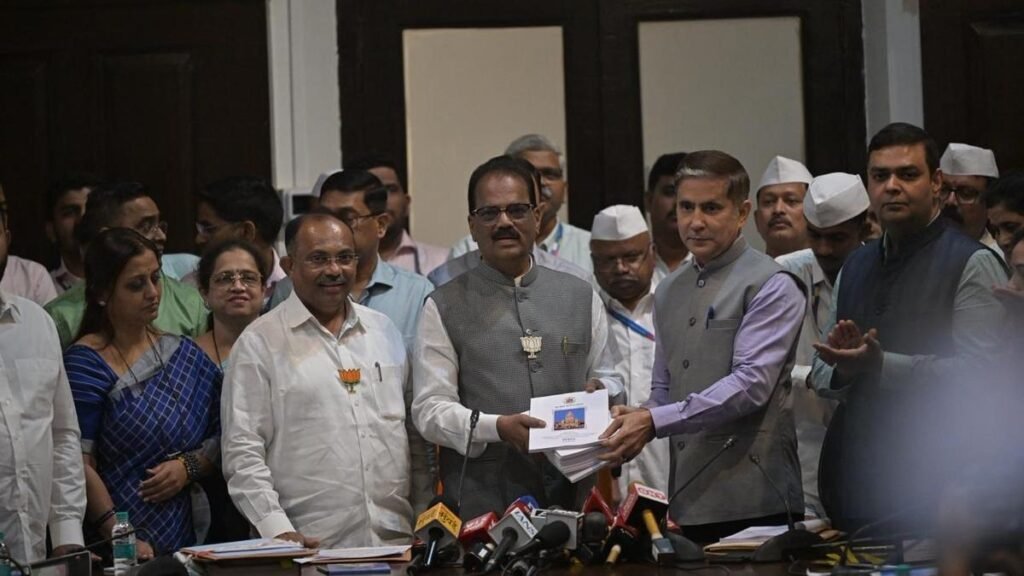
Asia’s richest municipal body, the Brihanmumbai Municipal Corporation (BMC), presented its annual budget for the financial year 2026-27 on Wednesday, February 25, 2026. With a staggering total outlay of ₹80,952.56 crore, this budget marks an 8.7% increase from the previous year’s ₹74,427 crore. This year’s presentation is particularly significant as it is the first time in four years that the budget is being presented before an elected body of corporators, following the end of the administrator’s rule.
The BMC has allocated a massive ₹48,164.28 crore toward capital expenditure, emphasizing big-ticket infrastructure projects that aim to transform Mumbai’s urban landscape. Major ongoing projects like the Mumbai Coastal Road, the Goregaon-Mulund Link Road (GMLR), and the concreting of city roads continue to be the top priorities. The civic body is focusing on completing these existing projects within set timelines rather than announcing new large-scale ventures.
A significant portion of the budget—₹4,248.08 crore—has been earmarked for the Education Department. Following the success of Mission SAMPURN, the BMC has introduced Mission SAFAL, which focuses on the holistic development of students through physical activities, arts, and futuristic skills.
Key educational initiatives include:
- Distribution of 20,000 tablets to Class 9 students.
- Setting up of a new CBSE board school in the K-East ward.
- Upgradation of school libraries with a provision of ₹5 crore.
- Cyber literacy training for 20,000 students in standards 8 and 9.
To fund its ambitious projects, the BMC has introduced a modified One Time Premium (OTP) policy for the redevelopment of buildings on municipal plots. The premium for residential users has been increased from 5% to 7.5%, while for non-residential users, it has risen from 10% to 12.5%. Additionally, the civic body is exploring the issuance of Municipal Green Bonds and environment taxes to generate further revenue.
While no new taxes have been announced for the common citizen, the budget continues to support the “Chief Minister’s Deep Cleaning Drive” and air pollution mitigation through Miyawaki plantations and smog towers. In the health sector, the focus remains on upgrading hospital infrastructure and ensuring “Zero Prescription” availability of medicines in municipal dispensaries.
The 2026-27 BMC budget is a clear statement of intent toward making Mumbai a world-class, climate-resilient city. By balancing massive infrastructure spending with grassroots improvements in education and health, the BMC aims to ensure that the benefits of its wealth reach every Mumbaikar. As the new elected body takes charge, the challenge will be the timely and efficient execution of these record-breaking allocations.
Stay tuned to NewsNowNation.com for more deep dives into Mumbai’s financial blueprint.
