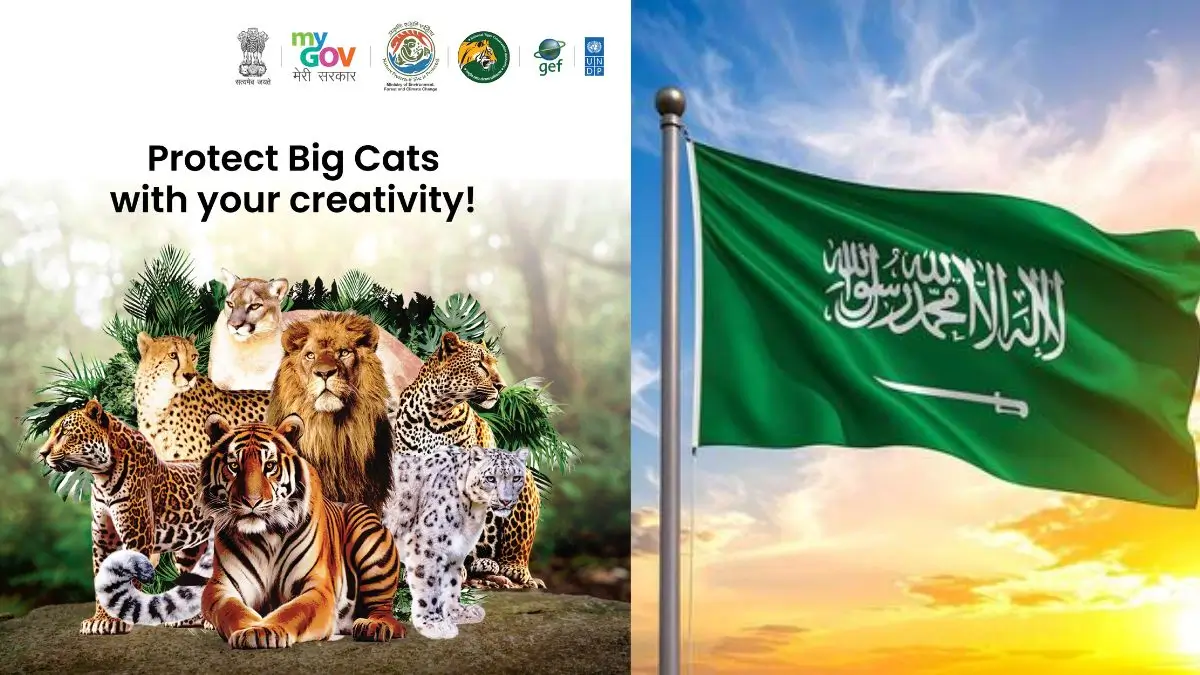
A Stronger Global Alliance for the World’s Most Endangered Big Cats
India’s ambitious wildlife diplomacy received another major boost as Bangladesh officially joined the International Big Cat Alliance (IBCA) as its 27th member nation, reinforcing regional cooperation to protect some of the world’s most threatened big cat species. The development marks another milestone for the alliance launched by India and highlights growing international support for collaborative conservation efforts.
The inclusion of Bangladesh is particularly significant because both countries share the Sundarbans mangrove ecosystem, home to one of the world’s largest populations of the endangered Royal Bengal Tiger. By working together through the IBCA framework, member nations aim to strengthen habitat conservation, scientific research, anti-poaching operations, wildlife crime prevention and sustainable coexistence between humans and wildlife.
India’s Global Conservation Vision Continues to Grow
The International Big Cat Alliance was announced by Prime Minister Narendra Modi during the 50th anniversary of Project Tiger and formally established as a treaty-based international organization in 2024. It focuses on conserving the world’s seven major big cat species:
- Tiger
- Lion
- Leopard
- Snow Leopard
- Cheetah
- Jaguar
- Puma
Headquartered in New Delhi, the alliance seeks to become a global platform where governments, conservationists, researchers and wildlife organizations collaborate through knowledge sharing, funding support and coordinated conservation strategies.
Why Bangladesh’s Membership Matters
Bangladesh’s entry strengthens one of the world’s most important transboundary conservation landscapes.
The Sundarbans spans India and Bangladesh and supports biodiversity that extends beyond tigers to crocodiles, dolphins, migratory birds and countless plant species. Wildlife experts have long argued that conservation efforts are most successful when neighbouring countries coordinate monitoring, habitat restoration and anti-poaching measures rather than working independently.
The International Big Cat Alliance offers exactly that platform.
By becoming the 27th member country, Bangladesh gains access to collaborative conservation programs, scientific exchanges, capacity building initiatives and global best practices while contributing its own expertise in mangrove ecosystem management.
A Growing International Movement
The IBCA has expanded rapidly since its launch, attracting countries from Asia, Africa and Latin America where big cats continue to play vital ecological roles.
According to alliance objectives, member countries will cooperate on:
- Wildlife habitat restoration
- Scientific research
- Technology-driven conservation
- Capacity building
- Anti-poaching operations
- Wildlife crime intelligence sharing
- Sustainable eco-tourism
- Climate-resilient conservation planning
The alliance also aims to support countries facing increasing pressures from habitat fragmentation, illegal wildlife trade and climate change.
India’s Conservation Success Provides a Strong Foundation
India’s leadership within the alliance is backed by decades of conservation experience.
The country currently hosts five of the world’s seven big cat species, making it uniquely positioned to lead international efforts. Programmes such as Project Tiger, Project Lion, the reintroduction of cheetahs and extensive use of camera trapping, satellite monitoring and community participation have become global reference models for wildlife management.
Tiger populations in India have shown remarkable recovery over recent decades, demonstrating that long-term investment in conservation can produce measurable results.
These experiences are expected to benefit newer member countries through technical cooperation and knowledge exchange.
Conservation Beyond Borders
Wildlife does not recognize political boundaries.
Big cats frequently move across forests shared by neighbouring nations, making international cooperation increasingly important. Scientists also warn that climate change is altering habitats and migration patterns, requiring coordinated conservation policies rather than isolated national efforts.
The IBCA represents a shift from country-specific conservation programmes to a broader international ecosystem approach.
By encouraging shared scientific data, coordinated action plans and financial cooperation, the alliance aims to improve the long-term survival prospects of vulnerable big cat populations worldwide.
A Positive Step for Biodiversity
Bangladesh’s decision to join the International Big Cat Alliance comes at a time when biodiversity protection has become a global priority.
Healthy big cat populations are considered indicators of healthy ecosystems. Protecting apex predators also safeguards forests, rivers, grasslands and thousands of other species that depend on the same habitats.
Environmental experts increasingly view such international partnerships as essential for meeting global biodiversity and climate goals.
Conclusion
Bangladesh becoming the 27th member of the International Big Cat Alliance is more than an expansion of membership—it represents growing international confidence in India’s vision for collaborative wildlife conservation.
As countries unite to protect tigers, lions, leopards, snow leopards, cheetahs, jaguars and pumas, the alliance is emerging as one of the world’s most significant conservation initiatives. For India, the milestone reinforces its leadership in biodiversity protection while strengthening regional partnerships that can help secure the future of some of Earth’s most iconic species.
For more updates on business, startups, technology, innovation, sustainability, environment and global developments, visit NewsNowNation at https://newsnownation.com/.
International Big Cat Alliance, Bangladesh joins IBCA, Big Cat Alliance, wildlife conservation India, Project Tiger, Royal Bengal Tiger, Sundarbans conservation, biodiversity protection, Narendra Modi, tiger conservation, global wildlife partnership, endangered species, wildlife diplomacy, environmental sustainability, NewsNowNation

