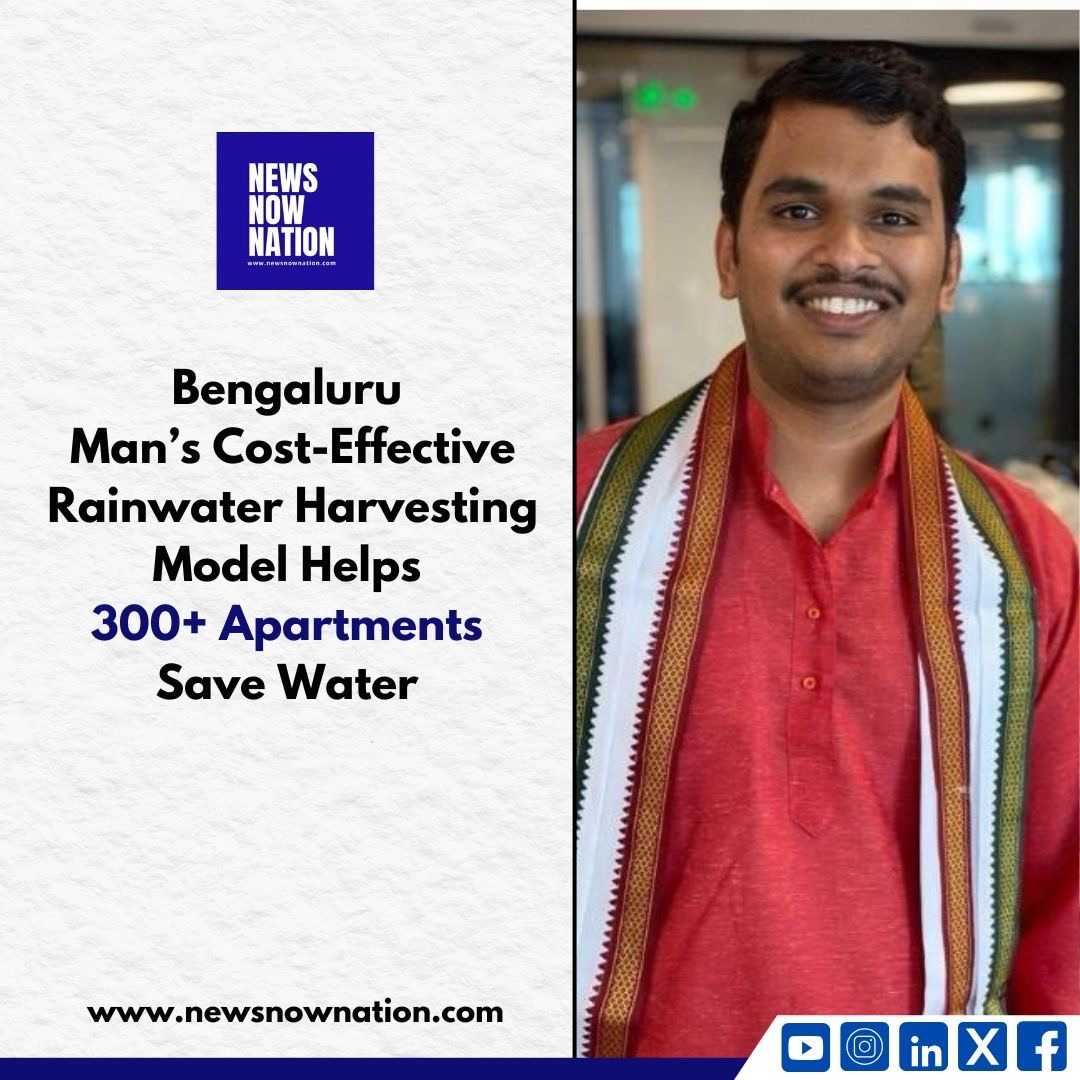
As the city grapples with severe water shortages, a resident has come up with an innovative and cost-effective solution to conserve water. Ganesh Shanbhag, a resident of Begur, has helped over 300 apartment complexes install rainwater harvesting (RWH) systems, significantly reducing their dependence on expensive water tankers.
A Simple Yet Effective Solution
Shanbhag’s journey into rainwater harvesting began in 2018 when the borewells in his apartment complex dried up. Faced with increasing water bills and an uncertain supply, he worked with his neighbors to design a simple RWH system that cost less than ₹3 lakh for their 100-flat complex. Within two months, the system had saved them nearly ₹2 lakh in water expenses while also replenishing the groundwater table.
How It Works
The RWH system designed by Shanbhag captures rainwater from rooftops using PVC gutters. It features a ‘first flush’ mechanism to remove initial debris and a disc filter to ensure clean water. The collected water is then directed into storage tanks or recharge pits, reducing dependency on borewells and water tankers.
Encouraged by the success of the model, Shanbhag started assisting other apartment complexes in setting up similar systems, offering his expertise free of charge. His passion project has now reached over 300 communities across Bengaluru.
Challenges in Adoption
Despite the clear benefits, rainwater harvesting adoption remains low in Bengaluru. As of March 2024, only around 2 lakh of the city’s 10.8 lakh homes had installed RWH systems. The Bangalore Water Supply and Sewerage Board (BWSSB) has imposed nearly ₹2 crore in fines on 40,000 households for failing to implement rainwater harvesting, yet many residents see it as an added expense rather than a long-term investment.
A Call for Sustainable Solutions
With Bengaluru’s water crisis worsening, Shanbhag believes that widespread adoption of rainwater harvesting could significantly ease the situation. He urges more communities to embrace this sustainable practice, emphasizing that even a small investment can lead to significant long-term savings and environmental benefits.
As water scarcity continues to be a growing concern, initiatives like these offer a viable solution, proving that simple, community-driven efforts can make a significant impact.

