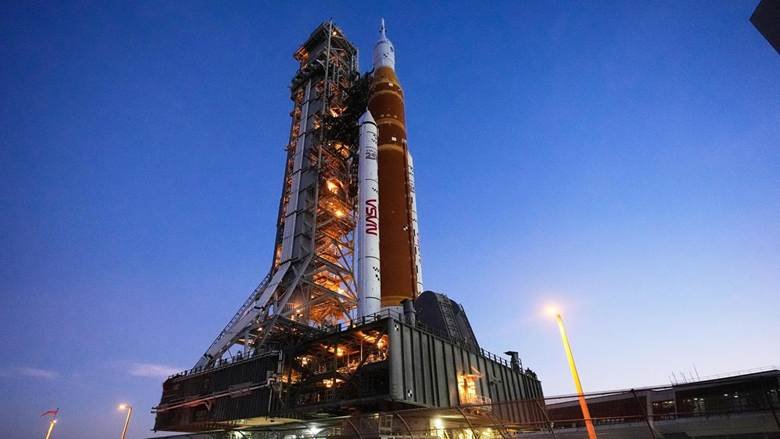
Global Competition in Space Exploration
The upcoming Artemis II mission marks a critical moment in the evolving global space race, as the United States prepares to send astronauts around the Moon for the first time in decades. Led by NASA, the mission is part of a broader effort to re-establish human presence on the Moon and assert leadership in space exploration amid growing competition from other nations.
Artemis II is designed as a crewed mission that will orbit the Moon and return safely to Earth, serving as a precursor to future lunar landings. It represents the first time since the Apollo program that humans will travel beyond low Earth orbit. The mission is not just a technological milestone but also a strategic move in a rapidly intensifying global competition for space dominance.
The United States is not alone in this race. Countries such as China have made significant advancements in their lunar exploration programs, including plans for human missions to the Moon. Meanwhile, Russia continues to pursue its own space ambitions, often collaborating with China on joint projects. These developments have transformed space exploration into a key arena of geopolitical influence.
The Artemis program itself is broader than a single mission. It aims to establish a sustainable human presence on the Moon, including the development of lunar bases and infrastructure that could support future missions to Mars. Artemis II plays a crucial role in testing systems such as the Orion spacecraft and Space Launch System (SLS), which are essential for long-duration missions.
The stakes for the United States are high. Leadership in space exploration is closely linked to technological innovation, national security and global prestige. The success of Artemis II would reinforce the country’s position as a leader in space, while delays or setbacks could provide opportunities for competitors to gain an advantage.
In addition to geopolitical factors, the mission has significant economic implications. The space industry is rapidly expanding, with increasing involvement from private companies and commercial partnerships. Investments in space technology are expected to drive advancements in areas such as communications, navigation and materials science.
Private sector participation has become a defining feature of modern space exploration. Companies like SpaceX and Blue Origin are playing an increasingly important role in supporting government missions and developing new capabilities. This collaboration between public and private entities is shaping the future of the space economy.
Another important aspect of the Artemis program is international collaboration. NASA has partnered with several countries through the Artemis Accords, which aim to establish guidelines for peaceful and cooperative exploration of space. These agreements are intended to promote transparency, interoperability and shared benefits among participating nations.
However, not all countries are part of these agreements, leading to the emergence of parallel frameworks and alliances. This division highlights the complex dynamics of the global space race, where cooperation and competition coexist.
The Artemis II mission also carries symbolic significance. It represents humanity’s renewed ambition to explore beyond Earth and expand the boundaries of knowledge. The mission will include astronauts from diverse backgrounds, reflecting a commitment to inclusivity and global representation in space exploration.
At the same time, challenges remain. Space missions are inherently complex and carry significant risks. Technical issues, budget constraints and political considerations can all impact timelines and outcomes. Ensuring the safety of astronauts and the reliability of mission systems is a top priority for NASA.
Environmental considerations are also becoming increasingly important. The impact of space activities on Earth’s environment and the sustainability of space operations are key issues that require careful attention. As space exploration expands, balancing progress with responsibility will be essential.
The Artemis II mission is also expected to inspire a new generation of scientists, engineers and explorers. Educational initiatives and public engagement efforts are being developed to increase interest in science, technology, engineering and mathematics (STEM) fields.
Public interest in space exploration has grown significantly in recent years, driven by high-profile missions and advancements in technology. Artemis II has the potential to capture global attention and reignite enthusiasm for human spaceflight.
Looking ahead, the success of Artemis II will pave the way for Artemis III, which aims to land astronauts on the Moon, including the first woman and the next man. This milestone would mark a new chapter in human exploration and set the stage for future missions to Mars.
The global space race is no longer limited to superpowers. Emerging space nations are also entering the field, contributing to a more diverse and competitive landscape. This shift underscores the importance of strategic planning and international cooperation.
In conclusion, Artemis II is more than just a mission; it is a defining moment in the modern space race. For the United States, it represents an opportunity to reaffirm leadership, drive innovation and shape the future of space exploration. As the world watches, the mission will serve as a benchmark for what is possible when ambition, technology and collaboration come together.
Follow for more updates regarding business related news in newsnownation.com.
