For decades, communication driven by intention was considered a defining feature of human intelligence. However, recent scientific research is challenging this assumption, showing that several animal species also demonstrate intentional communication — the ability to convey messages with purpose and awareness.
This growing body of research is reshaping how scientists understand animal cognition, social behaviour and the evolution of communication itself.
What is Intentional Communication?
Intentional communication refers to the ability to send signals deliberately to influence another individual’s behaviour or convey specific information. In humans, this includes speech, gestures and written language.
Traditionally, animal communication was believed to be instinctive rather than intentional. However, studies now suggest that many species can communicate in ways that involve awareness, flexibility and goal-directed behaviour.
Researchers are increasingly finding that animals do not simply react to stimuli but actively attempt to communicate their needs, desires or intentions.
Evidence from Different Species
Scientific observations across multiple species have provided strong evidence of intentional communication.
For example, dogs have been shown to use gaze and gestures strategically when interacting with humans. In controlled studies, dogs adjusted their behaviour depending on whether a human understood the situation, indicating an awareness of others’ knowledge and intentions.
Similarly, dolphins use complex vocalisations and body movements to communicate within their social groups. Each dolphin has a unique “signature whistle,” which functions almost like a name and helps maintain social connections.
Chimpanzees and other primates also exhibit advanced communication behaviours. Some chimpanzees have even learned sign language, using gestures to convey specific meanings and interact with humans in structured ways.
These findings suggest that intentional communication may be more widespread in the animal kingdom than previously thought.
Communication Beyond Sounds
Animal communication is not limited to vocal signals. Many species use gestures, body language and even physical actions to convey information.
One well-known example is the “waggle dance” performed by honeybees. Through specific movements, bees communicate the location of food sources to other members of the hive, effectively sharing detailed spatial information.
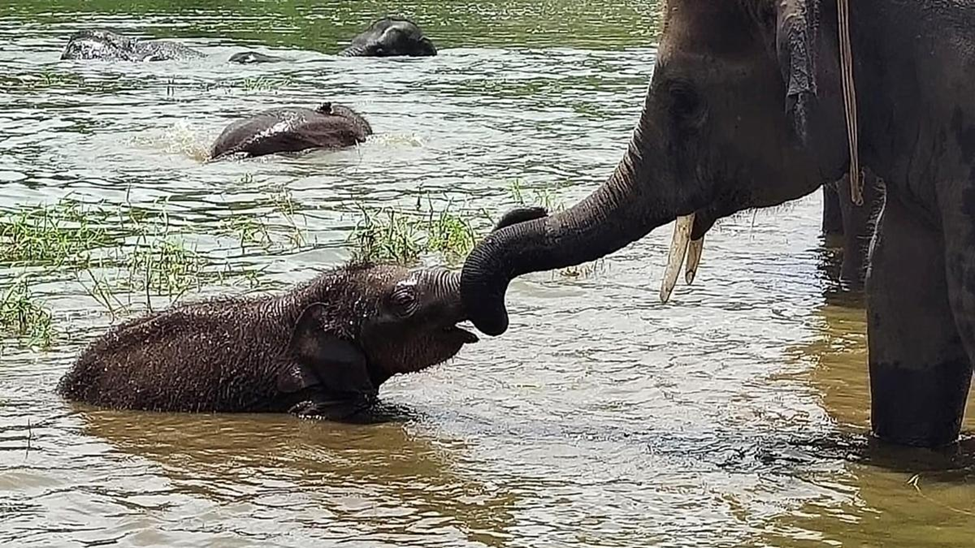
Similarly, animals such as wolves, elephants and birds engage in coordinated actions that demonstrate cooperation and shared goals, further indicating intentional communication.
These behaviours highlight the diversity of communication methods used by animals and challenge the idea that language is the only form of meaningful interaction.
Social Intelligence and Cooperation
Intentional communication is closely linked to social intelligence. Animals that live in complex social groups often require advanced communication systems to coordinate activities, maintain relationships and resolve conflicts.
Research shows that species such as primates, dolphins and certain bird species display cooperative behaviours that rely on communication. These animals can signal for help, coordinate actions and respond to social cues in ways that suggest an understanding of group dynamics.
In some cases, animals even adjust their communication strategies depending on the situation, demonstrating flexibility and problem-solving abilities.
Rethinking Human Uniqueness
The discovery of intentional communication in animals is prompting scientists to reconsider long-held assumptions about human uniqueness.
While human language remains more complex and structured, the underlying ability to communicate intentionally may not be exclusive to humans. Instead, it may have evolved gradually across different species over millions of years.
This perspective aligns with evolutionary theories suggesting that human communication systems developed from simpler forms of animal communication.
Implications for Science and Ethics
The recognition of intentional communication in animals has important implications for both science and ethics.
From a scientific perspective, it opens new avenues for studying the evolution of language and cognition. Understanding how animals communicate can provide insights into the origins of human language and social behaviour.
From an ethical standpoint, these findings encourage a re-evaluation of how humans treat animals. If animals possess higher levels of awareness and intentionality than previously believed, it strengthens the argument for better welfare and protection.
Researchers are also exploring the possibility of interspecies communication using advanced technologies, including artificial intelligence and machine learning.
Future of Animal Communication Research
The study of animal communication is rapidly evolving, with new technologies allowing scientists to analyse behaviour and vocalisations in greater detail.
Large-scale studies, including those using soundboards and data analysis tools, are helping researchers decode animal communication patterns and understand their meanings.
As research progresses, the line between human and animal communication continues to blur, raising new questions about intelligence, consciousness and the nature of language.
The idea that intentional communication is unique to humans is increasingly being challenged by scientific evidence. From dogs and dolphins to primates and bees, many animals demonstrate behaviours that suggest purposeful communication.
These discoveries not only deepen our understanding of the natural world but also highlight the complexity of animal intelligence.
As science continues to explore this field, it is becoming clear that communication is not a uniquely human trait but a shared feature of life on Earth.
Follow for more updates regarding business related news in newsnownation.com.
