Food Vlogger Aayush Sapra Faces Backlash After Reviewing Food at Sonam Wangchuk’s Hunger Strike Site in Delhi
New Delhi:Food Vlogger Aayush Sapra Faces Backlash After Reviewing Food at Sonam Wangchuk’s Hunger Strike Site in Delhi
New Delhi:
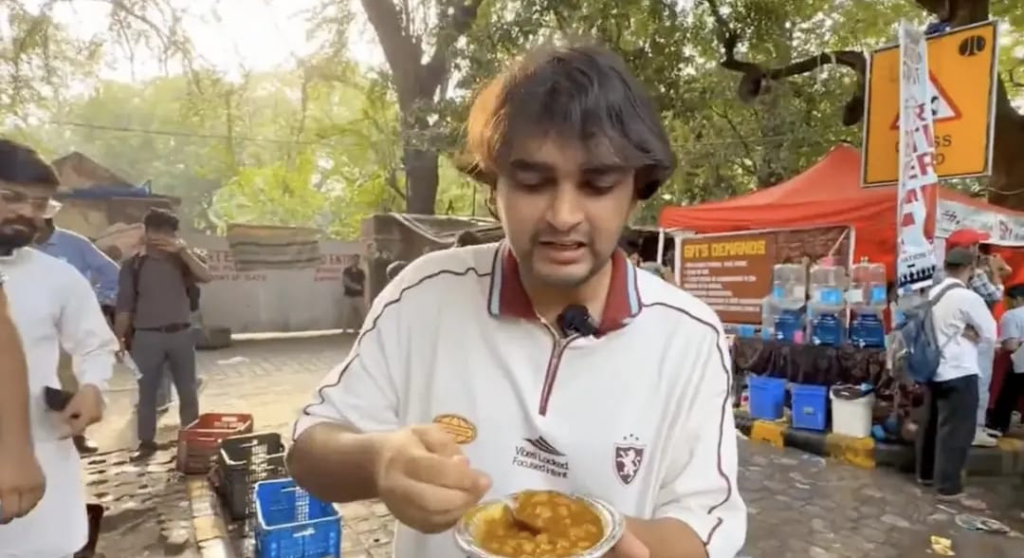
Popular food content creator Aayush Sapra has found himself at the centre of a major social media controversy after posting a video reviewing food served at Delhi’s Jantar Mantar, where environmentalist and education reform advocate Sonam Wangchuk is continuing his indefinite hunger strike. The video, which featured Sapra tasting chole and samosas while making remarks about Wangchuk’s fast, quickly went viral and triggered widespread criticism across social media platforms.
The controversy erupted after Sapra uploaded a food review from the protest venue, showcasing the meals being distributed to supporters and volunteers. During the video, he sampled dishes including chole and samosas while joking about the ongoing hunger strike. Many viewers felt that the tone of the content was inappropriate considering the seriousness of the protest and the deteriorating health of Sonam Wangchuk, who has been fasting for over two weeks.
Social media users reacted strongly, accusing the influencer of displaying poor judgment and insensitivity. Several users commented that creating entertainment content at a location where a person is risking his health through an indefinite hunger strike crossed ethical boundaries. Others questioned whether the pursuit of online engagement had overtaken basic empathy and respect for serious public movements. The criticism spread rapidly, with screenshots and video clips being widely shared across multiple platforms.
The video reportedly included comments suggesting that the food available at the protest site resembled a buffet and jokes about eating near Wangchuk while he continued fasting. Although Sapra did not directly interrupt the protest or approach Wangchuk, many viewers argued that the humour was misplaced and insensitive. Critics maintained that the protest site should have been treated with dignity rather than becoming the backdrop for food-related entertainment content.
The incident has once again highlighted the growing debate around the responsibilities of digital creators. With millions of people consuming short-form videos daily, influencers often face scrutiny over how they present sensitive events. While creators frequently cover public places, festivals, and cultural gatherings, many social media users believe that protests, memorials, and humanitarian situations require a different approach that prioritises context and sensitivity over viral content.
The backlash also reflects changing audience expectations. Internet users are increasingly demanding responsible storytelling from influencers whose content reaches large audiences. Rather than focusing only on views and engagement, many believe creators should consider the emotional impact their content may have on those directly involved in serious events. Public opinion suggested that empathy should remain a key factor when reporting or documenting emotionally charged situations.
Sonam Wangchuk’s protest itself has continued to attract nationwide attention. The renowned engineer, innovator and education reform advocate has been observing an indefinite hunger strike at Delhi’s Jantar Mantar in support of demands related to alleged irregularities in competitive examinations and broader concerns raised by youth groups. According to reports, his health has weakened significantly during the protest, with medical updates indicating considerable weight loss and declining physical condition.
Medical concerns surrounding Wangchuk have intensified as the fast has continued. Reports indicate that doctors monitoring his condition have noted weight loss, muscle weakness and falling blood sugar levels. Political leaders, supporters and members of civil society have appealed to him to end the fast while continuing discussions on the issues being raised. Despite these appeals, Wangchuk has reportedly remained committed to his protest.
The controversy surrounding Sapra’s video has also sparked conversations about content ethics in the digital era. Experts in media and communication have long argued that context matters as much as creativity. A location associated with a serious protest may not always be suitable for humorous or lifestyle-oriented content, particularly when it involves individuals undergoing physical hardship. While freedom of expression allows creators to document public events, audience expectations increasingly favour balanced and respectful storytelling.
Supporters of ethical content creation argue that influencers carry significant social responsibility because their words and actions can influence public perception. As the creator economy continues to grow, brands and audiences alike are placing greater importance on authenticity, accountability and social awareness. Incidents such as this serve as reminders that digital reach also comes with greater public scrutiny.
At the same time, the incident demonstrates the speed with which public opinion forms online. Within hours of the video’s circulation, criticism spread across social media, with many users expressing disappointment over what they described as a lack of empathy. Others called for greater sensitivity from creators covering protests, humanitarian issues and politically significant events. The discussion has extended beyond this single incident, becoming part of a larger debate about ethical boundaries in online content creation.
Whether the controversy has a lasting impact on Sapra’s online reputation remains to be seen. However, the incident has undoubtedly reignited conversations about responsible digital journalism, influencer accountability and the importance of respecting the seriousness of public movements. As online audiences become more conscious of ethical issues, creators may increasingly need to balance entertainment with compassion and context.
For Sonam Wangchuk, the focus remains on his ongoing protest and the issues he continues to raise through his indefinite hunger strike. Meanwhile, the debate generated by the food review video serves as another example of how quickly online content can influence public discourse and shape conversations around ethics, responsibility and respect in the digital age.
Follow NewsNowNation.com for more updates on business-related news and the latest developments from across India and around the world.
Popular food content creator Aayush Sapra has found himself at the centre of a major social media controversy after posting a video reviewing food served at Delhi’s Jantar Mantar, where environmentalist and education reform advocate Sonam Wangchuk is continuing his indefinite hunger strike. The video, which featured Sapra tasting chole and samosas while making remarks about Wangchuk’s fast, quickly went viral and triggered widespread criticism across social media platforms.
The controversy erupted after Sapra uploaded a food review from the protest venue, showcasing the meals being distributed to supporters and volunteers. During the video, he sampled dishes including chole and samosas while joking about the ongoing hunger strike. Many viewers felt that the tone of the content was inappropriate considering the seriousness of the protest and the deteriorating health of Sonam Wangchuk, who has been fasting for over two weeks.
Social media users reacted strongly, accusing the influencer of displaying poor judgment and insensitivity. Several users commented that creating entertainment content at a location where a person is risking his health through an indefinite hunger strike crossed ethical boundaries. Others questioned whether the pursuit of online engagement had overtaken basic empathy and respect for serious public movements. The criticism spread rapidly, with screenshots and video clips being widely shared across multiple platforms.
The video reportedly included comments suggesting that the food available at the protest site resembled a buffet and jokes about eating near Wangchuk while he continued fasting. Although Sapra did not directly interrupt the protest or approach Wangchuk, many viewers argued that the humour was misplaced and insensitive. Critics maintained that the protest site should have been treated with dignity rather than becoming the backdrop for food-related entertainment content.
The incident has once again highlighted the growing debate around the responsibilities of digital creators. With millions of people consuming short-form videos daily, influencers often face scrutiny over how they present sensitive events. While creators frequently cover public places, festivals, and cultural gatherings, many social media users believe that protests, memorials, and humanitarian situations require a different approach that prioritises context and sensitivity over viral content.
The backlash also reflects changing audience expectations. Internet users are increasingly demanding responsible storytelling from influencers whose content reaches large audiences. Rather than focusing only on views and engagement, many believe creators should consider the emotional impact their content may have on those directly involved in serious events. Public opinion suggested that empathy should remain a key factor when reporting or documenting emotionally charged situations.
Sonam Wangchuk’s protest itself has continued to attract nationwide attention. The renowned engineer, innovator and education reform advocate has been observing an indefinite hunger strike at Delhi’s Jantar Mantar in support of demands related to alleged irregularities in competitive examinations and broader concerns raised by youth groups. According to reports, his health has weakened significantly during the protest, with medical updates indicating considerable weight loss and declining physical condition.
Medical concerns surrounding Wangchuk have intensified as the fast has continued. Reports indicate that doctors monitoring his condition have noted weight loss, muscle weakness and falling blood sugar levels. Political leaders, supporters and members of civil society have appealed to him to end the fast while continuing discussions on the issues being raised. Despite these appeals, Wangchuk has reportedly remained committed to his protest.
The controversy surrounding Sapra’s video has also sparked conversations about content ethics in the digital era. Experts in media and communication have long argued that context matters as much as creativity. A location associated with a serious protest may not always be suitable for humorous or lifestyle-oriented content, particularly when it involves individuals undergoing physical hardship. While freedom of expression allows creators to document public events, audience expectations increasingly favour balanced and respectful storytelling.
Supporters of ethical content creation argue that influencers carry significant social responsibility because their words and actions can influence public perception. As the creator economy continues to grow, brands and audiences alike are placing greater importance on authenticity, accountability and social awareness. Incidents such as this serve as reminders that digital reach also comes with greater public scrutiny.
At the same time, the incident demonstrates the speed with which public opinion forms online. Within hours of the video’s circulation, criticism spread across social media, with many users expressing disappointment over what they described as a lack of empathy. Others called for greater sensitivity from creators covering protests, humanitarian issues and politically significant events. The discussion has extended beyond this single incident, becoming part of a larger debate about ethical boundaries in online content creation.
Whether the controversy has a lasting impact on Sapra’s online reputation remains to be seen. However, the incident has undoubtedly reignited conversations about responsible digital journalism, influencer accountability and the importance of respecting the seriousness of public movements. As online audiences become more conscious of ethical issues, creators may increasingly need to balance entertainment with compassion and context.
For Sonam Wangchuk, the focus remains on his ongoing protest and the issues he continues to raise through his indefinite hunger strike. Meanwhile, the debate generated by the food review video serves as another example of how quickly online content can influence public discourse and shape conversations around ethics, responsibility and respect in the digital age.
Follow NewsNowNation.com for more updates on business-related news and the latest developments from across India and around the world.
