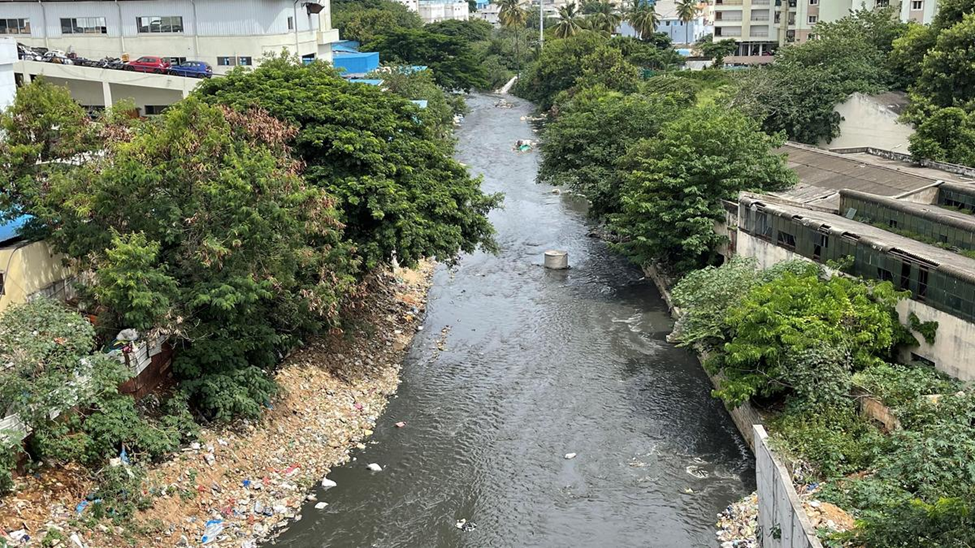
The Karnataka government’s ambitious plan to revive the Byramangala reservoir near Bengaluru has sparked debate among environmental experts and urban planners. While the ₹391-crore project aims to restore one of the region’s most polluted water bodies, a recent report suggests that the proposal fails to address the root causes of pollution flowing through the Vrishabhavathi river.
Byramangala reservoir, located on the outskirts of Bengaluru, has suffered severe contamination over several decades due to untreated sewage and industrial waste carried by the Vrishabhavathi river. Once an important water resource supporting agriculture and livelihoods in nearby villages, the reservoir has gradually turned into a heavily polluted water body.
Government’s Plan to Revive the Reservoir
The Karnataka government recently approved a large-scale rejuvenation plan designed to clean and restore the Byramangala reservoir. The project will be implemented jointly by the Minor Irrigation Department and the Bangalore Water Supply and Sewerage Board.
A key component of the project is the construction of a sewage treatment plant near the reservoir to prevent untreated wastewater from entering the lake. The proposed facility is expected to treat about 100 million litres of sewage per day, significantly reducing pollution levels in the waterbody.
Officials say the restoration effort will also include desilting the lake, strengthening embankments and introducing treated water into the reservoir. The project is expected to take several years to complete and aims to transform the polluted lake into a cleaner and more sustainable water resource.
Decades of Pollution in the Vrishabhavathi River
The primary source of contamination in the Byramangala reservoir is the Vrishabhavathi river, which flows through Bengaluru before reaching the reservoir. Over the years, the river has carried large quantities of untreated sewage and wastewater from the rapidly expanding city.
Urbanisation, inadequate sewage infrastructure and industrial discharge have contributed significantly to the deterioration of water quality. Continuous inflow of polluted water has severely degraded the ecological health of the reservoir.
Studies conducted in the past have also indicated that the reservoir’s water quality failed to meet safety standards due to high levels of pollutants and bacterial contamination, highlighting the seriousness of the environmental challenge.
Report Raises Concerns Over Root Causes
Despite the scale of the government’s revival project, environmental experts have expressed concerns that the current plan does not sufficiently address the upstream sources of pollution affecting the Vrishabhavathi river.
According to the report, focusing only on reservoir restoration without tackling the underlying pollution sources could limit the long-term effectiveness of the project. Experts argue that unless sewage management and waste disposal systems across Bengaluru are significantly improved, polluted water will continue to flow into the river.
The report suggests that comprehensive river basin management, stronger sewage infrastructure and stricter pollution control measures are necessary to ensure lasting improvements.
Importance of Addressing Urban Wastewater
The situation surrounding the Byramangala reservoir reflects a broader challenge faced by many rapidly growing cities. As urban populations increase, wastewater generation rises sharply, placing pressure on existing infrastructure.
In Bengaluru, several lakes and rivers have experienced similar pollution problems due to untreated sewage discharge and urban runoff. Environmentalists believe that long-term solutions must include expanding sewage treatment capacity, preventing illegal discharge and improving urban planning.
Without such measures, large-scale restoration projects may struggle to achieve their intended environmental benefits.
Economic and Ecological Significance
The Byramangala reservoir once played a vital role in supporting agriculture and livelihoods in surrounding villages. Spread across nearly 1,000 acres, the lake historically provided irrigation water and contributed to the local ecosystem.
Over time, however, pollution from upstream sources has rendered the water unsafe for most uses. Reviving the reservoir could help restore ecological balance, improve water availability and benefit communities in the region.
The project is also considered important for future urban development plans in nearby areas such as Bidadi, which is being developed as a satellite township near Bengaluru.
Balancing Infrastructure and Environmental Management
Experts believe that the success of the reservoir revival project will depend on a balanced approach that combines infrastructure development with environmental protection.
While the construction of sewage treatment plants and lake restoration work are positive steps, addressing the broader river pollution problem remains critical. Sustainable water management requires coordinated efforts across multiple government departments, urban planners and environmental agencies.
By strengthening pollution monitoring systems and expanding wastewater treatment infrastructure, authorities may be able to improve the health of the Vrishabhavathi river and the lakes connected to it.
The Road Ahead
The Byramangala reservoir restoration project represents an important opportunity to improve water management and environmental sustainability in the Bengaluru region. However, the concerns raised by experts highlight the need for a more comprehensive strategy that addresses both symptoms and root causes of pollution.
If implemented effectively, the project could help restore a historically important waterbody while also improving ecological conditions in the Vrishabhavathi valley.
As cities continue to expand, integrated water management and environmental planning will play a crucial role in protecting natural resources and ensuring sustainable urban development.
Follow for more updates regarding business related news in newsnownation.com.
