A Heartbreaking Incident Raises Questions About Changing Family Values, Elderly Isolation and Emotional Responsibility
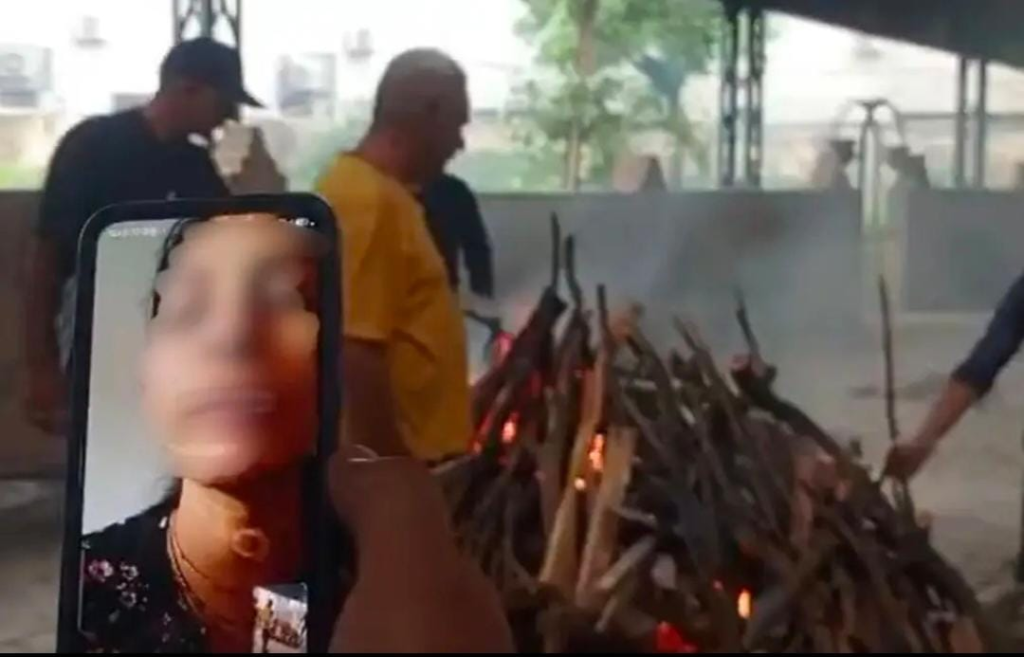
A deeply emotional incident from Haryana’s Sonipat has triggered a nationwide discussion on family responsibility, elderly care and the changing nature of relationships in modern society. A 74-year-old former textile trader, who spent the final years of his life in an old-age home, passed away after a prolonged illness. While the funeral was performed with dignity by the staff of the old-age home and local residents, his three daughters attended the last rites only through a video call from different locations, including Nepal, Uttar Pradesh and Mumbai.
The deceased, identified as Shivcharan Ram Ratan Gupta, was originally a successful textile businessman from Mumbai. According to reports, he had moved to the old-age home in Sonipat along with his wife nearly one-and-a-half years ago. After his wife’s death, he continued to stay at the facility, where the staff became his primary support system during his final days.
Officials at the old-age home stated that Gupta had been suffering from prolonged health complications. They informed his daughters nearly twenty days before his condition became critical and requested them to visit. However, none of them reportedly arrived to meet their father before his passing. Following his death, the management once again contacted the family and informed them that arrangements could be made if they wished to attend the funeral in Sonipat. According to the management, the daughters conveyed that they were unable to travel due to personal commitments and instead requested to join the cremation through a video call.
The funeral was eventually conducted by the old-age home’s staff with assistance from local residents. Throughout the cremation, the daughters remained connected virtually. Reports also state that the eldest daughter transferred ₹5,100 online and requested that all funeral rituals be performed properly according to tradition. The management ensured that the last rites were completed with dignity despite the absence of immediate family members.
According to those associated with the old-age home, Gupta often expressed pride in his daughters. He had devoted much of his life to ensuring they received quality education and opportunities. Two of his daughters reportedly became teachers, while each eventually settled in different locations after marriage. Staff members recalled that he frequently stayed in touch with them through phone calls. However, communication reportedly reduced significantly after his health deteriorated.
The incident has sparked widespread debate across social media platforms and among citizens, with many expressing concern over the growing emotional distance between elderly parents and their children. While several people criticised the daughters for not attending the funeral in person, others urged restraint, pointing out that every family has circumstances that may not be publicly known. The discussion has therefore expanded beyond one family, focusing instead on broader issues such as elderly isolation, migration, professional responsibilities and the emotional challenges faced by ageing parents.
Experts working in the field of senior citizen welfare have long highlighted that emotional support often becomes as important as financial assistance during old age. As more families become geographically dispersed due to education, employment and international migration, elderly parents frequently find themselves living alone or depending on institutional care. While technology such as video calling helps maintain communication across distances, many believe it cannot replace physical presence during emotionally significant moments, particularly during illness or the final farewell of a loved one.
The case has also brought renewed attention to the growing number of senior citizens residing in old-age homes across India. Many such institutions today not only provide accommodation and healthcare but also emotional support, companionship and dignified end-of-life care for residents whose families are unable to care for them directly. Caregivers at these facilities often become the closest companions for elderly residents during their final years.
Another significant aspect of the incident was the family’s decision to donate Gupta’s eyes after his death, allowing his corneas to benefit individuals in need of vision restoration. This gesture has been acknowledged as a meaningful contribution to society despite the emotional controversy surrounding the funeral arrangements.
The incident continues to generate conversations about balancing professional commitments with family responsibilities in an increasingly fast-paced world. It has encouraged discussions about the importance of regular communication with elderly parents, planning family support systems and ensuring that senior citizens receive both emotional and social care during their later years.
As India experiences rapid demographic and social changes, stories such as this serve as reminders of the need for stronger family connections, community support and greater awareness of elderly welfare. Whether viewed as a reflection of changing lifestyles or an unfortunate family circumstance, the incident has undoubtedly reopened an important conversation about compassion, responsibility and the dignity every individual deserves in the final chapter of life.
For more updates on business-related news and trending developments, follow NewsNowNation.com.
