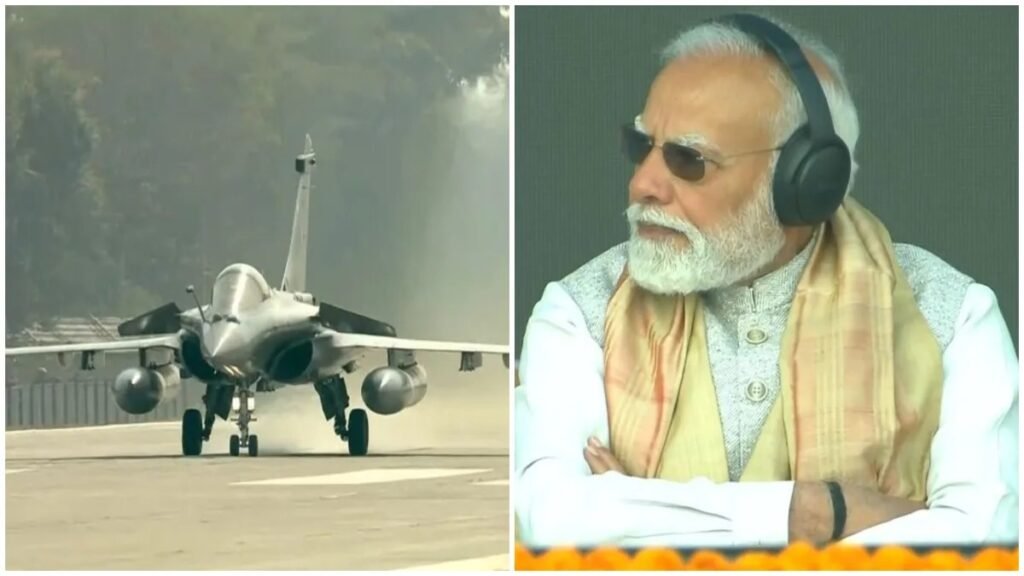
In a major development for India’s northeastern region, Prime Minister Narendra Modi is set to inaugurate a strategically significant highway in Assam that has been engineered to serve as a dual-purpose roadway and military runway. The initiative forms part of a broader infrastructure and defence strategy aimed at strengthening operational readiness along the sensitive border with China.
The highway, located close to the Line of Actual Control (LAC), plays a critical role in improving both civilian connectivity and defence logistics. Designed to support large aircraft operations during emergencies, the road reflects India’s evolving approach to border infrastructure — combining transport development with military utility. Defence analysts say such dual-use projects serve multiple objectives: enhancing rapid troop movement, enabling efficient supply chain management, and bolstering regional resilience.
Officials from the Ministry of Defence and the Ministry of Road Transport and Highways have underscored the project’s strategic impact. They note that improving infrastructure near the China border has long been a priority for New Delhi, particularly following periods of heightened tensions in eastern Ladakh and other northern sectors. By enabling rapid deployment capabilities and expanding logistic corridors, such highways aim to reduce response times in complex border scenarios.
The Assam highway project also carries significant economic implications for the local population. Improved connectivity is expected to stimulate trade, tourism and commerce in previously remote districts, contributing to regional development long sought by policymakers. Residents and business leaders have welcomed the improved access, saying it will open up new opportunities for investment and mobility. Experts add that such infrastructure expansion aligns with India’s larger vision of integrating border regions more closely with national economic frameworks.
Geopolitical experts emphasize that strategic roadways with runway capabilities are not unique to India but are increasingly being adopted by nations with challenging terrain and sensitive frontiers. However, the emphasis on combining civilian utility with defence needs reflects India’s nuanced approach to resource optimisation and regional stability.
While details of the inauguration ceremony and operational timelines are still being finalised, government sources indicate that the highway is expected to be fully operational for both civilian and military use in the coming months. Discussions are underway to integrate additional features that could support emergency air operations, further enhancing the road’s strategic versatility.
The Assam highway project comes at a time when India is steadily advancing its border infrastructure portfolio across multiple fronts, including Ladakh, Arunachal Pradesh and Sikkim. These initiatives are seen as crucial components of India’s broader security architecture, balancing development needs with defence imperatives.
As the nation anticipates the official inauguration by Prime Minister Modi, stakeholders are optimistic that this project will serve as a model for future dual-use infrastructure endeavours. Its successful implementation could reinforce India’s preparedness posture while supporting inclusive growth in border communities.
Stay updated with comprehensive coverage and expert analysis on this and other major developments at NewsNowNation.com.
