Spacecraft engineering is the research, development, design, and manufacture of vessels that travel within the outermost layers of atmospheric Earth, and beyond to outer space. Spacecraft engineering includes the making of a space shuttle ,rocket ,satellite ,rovers etc. It is one of the most difficult fields of engineering because it involves complex physics and advanced mathematical computation and modeling.
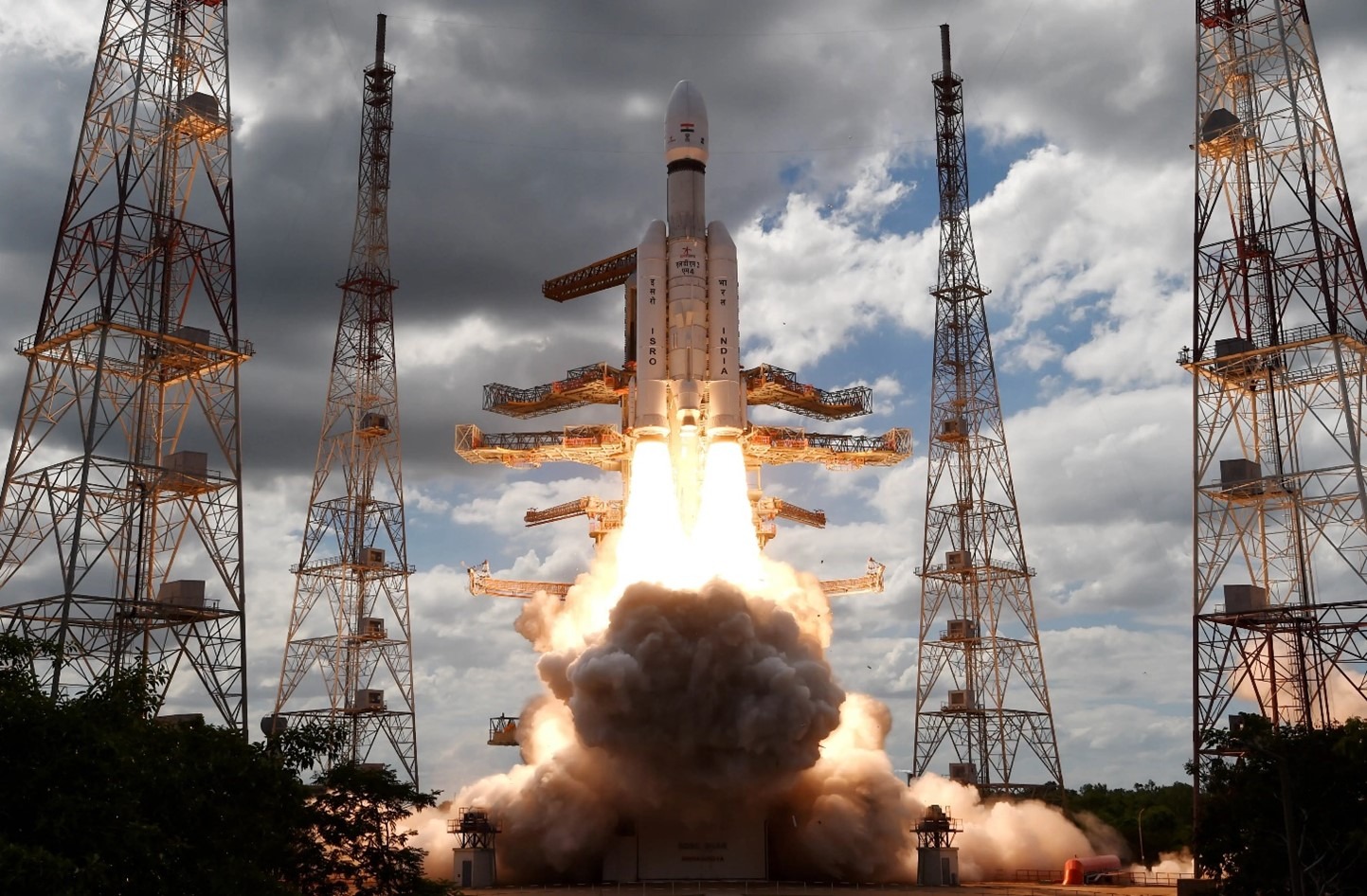
The Chandrayan 3 which was launched on July 14,2023 was a remarkable mission by ISRO – Indian Space Research Organisation which was a spacecraft carrying a lander to the surface of the moon. India became the first country to softly land a spacecraft on the lunar south pole, and the fourth country to achieve a soft landing on the Moon, after the United States, the Soviet Union, and China.
The earlier attempt made by ISRO was a failure as there was a communication blackout and is till date lost in the vast expanse of space. Four years ago, ISRO made a similar attempt but things did not work out as per the plan. ISRO’s Chandrayaan-2 Mission failed in its lunar phase because its lander ‘Vikram’ crashed into the surface of the moon following anomalies in the braking system in the lander while attempting a soft landing on September 7, 2019.The Chandrayan-3 entered lunar orbit on 5 August, and India became the first country to touch down near the lunar south pole, at 69°S, the southernmost lunar landing on 23 August 2023.
ISRO scientists say they have made adjustments that make it more likely the current mission will land successfully. That includes a system to broaden the potential landing zone. The lander has also been equipped with more fuel and sturdier legs for impact. Chandrayaan-3 has a lone instrument in the orbit called The Spectro-Polarimetry of Planet Earth. The Difference between Chandrayaan 2 and Chandrayaan 3 is the main objective. The primary objective for Chandrayaan 2 was to study the lunar topography, mineralogy, elemental abundance, and lunar exosphere and also search for water ice in polar regions. The aim for Chandrayaan 3 was set as a soft landing on the lunar’s south pole, deploying a rover from the lander to explore the south pole, studying the composition and distribution of water on the surface, study the mineralogy and geology of the surface and study the lunar environment and how it has contributed to the moon’s evolution. Despite the failure of Chandrayan-2, the scientists did not give up hope and were determined to land on the surface of the Moon. Finally, Chandrayan-3 was a successful mission and helped in getting the important data from the South Pole of the Moon which was not done by any nation so far. This shows that the engineers working the field of aerospace did a remarkable job.

Saiyam Kapadia | Brightlands School