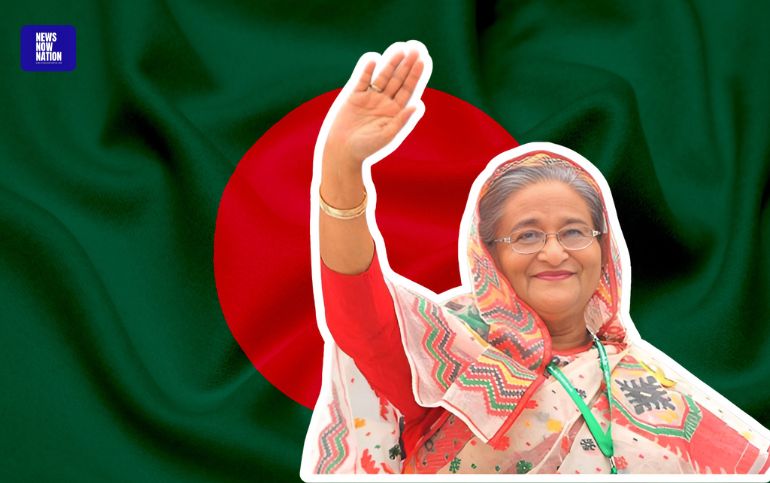
Sheikh Hasina, the long-standing Prime Minister of Bangladesh, resigned and fled the country on Monday amid weeks of intense protests.
PM Sheikh Hasina Resigned: A Breakdown of Events
Sheikh Hasina Resigns and Departs for India
On Monday, 76-year-old Sheikh Hasina left Dhaka in a military aircraft, landing at Hindon near Delhi, India, later that evening. Indian government officials confirmed her arrival, stating that Hasina decided to step down after a meeting with the security forces’ leaders. She requested urgent permission to enter India, which was promptly granted by New Delhi. As of the latest information, Hasina remains in India, where she seeks refuge following her resignation.
Parliament Dissolution and Interim Government Formation
Following Hasina’s resignation, President Mohammed Shahabuddin dissolved the parliament on Tuesday, paving the way for an interim government. Concurrently, the president released Begum Khaleda Zia, chairperson of the Bangladesh Nationalist Party (BNP) and Hasina’s arch-rival, from house arrest. Student leaders driving the protests have proposed Nobel Peace laureate Muhammad Yunus as the chief adviser of the interim government. This move is seen as an attempt to restore stability and order amid the political chaos.
The Protests Leading to Hasina’s Resignation
Origin of the Protests
The protests initially began in response to government job quotas, organized by the Students Against Discrimination group. These demonstrations, which started in June, escalated into a broader movement demanding Hasina’s resignation after violent clashes with security forces. The quota system was perceived as unjust, sparking widespread anger among students and young professionals.
Key Demands and Escalation
Protesters called for an apology from Hasina for the violence, restoration of internet services, reopening of educational institutions, and the release of detained individuals. By the weekend, the protests had evolved into a campaign for Hasina’s resignation, with a nationwide non-cooperation movement beginning on Sunday. The students’ demands highlighted deeper issues of governance and accountability in Hasina’s administration.
Why Did Protesters Demand Hasina’s Resignation?
Critics and rights groups accused Hasina’s government of using excessive force during the July protests. Hasina initially blamed opposition parties for the violence but later described the protesters as terrorists. Despite offering talks, the student groups refused, maintaining their demand for her resignation. The government’s heavy-handed response to peaceful protests fueled further dissent and calls for change.
Triggers and Underlying Issues
Job Quota Controversy
The protests were sparked by the High Court’s reinstatement of a quota system for government jobs, favoring relatives of veterans from Bangladesh’s independence war. This decision, which overturned Hasina’s 2018 policy, fueled anger among students facing high unemployment rates. The quota system was seen as discriminatory, denying merit-based opportunities to many qualified candidates.
Economic Challenges
Bangladesh’s economic growth has stagnated, with inflation around 10% per annum and shrinking dollar reserves. The flagging economy and high youth unemployment exacerbated public discontent, making public sector jobs highly sought after due to their stability and benefits. Experts also attribute the current unrest in Bangladesh to stagnant job growth in the private sector, making public sector jobs, with their accompanying regular wage hikes and privileges, very attractive.
Hasina’s Political Background
January Election and Retention of Power
Hasina retained power for a fourth consecutive term in the January election, which was boycotted by the BNP. The opposition accused her Awami League party of legitimizing sham elections, further intensifying political tensions. Her government faced criticism for stifling dissent and undermining democratic processes.
Long-Term Governance Issues
Throughout her tenure, Hasina faced accusations of authoritarianism, corruption, and human rights abuses. Her government’s actions during the protests reflected a pattern of suppressing opposition and controlling political narratives. The students’ movement brought these issues to the forefront, challenging the legitimacy of her leadership.
The resignation of PM Sheikh Hasina marks a significant turning point in Bangladesh’s political landscape. With the formation of an interim government and ongoing protests, the country stands at a crossroads. The unfolding events will shape the future of governance and democracy in Bangladesh. The protests have not only highlighted the immediate grievances of the population but have also exposed deeper structural issues that need to be addressed.
As Bangladesh navigates this period of transition, the role of civil society, international observers, and the interim government will be crucial in ensuring a peaceful and democratic resolution. The world watches closely as Bangladesh takes steps towards rebuilding trust and stability in its political system.
Stay tuned to News Now Nation for updates and more news.
Follow us on social media for real-time news updates:

