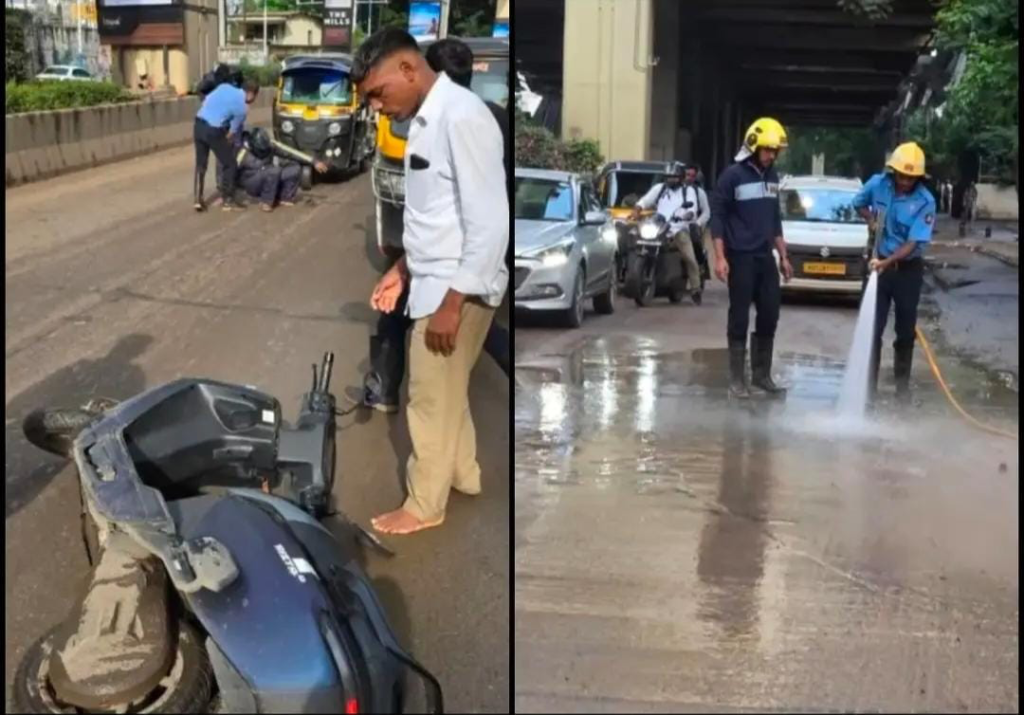
Oil Spill Mixed With Rainwater Turns Busy Pune Road Into a Dangerous Stretch
A major road safety incident unfolded in Pune on Tuesday morning after leaked oil from vehicles mixed with mud and rainwater, creating an extremely slippery road surface that caused nearly 25 vehicles to skid within a short span. The incident occurred on the stretch connecting RTO Chowk and Naidu Hospital Road, where continuous rainfall had already made driving conditions challenging. At least six commuters sustained injuries, most of them reported to be minor, while emergency response teams acted swiftly to prevent the situation from worsening.
The accident-prone stretch quickly turned into a hazard for motorists, especially two-wheeler riders who lost control after their tyres came in contact with the oil-coated road surface. Eyewitnesses reported that several riders fell within minutes of one another, creating panic among commuters and forcing many vehicles to slow down significantly. Local residents and passers-by immediately rushed to help those who had fallen before emergency services reached the location.
According to preliminary information, the slippery condition was caused by oil leaking from one or more vehicles that mixed with accumulated mud and rainwater. The resulting layer formed a dangerous film over the asphalt, drastically reducing tyre grip. Such conditions are particularly hazardous during the monsoon season, when even a small amount of oil can significantly increase the risk of skidding and accidents.
Traffic movement on the road came under severe disruption as vehicles struggled to navigate the affected section safely. Police personnel and civic authorities quickly diverted traffic while emergency responders assessed the situation. Fire brigade teams were also deployed to the spot after repeated reports of vehicles losing control on the same stretch.
To restore road safety, firefighters initiated an extensive cleaning operation using high-pressure water jets to wash away the mixture of oil, mud and debris from the road surface. The cleaning exercise continued until officials were satisfied that the stretch had become safe for motorists. The prompt response prevented additional accidents and helped restore normal traffic flow within approximately an hour.
Officials confirmed that six people sustained injuries during the multiple skidding incidents. Fortunately, no fatalities were reported. Medical assistance was provided to those injured, and authorities continued monitoring the location to ensure that no fresh accidents occurred after traffic resumed. The quick coordination between traffic police, fire services and local administration played a significant role in containing the situation.
Road safety experts often warn that oil spills become particularly dangerous during the rainy season because water spreads the oil across a larger surface instead of washing it away. This reduces friction between vehicle tyres and the road, increasing the likelihood of skidding, especially for motorcycles and scooters. Drivers are generally advised to reduce speed, avoid sudden braking and maintain a safe following distance during monsoon conditions.
The incident has once again highlighted the importance of timely road maintenance and immediate removal of hazardous materials from public roads. Authorities are expected to examine whether the oil leak originated from a damaged commercial vehicle or another source and whether additional preventive measures can be implemented to avoid similar incidents in the future. Regular inspections of accident-prone locations and rapid response mechanisms remain essential for ensuring commuter safety during heavy rains.
Urban roads across major Indian cities frequently experience waterlogging, mud accumulation and vehicle fluid leaks during the monsoon, creating hidden risks for motorists. Experts recommend that civic agencies increase surveillance during periods of heavy rainfall and respond immediately to reports of slippery road surfaces. Public awareness regarding cautious driving in adverse weather conditions can also help reduce the number of preventable accidents.
For commuters, the Pune incident serves as an important reminder that even routine journeys can become hazardous when road conditions deteriorate unexpectedly. Defensive driving, reduced speed and increased alertness remain the most effective ways to minimise risks during the rainy season. While emergency services managed to restore normalcy quickly in this case, continued investment in road safety infrastructure, rapid emergency response and preventive maintenance will be essential in reducing similar incidents in the future.
For more updates on business-related news and important developments from across India, follow NewsNowNation.com.
