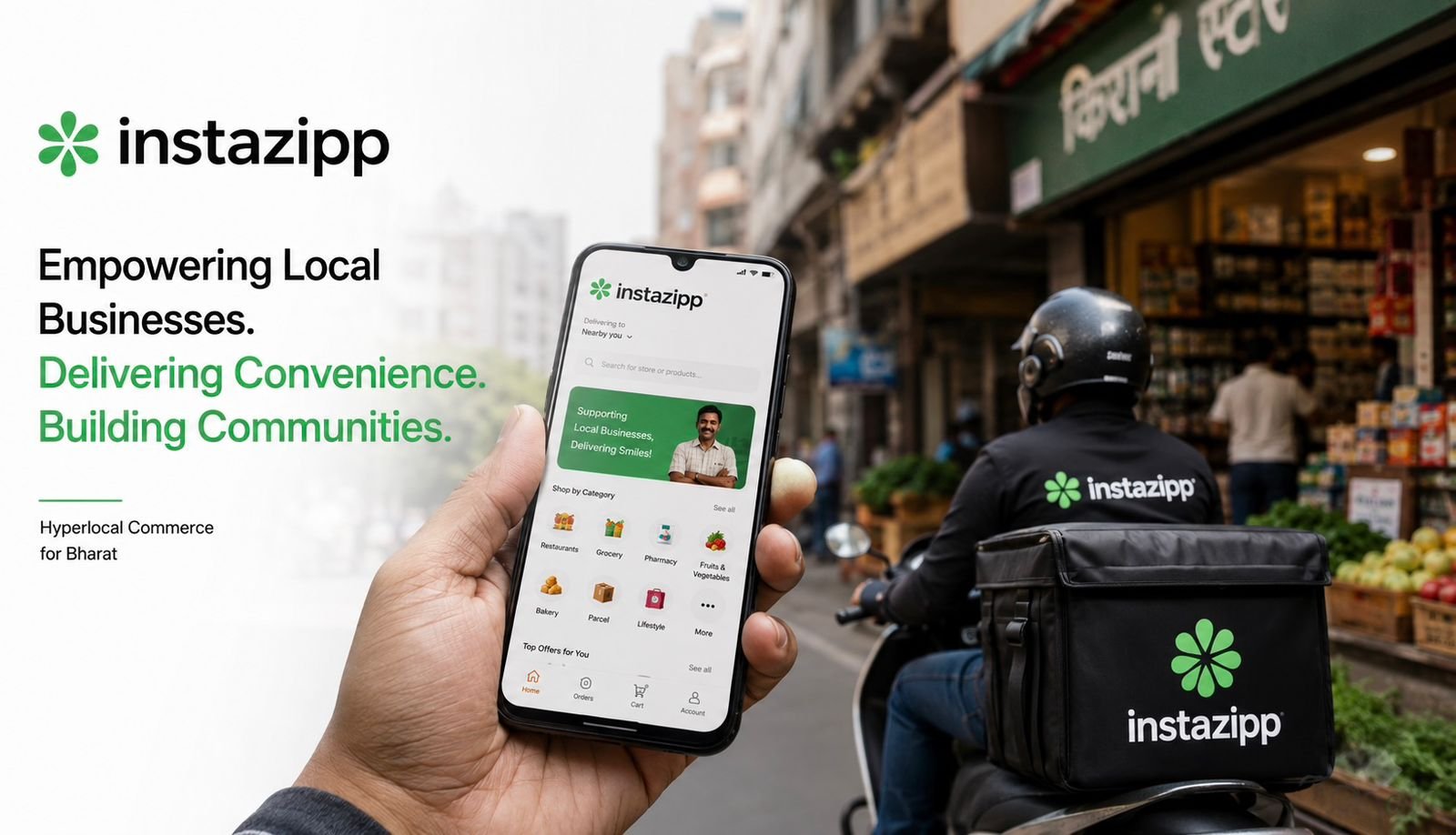
How Instazipp Is Helping Local Businesses Compete in India’s Growing Quick Commerce Market
As India’s quick commerce sector continues to expand beyond metropolitan cities, a Gujarat-based startup is emerging with a mission to empower local businesses while delivering convenience to customers.
Instazipp, a hyperlocal multi-vendor marketplace and quick commerce platform, is positioning itself as a merchant-first alternative in a market often criticized for high commission fees and complex pricing structures.
Focused primarily on Tier 2 and Tier 3 cities, the startup aims to bridge the gap between local retailers and digitally connected consumers through fast deliveries, transparent pricing, and technology-driven operations.
Addressing a Major Pain Point for Local Businesses
For many restaurants, grocery stores, pharmacies, and local retailers, online marketplaces have become an important source of customer acquisition. However, the high commissions charged by several delivery platforms can significantly impact profitability.
Instazipp is attempting to solve this challenge through a simplified pricing structure that charges sellers a platform fee of only 2.5% plus applicable GST.
According to the company, this approach allows businesses to retain a larger share of their revenue while still accessing digital ordering, payment processing, delivery support, and customer management tools.
Industry observers believe that transparent pricing models could play a crucial role in encouraging greater digital adoption among small and medium-sized businesses in emerging markets.
Building a Hyperlocal Ecosystem
Unlike traditional e-commerce platforms that often rely on centralized fulfillment, Instazipp focuses on local commerce.
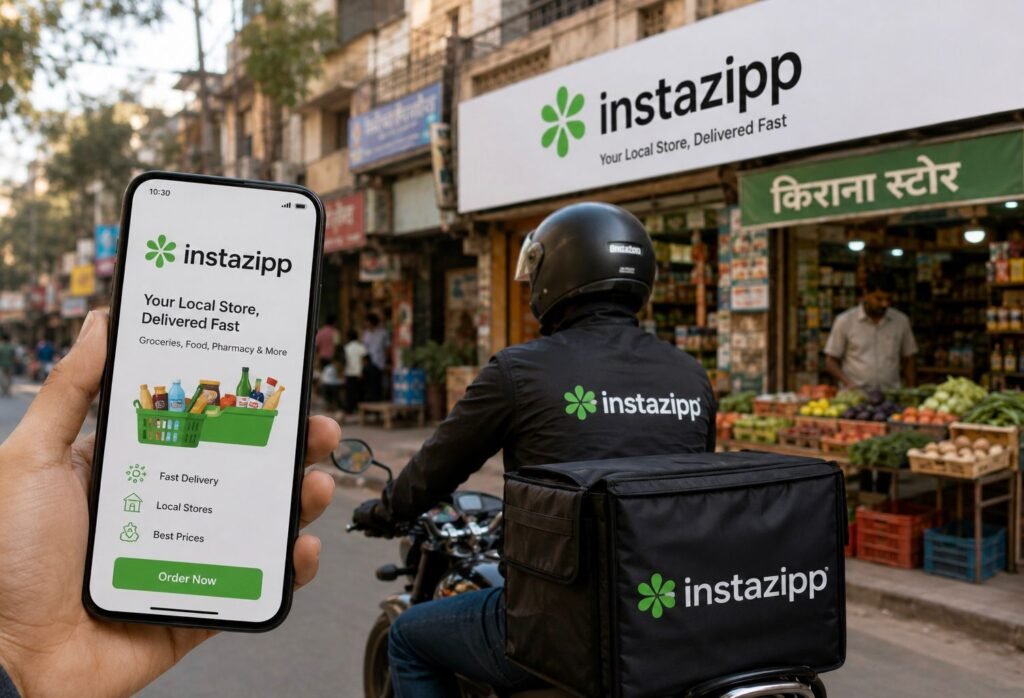
The platform connects customers with nearby businesses across multiple categories, including:
- Restaurants and cloud kitchens
- Grocery and kirana stores
- Pharmacies and medical stores
- Bakeries
- Fruits and vegetables
- Parcel services
- Lifestyle and specialty retailers
By leveraging existing local inventories, Instazipp enables businesses to reach customers within their immediate service areas while maintaining control over pricing and operations.
Quick Commerce Beyond Metro Cities
Consumer expectations around delivery speed have changed dramatically over the past few years.
Recognizing this shift, Instazipp has developed a hyperlocal delivery network designed to complete most orders within approximately 60 minutes.
The company utilizes technology-driven features such as real-time order tracking, intelligent order allocation, route optimization, and local vendor matching to improve operational efficiency.
This model is particularly relevant in smaller cities where demand for quick commerce is increasing but access to large-scale delivery infrastructure remains limited.
Supporting Digital Transformation for Local Retailers
One of the startup’s key focuses is simplifying technology adoption for traditional businesses.
Instazipp offers a dedicated seller dashboard that enables merchants to manage inventory, track orders, access sales reports, and run promotional campaigns through a mobile-friendly interface.
The onboarding process has been designed to help local entrepreneurs begin selling online with minimal technical expertise.
As India’s digital economy continues to expand, platforms that simplify online commerce for small businesses are expected to play an increasingly important role in regional economic growth.
Customer-Centric Convenience
For consumers, the platform offers access to trusted local businesses through a single digital marketplace.
Features include:
- Fast hyperlocal delivery
- Secure online payments
- Real-time order tracking
- Access to local merchants
- Promotional offers and rewards
- Convenient mobile and web ordering
By combining local availability with digital convenience, Instazipp seeks to create a seamless shopping experience while supporting neighborhood businesses.
Growth Ambitions
With a growing presence in Gujarat, Instazipp is preparing for expansion into additional markets across India.
The startup’s long-term vision focuses on creating a sustainable ecosystem that benefits customers, merchants, delivery partners, and local communities alike.
As competition in India’s quick commerce sector intensifies, startups that prioritize merchant success alongside customer convenience may find significant opportunities in underserved Tier 2 and Tier 3 markets.
The Road Ahead
The rapid evolution of India’s hyperlocal commerce landscape is creating new opportunities for innovation. Instazipp represents a new generation of startups seeking to balance growth with sustainability by offering transparent pricing, local business empowerment, and fast delivery capabilities.
Whether the company can scale its merchant-first model nationally remains to be seen, but its approach reflects a broader shift toward supporting local businesses in the digital economy.
As hyperlocal commerce continues to gain momentum, startups like Instazipp could play an important role in shaping the future of retail in India’s emerging cities.

